
Historical Background
US draconian policies towards Cuba are rooted in the Monroe Doctrine given by US President James Monroe in 1823. It divided the world into two parts: America and Europe. According to this doctrine, the western hemisphere of the world would be solely controlled by America, and foreign interventions would not be tolerated. Before the 1959 Cuban Revolution, Cuba had been under the US-backed government of Fulgencio Batista. The public went against Batista due to his dictatorship and extreme corruption. Following these issues, Fidel Castro, a pro bono lawyer, rose and became a revolutionary leader.
Tensions between Cuba and the US rose in 1959 when the Cuban Revolution became successful, and Fidel Castro overthrew the US-supported regime of Fulgencio Batista. Castro was a Leninist Marxist who aligned with Soviet policies. Cuba is only 90 miles away from the US, and it comes under its sphere of influence. In the name of Cuba, the Soviet Union established a mini home in the backyard of the United States. As per the Monroe Doctrine, the US will not tolerate any foreign intervention, so the US, under the presidency of John F. Kennedy, imposed economic sanctions on Cuba, and it also supported the failed 1961 Bay of Pigs invasion carried out by CIA-trained Cuban exiles aboard vessels, including the Houston and Rio Escondido.
The tensions rose when US forces detected Soviet SS-4 and SS-5 nuclear missiles deployed in Cuba. Reports provided by the Council of Foreign Relations uncover that the US had also deployed its 15 SM-78 Jupiter ballistic missiles in Turkey, which was a Soviet sphere of influence, in response to the Soviet deployment of missiles in Cuba. Throughout history, all the republicans like Ronald Reagan, Bill Clinton, Donald Trump, etc., have imposed sanctions on Cuba, while the Democrats, like Obama, have always tried to maintain close ties with Cuba.
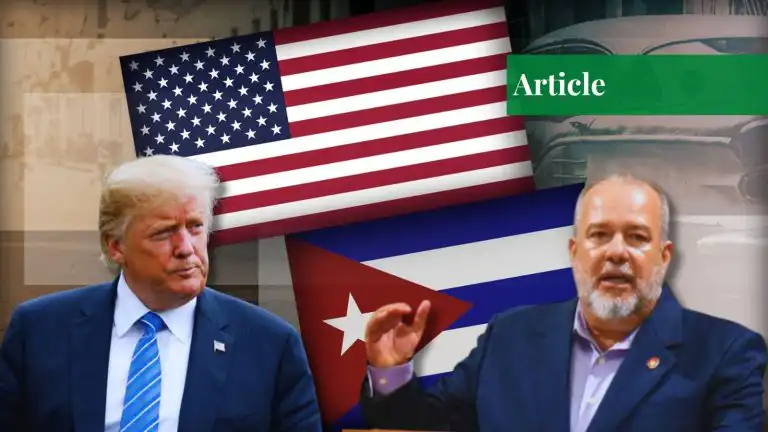
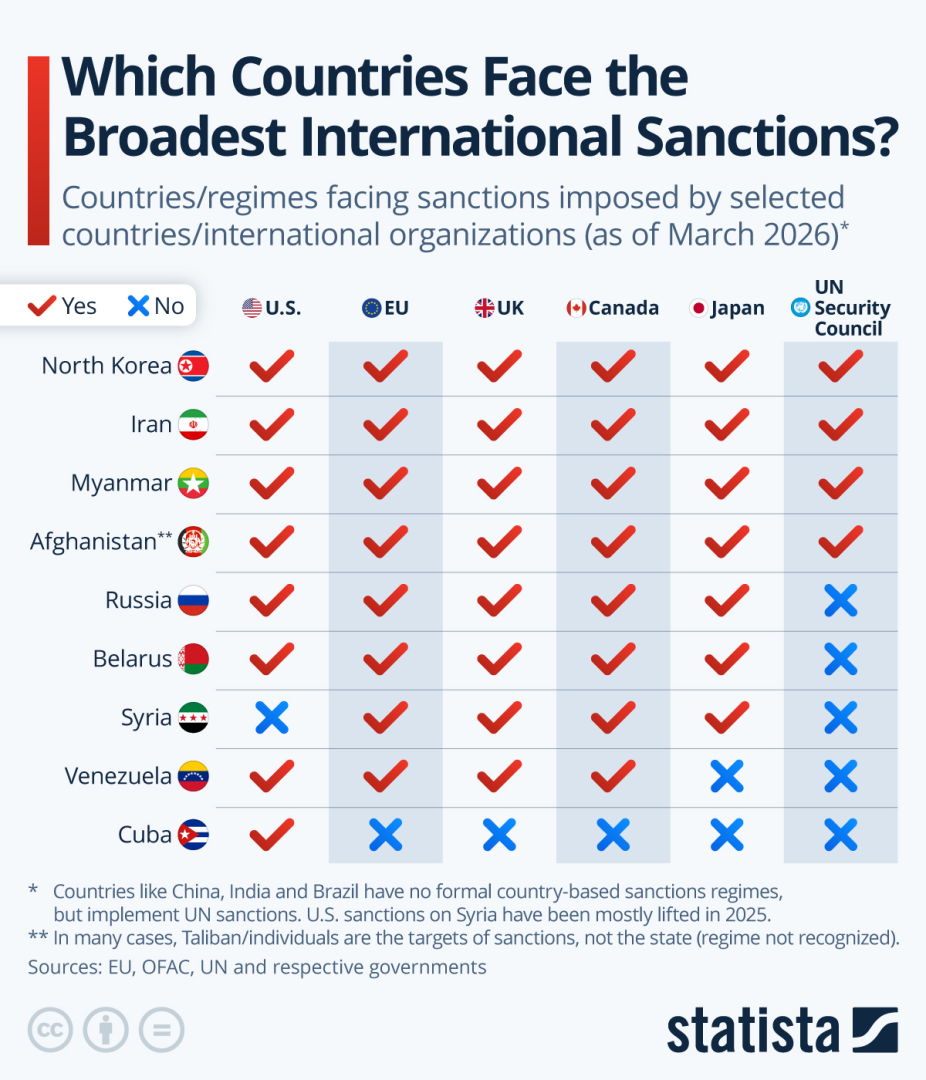
President Trump, after his 1 year of 2.0 government, signed an executive order declaring that Cuba is an unusual and extraordinary threat to the US due to its close ties with Russia. President Trump said that “he can do anything with Cuba he wants with it.” To free Cuba from the communist regime, President Trump has cut all its oil supplies, due to which Cuba is suffering a blackout from the oil crisis. First, President Trump took over Venezuela, and then, in the name of drug cartels, he deployed his forces in Mexico, two key suppliers of oil to Cuba. Now Cuba is suffering from an oil crisis. President Trump has also said that “Cuba is next after Iran”. US Secretary of State Marco Rubio has said that “The US would love to see regime change in the country”.
Strategic Importance of Cuba and the Great Power Competition
Cuba serves as a strategic chokepoint for the United States as it lies at the intersection of the Gulf of Mexico, the Caribbean basin, Atlantic shipping routes that connect the US with Latin America, Europe, and the Panama Canal. The Caribbean is known as the “third border” for the US, as it serves as a defensive buffer zone between America and Europe. Caribbean can provide a gateway to the external powers like China and Russia to intervene in the United States of America.
Cuba is situated just 90 miles away from the United States. Its importance was highlighted during the Cuban Missile Crisis when US officials noted that adversaries can easily pressure America via Cuba to achieve their interests. If there were foreign intervention in Cuba, then it could also affect the economy of the United States because many American cargoes pass through the Caribbean Sea. To maintain its sovereignty and to adhere to the Monroe Doctrine, the United States wants to take control of Cuba.
In the era of great power competition, the United States is consistently trying to contain the influence of China. To do this, the US is blocking all the oil trade routes of China. Firstly, President Trump blocked the Panama route, which was an essential point for China to trade oil during Biden’s government. Following this, President Trump overthrew the regime of Nicolás Maduro, the former president of Venezuela. China imports oil mainly from Venezuela, but now this route has been blocked. China also imports oil from Mexico; to contain China, the United States has deployed its forces in Mexico. After all these blockades, China was surviving on Middle Eastern oil, which is now not possible due to the Iran-Israel war. Now China will suffer a high long-term economic cost due to the oil crisis.
President Trump wants to take control of Cuba to contain China. Recent years have witnessed China’s growing influence in the Caribbean Sea. China has close ties with this island. China has established its banks there. Through trade, infrastructures, investments, etc., China has a great influence on the Caribbean Sea, surrounding Cuba. Senior officials in the State Department and Pentagon have repeatedly cited Cuba as a strategic chokepoint where foreign influence could threaten US sovereignty. To avoid China expanding its economic influence in Cuba, the US sphere of influence, the United States wants to topple the Cuban regime and establish a US-backed government in Cuba.
Russia also has its influence in Cuba from the Cold War era. Russia’s foreign minister Sergei Ryabkov, in 2022, warned that Russia will not demilitarise to Cuba or Venezuela amid tensions with the United States. The United States views Russian influence in Cuba not only as bilateral cooperation but as strategic signals to counter NATO’s pressure in Europe. Russia also has allies in Latin America, which showcases that Russia can challenge US dominance in its own sphere of influence.
Strategically, Russia’s intervention in Cuba will enable Moscow to develop geographic counter-pressure: whereby, the United States is challenging Russia in Eastern Europe and surveilling Arctic expansion, Russia is signalling that it can still operate via the Caribbean, a historic area under the Monroe Doctrine. According to scholars, this represents a traditional great-power balancing logic where the marginal theatres (Caribbean and Arctic) are transformed into interconnected arenas of signalling, rather than confrontation.
Trump’s Foreign Policy Approach
President Trump’s foreign policy approach includes the following factors:
Transactional Diplomacy
Transactional diplomacy is a foreign policy approach that prioritizes reciprocal deals and renegotiations. It deals with international relations as a business transaction where leaders focus on return on investment. President Trump, being a businessman, adheres to this approach by focusing on negotiations and bargaining. Brookings reports say that President Trump has replaced engagement-based diplomacy with transactional diplomacy.
Engagement-based diplomacy is founded on complete trust in alliances, whereas transactional diplomacy is based on quid pro quo principles, where something is given in exchange for something else. It is based on making deals under pressure. In the case of Cuba, President Trump is using a transactional approach by pressuring Cuba through various means. The United States has imposed restrictions on tourism in Cuba for Americans, activated the Helms-Burton Act, and cut the oil supply networks of Cuba. By doing this, President Trump imposed economic pressure so that at the boiling point of Cuba, he would propose an asymmetrical deal to Cuba.

Trump’s Art of the Deal
President Trump, in his book The Art of the Deal, has listed some of his deal patterns, given below:
- Think Big: In his words, “I like thinking big. I always have to. To me, it’s really straightforward: if you’re already going to be thinking, you might as well think big.”
- Think Worst: Trump says, “I always go into the deal expecting the worst. If you prepare for the worst, if you can tolerate the worst, the good will always take care of itself.”
- Maximise Options: Trump observed, “I never get too attached to one deal or one approach. I keep a lot of balls in the air.”
- Use Leverage: In accordance with Trump, “The worst thing you can do in a deal is seem desperate. The best thing you can do is deal from strength, and leverage is the biggest strength you can have.”
- Fight Back: Trump believes, “Much as it pays to emphasise the positive, there are times when the only choice is confrontation, when people treat me badly or unfairly, my general attitude has been to fight back very hard.”
Trump’s Cuba policy can be analyzed through The Art of the Deal. By taking control of Cuba, overthrowing the Venezuelan regime, and engaging in the Iran-Israel war, President Trump is thinking big. Ultimately, he wants to contain China, curb Russian influence, and make America great again. He has many options in his court, such as sanctions, oil supply disruptions, and travel restrictions. President Trump has used Cuba’s weakness in importing fuel. Instead of targeting Cuba directly, he used Venezuela to curb Cuba’s oil supply network. In Cuba, Trump has complied with his unique pattern of creating a crisis first, twiddling his thumbs, then negotiating, and finally having an asymmetrical deal in favor of the United States.
Drill Baby Drill and United States Strategic Policy
On 20th January, 2025, President Trump gave a speech at the inauguration ceremony of his second term presidency. In his speech, he focused on various aspects to make America great again. He also mentioned a scheme named “drill baby drill,” which primarily means that instead of depending on other nations for energy requirements, America will explore its oil and gas and will become self-sufficient to be an oil exporter. Implicitly, it also means that to make America great again, the United States will do anything with the states that are in its sphere of influence but have foreign interference.
Cuba is also under foreign control. It has close ties with China and Russia. It is becoming a great threat to the United States. Through history, America have learnt that Cuba is strategically very important for us and at times it can become a great threat to the United States, as it was during the Cuban Missile Crisis. So, to eradicate this threat, President Trump wants to overthrow the regime and appoint a pro-US president in Cuba. Through this, America will adhere to its Monroe Doctrine, there will be no foreign interventions, and America will gain control of the Caribbean Sea.
One can view the US strategic policy of occupying Cuba through a lens that it could have a domino effect in Greenland. First, President Trump will overthrow the Cuban government, and then the main target will be Greenland. Securing the near abroad, Cuba, can pose security threats to Greenland. And by doing so, the US would have Greenland or in other words, it would have 15% of the Arctic more.
Implications of US Policy Towards Cuba
Regional Stability in the Caribbean
The imposition of sanctions, disruption of the oil supply network, and economic coercion will affect the stability of Havana and neighboring islands. It is affecting Cuba, as there are no resources for basic needs like electricity, fuel, healthcare, etc. Due to this, there was a complete blackout in Cuba for the past 29 hours. After restoring its energy, Cuba experienced a second blackout soon after, since not enough electricity had been generated.
Risk of Escalations Amid Great Power Rivalry
Cuba has close ties with great powers like China and Russia. In a crisis, they both can supply resources to Cuba and will come before the United States. Karl Marx wrote in his work The Eighteenth Brumaire of Louise Bonaparte, “History repeats itself, first as tragedy, second as farce”. During the Cold War era, Russia deployed nukes in Cuba to threaten America. This can occur again, which can be more chaotic and farcical than before.
Long-term Consequences for International Order
Use of sanctions and economic coercion on a sovereign state challenges the norms of non-intervention and territorial integrity. Recently, in his speech, President Trump declared that the world order has been distorted. It reflects the broader desire of the US to leverage economic power to shape outcomes in favor of US interests. By claiming this about the world order and withdrawing from 66 international organizations, the US now has no restrictions or limitations on doing anything.
Conclusion
The Cuban crisis of the 21st century is an example of a perfect storm of systemic collapse. By using sanctions as a strategy, economic warfare has been normalised in US foreign Policy. President Trump has used his unique pattern of dealing and transactional diplomacy as a foreign policy approach, where economic coercion smoothly replaced direct military confrontation. Washington is trying to contain China and curb Russian influence in its hemisphere. This crisis has showcased that a rival state can use the energy dependence of a state as a tool of coercive diplomacy. US strategic policies and schemes like drill baby drill have significant implications for Cuba as well as the US. To make America great again and to take full control of the western hemisphere, the US will establish a pro-US government in Cuba.
“International politics, like all politics, is a struggle for power.”
Hans Morgenthau
If you want to submit your articles and/or research papers, please visit the Submissions page.
To stay updated with the latest jobs, CSS news, internships, scholarships, and current affairs articles, join our Community Forum!
The views and opinions expressed in this article/paper are the author’s own and do not necessarily reflect the editorial position of Paradigm Shift.

Syeda Farani Fatima is an undergraduate student of International Relations at the International Islamic University of Islamabad, with a strong interest in anti-corruption, counter-terrorism and geopolitics. Strongly committed to fighting corruption, terrorism, and supporting national reform through research and public service.