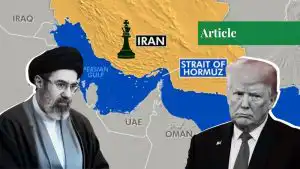
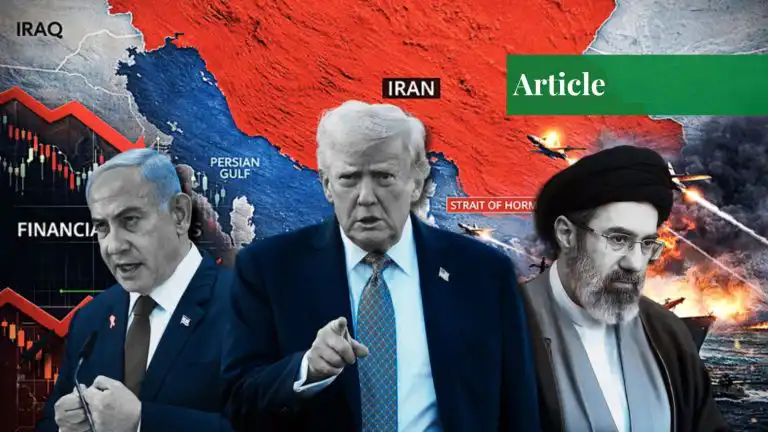

Geopolitics is rapidly changing due to growing tensions between the US, Israel, and Iran. Global economic stability and energy markets are at greater risk due to the escalating threat of military conflict. At this moment, Pakistan’s diplomatic role is important, as key ministers from Saudi Arabia, Egypt, and Turkiye are currently in Pakistan to discuss the crisis. Additionally, there has been a rise in proxy involvement, with Hezbollah supporting Iran in this conflict and the Houthis in Yemen attacking southern Israel.
Due to the conflict between the United States, Israel, and Iran, almost 20 percent of oil supplies have been affected because of the disrupted shipping from the Strait of Hormuz, according to the IEA. The increase in fuel prices is also affecting the US, as gasoline prices have reached $3.98 per gallon. The global oil shortage has reached 10 million barrels per day, which is double the impact of the 1973 oil embargo. Shipping disruptions in the Strait of Hormuz have trapped various vessels. Iran is reportedly charging a $2 million fee per vessel to pass through. According to Pakistan’s Foreign Minister, Ishaq Dar, Iran has allowed 20 Pakistan-flagged oil tankers to pass through the Strait of Hormuz, as stated in a message later shared by the US president on his Truth Social platform. This development is being considered a diplomatic success for Pakistan.
Similarly, the supply of helium is being affected. As of March 2026, around 30-33 percent of the global helium supply has been disrupted because of this conflict, especially in Qatar. This disruption is affecting technology industries, including semiconductors and MRI scans, as helium prices have increased. In addition, 30 percent of the global fertilizer supply has been affected by the conflict, increasing the risk of food shortages.
On the other hand, military mobilization is increasing as the USS Abraham Lincoln carrier strike group redeploys. The US Secretary of Defense, Pete Hegseth, has asked for $200 billion in additional funding for the Iran war. This suggests that the US may be preparing for a ground invasion, as the Washington Post reports that the Pentagon has been preparing for a ground invasion in Iran, with thousands of American soldiers and Marines arriving in the Middle East.
For this, targeted ground operations are being planned, likely focusing on specific areas or islands rather than a full-scale invasion, based on current military posturing. There is a strong possibility that they will target islands such as Kharg Island, where 90 percent of Iranian oil is refined, and Qeshm Island, which has underground tunnels for anti-ship missiles, drones, and other strategic assets. Larak Island contains bases, bunkers, and radar systems for tracking ships crossing the Hormuz Strait. Additionally, Abu-Musa Island is also strategically significant.
These islands, like Abu-Musa Island, are very important for keeping the Strait of Hormuz safe because of the Iranian military equipment there. This could be a way to open the Strait of Hormuz again, or they may intend to capture an island to claim a strategic win.
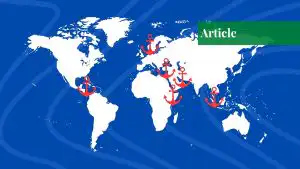
In case of a ground invasion, Iran has clearly stated that if the United States attacks, it will target the Red Sea. Iran has also stated that it may target the Yanbu port in Saudi Arabia and the Fujairah complex in the UAE, while the Houthis have indicated that they could close the Bab al-Mandab Strait. By closing this route, ships would be forced to take an alternative route, which is the Cape of Good Hope, adding up to 20 days to shipping journeys and significantly increasing energy prices.
Iran views this as a strategic deterrent, aiming to prevent an attack by targeting the Red Sea, energy facilities in the Gulf, and cutting the trade routes between Europe and Asia. If the US invades Iran and the Red Sea is attacked, it could significantly affect Europe, as its oil supply chains would be disrupted, potentially forcing NATO to join the conflict.
Pakistan is trying to maintain its relations with both the US and Iran in this conflict while attempting to prevent the escalation of the conflict. Pakistan has organized a high-level regional summit in Islamabad, where officials from three countries-Saudi Arabia, Egypt, and Turkiye are meeting to discuss the crisis. The summit aims to quickly find solutions and prevent further escalation, which would protect both regional peace and economies.
For Pakistan, any disruption to Gulf economic activity will significantly impact its economy, especially concerning remittances. Furthermore, Pakistan shares a long border with Iran and must maintain its relations with the US. These factors explain Pakistan’s desire to end the conflict. If this war escalates, the pressure on Pakistan to choose a side will also increase.
In conclusion, the growing tensions between the United States, Israel, and Iran are affecting the world economy and causing an energy crisis. Food supplies and the security of the world’s energy supply are at risk due to the disruption of vital resources like fertilizers and helium. This conflict is also slowing down industries and raising living costs, making fuel and basic goods more expensive everywhere.
If the situation worsens, important areas like the Strait of Hormuz and the Red Sea might be attacked. If there are ground battles, it could make it harder for countries to work together and make the region more unstable, especially if they attack significant Iranian islands. Disruption of shipping routes would affect international trade and possibly lead to a financial crisis. There will be economic consequences for the Gulf countries that rely on energy exports.
However, the consequences could extend beyond the Middle East if a ground invasion takes place and Iran retaliates by cutting off energy supplies. Pakistan plays an important diplomatic role in this conflict by attempting to keep ties with both the US and Iran intact while preventing further escalation. Pakistan’s economy and the stability of the region depend on its efforts. The conflict between the US, Israel, and Iran puts Pakistan in a delicate position at the center of the crisis.
* piece submitted before the ceasefire agreement of 8th April
If you want to submit your articles and/or research papers, please visit the Submissions page.
To stay updated with the latest jobs, CSS news, internships, scholarships, and current affairs articles, join our Community Forum!
The views and opinions expressed in this article/paper are the author’s own and do not necessarily reflect the editorial position of Paradigm Shift.

I am currently pursuing a Bachelor’s degree in International Relations at the University of Punjab. I have a strong interest in global politics, diplomacy, and international security, and I focus on analyzing evolving geopolitical conflicts, energy security, and regional stability.