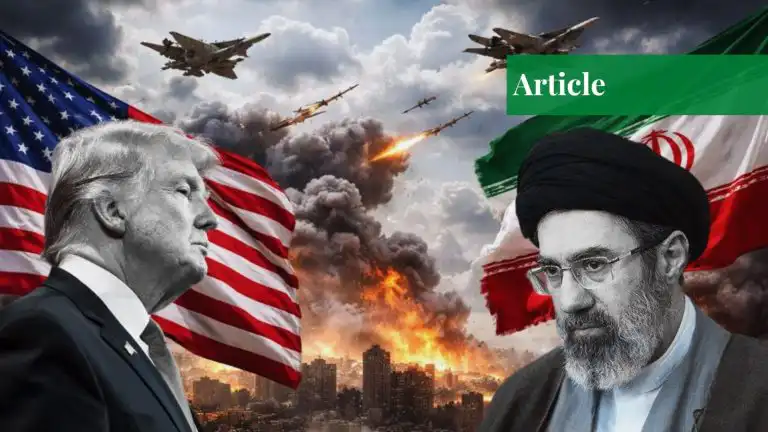

In the recent Iran conflict, Washington has sent highly mixed signals. On one hand, President Donald Trump publicly framed the US-Israel campaign against Iran as a necessary fight to “eliminate threats from the Iranian regime,” claiming American forces had begun “major combat operations” in Iran. On the other hand, other parts of the US government have emphasized restraint and diplomatic channels. For example, a White House fact sheet released just weeks earlier portrayed the confrontation as an extension of “maximum pressure” policies, including executive orders on sanctions and tariffs against Iran.
Even as Trump threatened to “destroy” Iran’s missile forces and “obliterate” its navy, he simultaneously spoke of urging Iranian citizens to “take power once the operation is over.” As Foreign Policy columnist Steven Cook observes, US officials are now telling two different stories about the same events: one portraying a decisive victory over Iran, the other warning of backlash and incomplete results. “Each narrative suggests a different policy response,” he writes, “but it is hard to imagine a consensus…for a coherent US approach to Iran.”
US Officials’ Shifting Statements
Early in the crisis, Trump’s language was unambiguously aggressive. After a joint Israeli‑American strike on February 28, 2026, he announced that “major combat operations” had begun in Iran. In video messages, he vowed to “raze” Iran’s missile infrastructure and “annihilate” its navy, painting the regime as a “wicked, radical dictatorship” that must never threaten American security. His defense secretary and intelligence officials similarly defended the operation as targeting Iran’s nuclear and military capabilities. Notably, senior US commanders briefed reporters that this campaign was far more extensive than prior strikes, indicating “dozens” of targets and coordination with Israel.
Yet at almost the same time, White House communications stressed continuity with broader strategy. An official fact sheet (February 6, 2026) described a renewed “national emergency with respect to Iran” and touted new sanctions and tariffs on Iran’s economy. It framed Trump’s actions as building on his 2018 withdrawal from the nuclear deal and “maximum pressure” policy, rather than a radical departure. Even after the bombing campaign began, Trump offered to resume talks.
On November 7, 2025, he publicly said Iran requested the removal of sanctions and that he was willing to talk. This left observers puzzled. How could Tehran be asking to negotiate if its nuclear program had already been “totally obliterated,” as Trump claimed weeks earlier? Trump’s boastful assessment that the nuclear threat was “fixed” forced Israel to find new pretexts (focusing on Iran’s missiles instead) so as not to contradict him. In short, Trump’s discourse oscillated between all-out war and reassuring diplomacy—a split narrative echoed by some legislators and advisors.
Israeli Pressure and Coordination
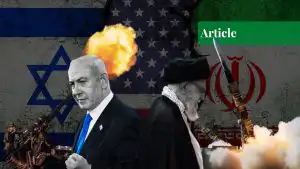
Israel has aggressively pulled the US into the conflict. From day one, Israeli leaders framed the campaign as a joint effort to eliminate an “existential threat” posed by Iran. Defense Minister Israel Katz publicly thanked the US for conducting the strike alongside Israel, calling it a “preemptive strike against Iran to remove threats to the State of Israel.” Israeli media reported that the operation had been “planned for months,” with the US “on the same page” as Tel Aviv. In effect, Israeli officials actively lobbied Washington to deepen its commitment; as analysts note, Netanyahu is “pushing the United States to join Israel in yet another war with Iran,” driven by a “desire for perpetual US involvement” to break Iran’s power.
There were subtle differences in how each ally presented the mission. Prime Minister Netanyahu’s video statement thanked Trump for his historic leadership and explicitly called it a joint campaign. Trump, by contrast, spoke mostly of an American operation—mentioning Israel only indirectly. In practical terms, however, the US and Israeli militaries worked closely. Intelligence and air-defense systems were shared, and strikes were coordinated in real time. The joint operation (codenamed “Epic Fury” by the US and “Roaring Lion” by Israel) has been described as “impressive” in combining American firepower with Israeli intelligence. At the same time, Israel continues to press for even greater US involvement. As one commentator put it, Netanyahu’s campaign reflects an “aim for unchallenged dominance” in the region, and he expects the US to follow Israel in supporting an extended war.
International Reaction and Global Pressure
Abroad, allies and adversaries alike have criticized America’s mixed messaging and actions. Many US partners were caught off guard by the strikes. UN Secretary-General António Guterres condemned the “military escalation,” warning that US and Israeli use of force against Iran undermines international peace and “risks a wider regional conflict with grave consequences for civilians.”
European leaders spoke out strongly. In a joint statement, the prime ministers of Germany, France, and the UK “condemned Iranian attacks” but also stressed they were “committed to regional stability” and urged the resumption of US–Iran diplomacy. French President Emmanuel Macron called for an immediate UN Security Council session, saying the “current escalation is dangerous for everyone. It must stop.” Commission President Ursula von der Leyen and Council President Charles Michel similarly urged all parties to “exercise maximum restraint,” protect civilians, and “fully respect international law.” Even Canada, a close US ally, expressed unease Prime Minister Mark Carney said he supported preventing an Iranian nuclear weapon but lamented that the US and Israel acted “without engaging the United Nations or consulting” allies. He explicitly called for a “rapid de‑escalation” and a return to political solutions.
Regional actors added pressure. Oman, a neutral mediator in the nuclear talks, flatly warned Washington not to get “sucked in” further into a conflict that serves neither US nor global interests. Turkey’s foreign ministry decried the spiral of violence, noting it began with “Israel and the US attacking Iran” and risks the region’s future. Norway’s foreign minister pointedly stated that Israel’s preventive strikes on Iran violate international law, emphasizing that preemptive attacks are only legal under an “immediately imminent threat.” Russia and China each urged an immediate halt and return to talks: Russia’s leadership accused the US of using nuclear negotiations as a “cover-up” for military strikes, while China appealed for dialogue and respect for Iran’s sovereignty.
Even some US treaty allies in the region were cautious. Gulf partners condemned Iranian missile attacks on their territory; for example, Qatar and the UAE called them “dangerous escalation,” but none explicitly blessed the US-Israeli offensive. Instead, Arab states and international organizations uniformly urged restraint and diplomacy.
Analysts’ Critique of the US Narrative
Scholars and policy analysts have been especially blunt about America’s narrative. The pervasive criticism is that US discourse has become driven by politics and ideology, not facts. Steven Cook argues that the Iran debate has devolved into “narrative-driven analysis” peddling “separate realities.” In practice, US officials are offering two mutually contradictory assessments of their own military operations. One line of argument treats the strikes as an overwhelming success that has finally neutralized Iran’s nuclear program; another warns that they were limited and could provoke dangerous retaliation. Thus, he observes, “Washington is awash in narrative-based analyses. Instead, you just get competing realities, which is no reality at all.”
Other experts similarly see incoherence. Al Jazeera’s analysis pointed out that Trump’s claim of “obliterating” Iran’s nuclear sites forced Israeli strategists to invent a new justification (missiles) for continued strikes. The result is an open secret: different actors are shifting goals to suit their stories. Think tanks note that Trump’s National Security Strategy now treats the Middle East as a low priority, even as he wages the region’s most intense war in decades, a direct contradiction. In one view, this project of “perpetual wars against Iran” seems to serve Israeli ambitions more than an agreed US strategy.
In conclusion, the United States today presents a fractured Iran policy. Its leaders are not going to talk in the same way. Hawks and supporters desire greater violence. Arguing and diplomats tell us to be cautious and negotiate. The end result of this fight has created no sense of clarity or direction in the US. America could end up pursuing policies that do not suit the actual issues, as one analyst cautioned, unless we connect what we say with what we do. The result is a credibility gap at home and abroad: if allies and adversaries cannot tell what the US really stands for, Washington’s role in Iran will remain conflicted and unpredictable.
If you want to submit your articles and/or research papers, please visit the Submissions page.
To stay updated with the latest jobs, CSS news, internships, scholarships, and current affairs articles, join our Community Forum!
The views and opinions expressed in this article/paper are the author’s own and do not necessarily reflect the editorial position of Paradigm Shift.

Amir Mushtaq is a student of IR at IIUI and a researcher at the Institute of Strategic Studies and KIIR Islamabad.