
Renewed Diplomatic Negotiations Between the US and Iran
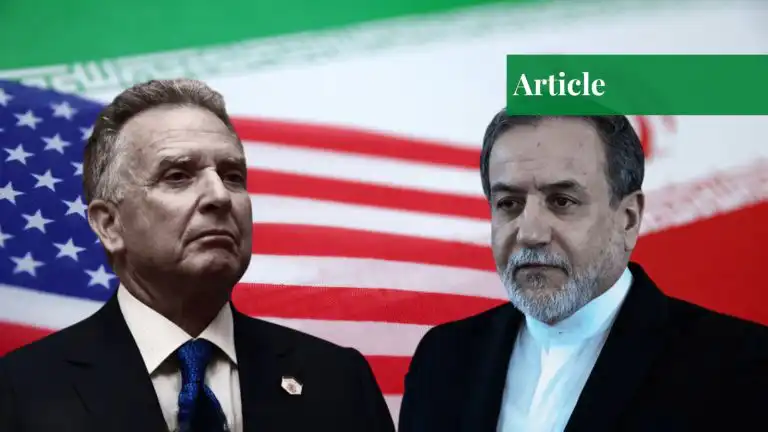
The month of February brought renewed hope for peace and stability in the Middle East with the start of negotiations between Iran and the United States. The delegations from the two sides held talks in Oman on February 6, 2026. This meeting marked the start of peace negotiations amidst escalating tensions between the two sides. As per international media reports, the first round of US-Iran talks was highly constructive and promising. After the negotiations, the US and Iranian officials returned to their capitals to discuss the meeting with their governments. Despite the aggressive rhetoric of the Trump administration, the US delegation has shown a positive attitude in recent talks with Iran.
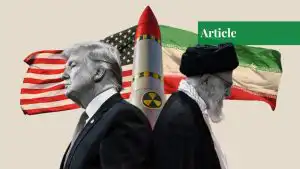
Tensions between Iran and the United States have reached a new apex due to the former’s support for regional proxy groups against Israel, Washington’s major regional proxy, and its alleged ambition to gain nuclear power. Iranian officials have explicitly stated that uranium enrichment is their right. However, Iran has repeatedly stated that its nuclear project is merely for peaceful purposes and it does not intend to build nuclear weapons. On the other hand, the United States and Israel want Tehran to end its uranium enrichment, as it could lead to the start of a nuclear weapons program in the future.
Strategic Calculations and the Cost of War Between the US and Iran
Despite the heightened rhetoric, neither Iran nor the United States seeks a direct military confrontation due to its immense strategic cost. Indeed, the United States is a global superpower, and it has clear military supremacy over Iran. However, throughout its history, it has not won even a single war on its own despite spending trillions of dollars on its military. All the major wars that the US won involved a coalition of different Western nations. Moreover, Washington’s global hegemony is already under strain due to the rise of Russia and China.
The United States, through its hard policies and interventionist attitude, has already pushed numerous third-world countries towards the rising Eastern bloc. The Trump administration, due to its aggressive and exclusive policies, is already facing severe global criticism. A military action against Iran would not only further isolate the United States globally, but it would also hurt its interests in the Middle Eastern region.
The Carrot-and-Stick Approach
Amidst the ongoing US-Iran talks, Washington appears to be employing a dual-track strategy. US President Donald Trump has recently signed an order imposing tariffs and sanctions on countries that trade with Iran. In his recent post on his social media platform Truth Social, he shared, without any comment, a Wall Street Journal article titled “Pentagon Prepares Second Aircraft Carrier to Deploy to the Middle East.” This post is widely perceived as an alleged confirmation of reports that the United States intends to further increase its military assets in the Middle East. The article quotes different US officials stating that the Pentagon seeks to prepare an aircraft carrier strike group to join the USS Abraham Lincoln in the Middle East.
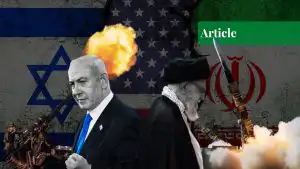
According to Al Jazeera, “The move by the USS Gerald R. Ford, first reported by The New York Times, will put two carriers and their accompanying warships in the region as Trump increases pressure on Iran to make a deal over its nuclear program.” These reports of the US intention for the deployment of a second aircraft carrier strike group in the region came hours after a meeting between US President Donald Trump and the Israeli Prime Minister Benjamin Netanyahu, who is known for his hostile designs against Iran and regional Muslim powers, at the White House.
After meeting with Netanyahu, President Trump said, “There was nothing definitive reached other than I insisted that negotiations with Iran continue to see whether or not a deal can be consummated. If it can, I let the Prime Minister know that it will be a preference. If it cannot, we will just have to see what the outcome will be.”
International media reports suggest that Israel seeks a full-fledged US attack on Iran due to the embarrassment it faced during the 12-day war. Before this war with Iran, Israel was perceived as an invincible power. However, Iranian missile attacks exposed the loopholes in its air defense system, tarnishing its military’s global image. During this war, Israel coerced the United States into joining its attack on Iran, which resulted in US military action on Iranian nuclear facilities. However, due to a strong response from Iran and the fear of being further embarrassed, Israeli Prime Minister Netanyahu agreed to a ceasefire deal with Iran. It appears that the pressure of Netanyahu on the US is driven by a desire to avenge the humiliation and resentment endured during the 12-day war.
Prospects for Diplomacy—or Escalation?
Global powers are closely monitoring the ongoing situation between Iran and the United States. People around the world, especially in the Middle East, want a diplomatic resolution of the dispute. However, the conflicting interests of both sides could make these negotiations unsuccessful. Iran seeks immediate relief from US economic sanctions on its banking and oil sector. On the other hand, the United States’ demands include regime change in Iran, a total halt to uranium enrichment, and limits on its ballistic missile program.
Meanwhile, Iranian Foreign Minister Abbas Araqchi has strictly stated that Tehran will only discuss the nuclear program with Washington. Furthermore, he condemned President Trump’s new aggressive designs about the region by stating, “Any dialogue requires refraining from threats and pressure.”
Indeed, Donald Trump’s new tariffs on Iran’s trading partners and the Pentagon’s decision to increase military presence in the region pose a significant threat to the peace talks between the two sides. These moves could prove detrimental for diplomatic negotiations, as Iran could perceive them as a form of coercion to accept the US and Israeli demands, further decreasing trust between the two sides. The US administration and the Omani mediators need to create a win-win situation for both sides. Otherwise, the region would plunge into another humanitarian crisis. A US military conflict with Iran would also impinge on Washington’s regional interests due to the significant presence of Iran-backed proxy and resistance groups in the Middle East.
If you want to submit your articles and/or research papers, please visit the Submissions page.
To stay updated with the latest jobs, CSS news, internships, scholarships, and current affairs articles, join our Community Forum!
The views and opinions expressed in this article/paper are the author’s own and do not necessarily reflect the editorial position of Paradigm Shift.

Muhammad Hamza Tanveer is a political analyst specialising in South Asian and Middle Eastern affairs. His work focuses on religious nationalism, regional security, and minority rights. He has been featured in Stratheia, Pakistan Today, Pakistan Observer, and the Asian Mirror. He is also working as a research analyst and political commentator for Paradigm Shift and contributes to the monthly magazine of Nearpeer.