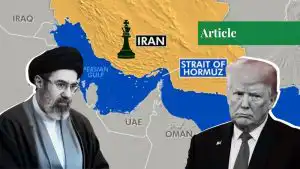


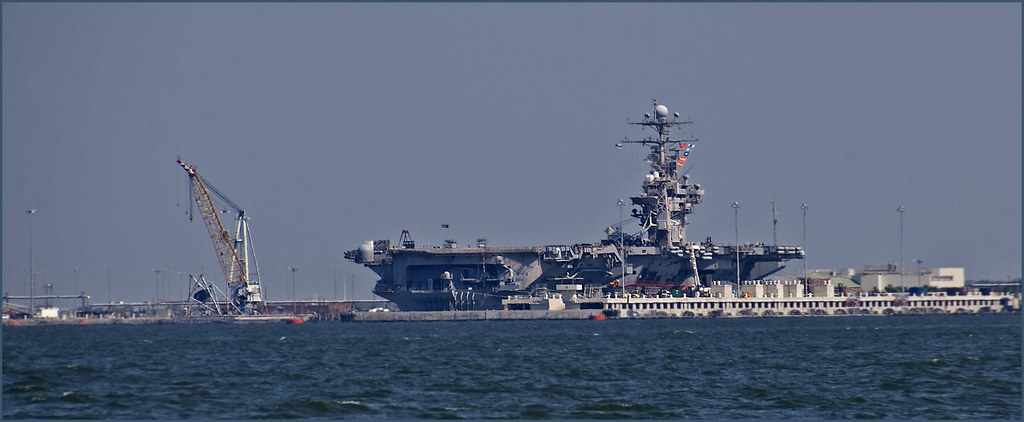
The standoff between the US and Iran, which cycles in and out of the spotlight, has now reached a critical juncture. With two carrier strike groups, namely the USS Abraham Lincoln and the USS Gerald R. Ford, leading these strike groups, accompanied by numerous destroyers and cruisers, this is the largest military buildup since the Iraq War in the region. A public ultimatum from President Trump multiplies the complexity of the situation and presents it before us as the textbook case for game theory.
Crucially, Trump’s unpredictability functions as a strategic asset in itself, invoking the “madman theory” of diplomacy: if Tehran cannot accurately calculate the risk of US action because the president appears irrational or impulsive, they are more likely to concede to avoid a catastrophic miscalculation.
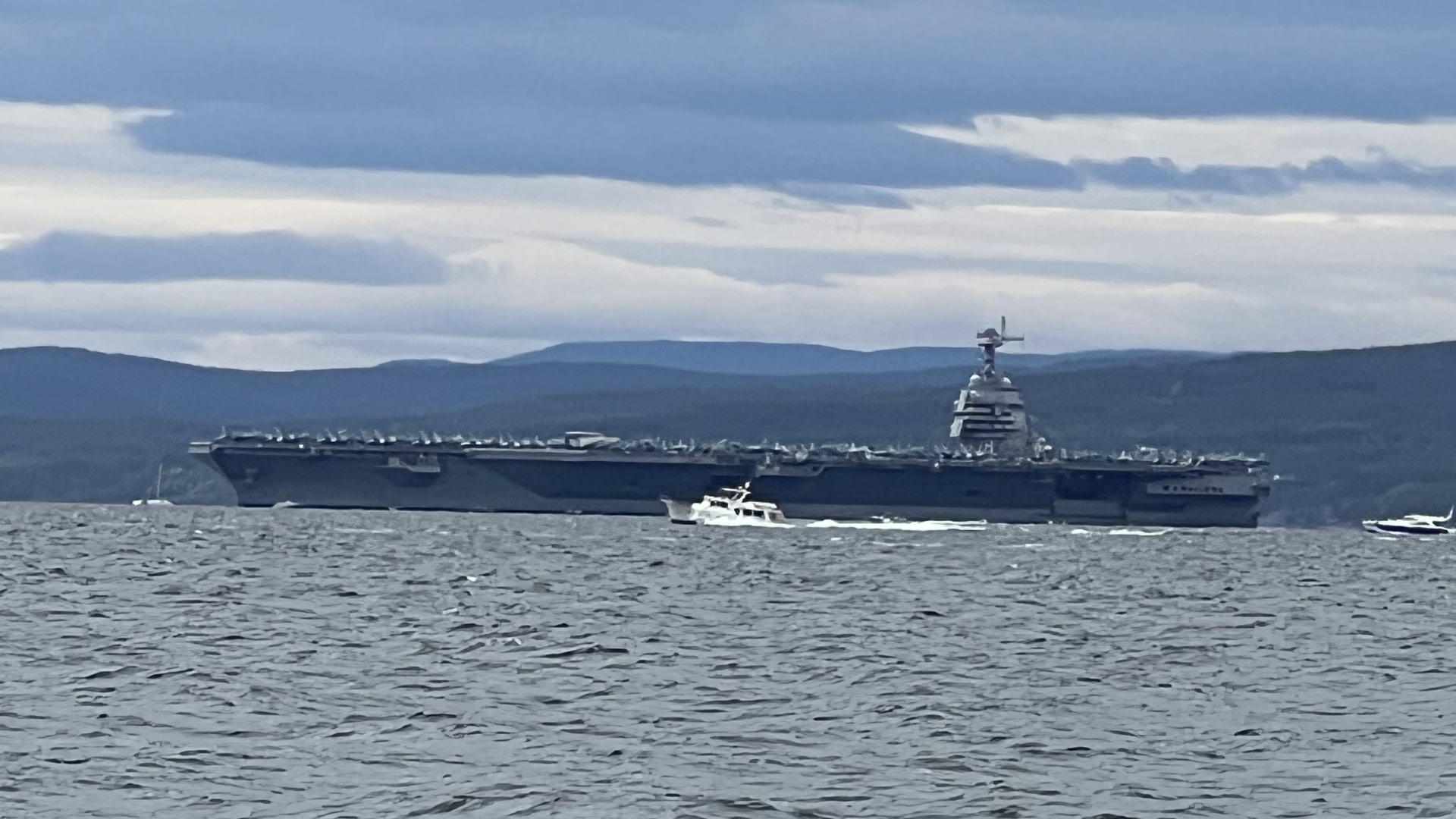
The carriers’ itinerary towards the Persian Gulf can only be fully understood through the disciplined logic and lens of game theory. When we begin to view the situation from this vantage point, we move beyond the floating narratives and start examining events through the cold calculus of strategic interaction. In this cold calculus, each action serves as a signal, every commitment is tested for credibility, and the shadow of catastrophic miscalculation looms over every decision.
It’s a game of chicken with asymmetric players and a complex payoff matrix. The core question is, “Can Trump afford to chicken out? What constitutes a win for each side? What cards does Iran actually hold? “To answer these, we must examine military capacity as well as the divergence in time horizons and risk tolerance between a democratic superpower and a revolutionary theocracy.
To analyze this, we need to define the players, their preferences, and the structure of the game that they are playing.
Foremost, we can say that it is a game of “nuclear brinkmanship.” We can model this as an escalation game. The US has moved its cards first and deployed a massive armada, a naval power, and issued a two-week deadline (though the deadline is now flexible). Iran’s response has been to not “capitulate,” as US envoy Steve Witkoff put it. He further expressed curiosity at their defiance. The upcoming talks in Geneva on Thursday are the next public move.
The Players
We have our Player A, which is the United States (Trump). Their stated goal is a new nuclear deal with “zero enrichment” by Iran and to force Iran to forsake its support to non-state actors in the Middle East—the Houthis and Hezbollah. The undemonstrated goals likely include demonstrating strength, avoiding a protracted Middle East conflict, which is cacophonous for its Middle Eastern allies, and maintaining domestic political standing. However, the US is not a fully free agent; Israel functions as a “shadow player” with its own red lines and the capacity to trigger a wider war independently, which fundamentally complicates Washington’s escalation control.
Player B, which is obviously Iran (Khamenei), has a core goal of regime survival. At first, their most formidable goal will be to avoid conflict by reaching a sort of agreement without being seen as a weak one, and the other most important goal, if the war actually happens, will be to prolong the conflict and not capitulate. Survival will constitute a win for Iran. It is vital to distinguish here between “regime survival” (remaining in power) and “strategic victory” (achieving regional hegemony). For Iran, simply outlasting the US military presence counts as a win, regardless of the damage sustained. Iran cannot let go of its nuclear infrastructure, which it deems both a deterrent and a symbol of national sovereignty and technological prowess.
The Moves and Payoffs: What Each Side Stands to Win or Lose
What moves and payoffs will define either a win or a loss for Iran? We need to break down the strategic options and their potential outcomes.
Trump’s Options
Trump’s first option is a kinetic action. This is the escalation move. The US will—undoubtedly—inflict significant damage. However, as the Pentagon’s warnings and the Sky News analysis indicate, the US probably only has thecapacity for a campaign lasting one to two weeks. This requires clarification: The US military plans in phases. The initial “shock and awe” air campaign might last two weeks, but this would transition into a sustained, lower-intensity strike campaign. The constraint is not a complete depletion of munitions but the rapid expenditure of high-precision, high-cost interceptors against a low-cost drone swarm—an unsustainable economic exchange rate for the Pentagon.
Additionally, as Gen. Dan Caine, the chair of the Joint Chiefs of Staff, cautioned Trump, a confrontation with Iran could significantly reduce the US’s supply of ship-launched interceptors, Patriots, and Terminal High Altitude Area Defense (THAAD) anti-missile missiles. Iran, on the other hand, would also retaliate with its might, using ballistic missiles to strike US bases and likely Israel. If Israel is struck and retaliates, the game fundamentally shifts from a bilateral US-Iran conflict to a US-Israel-Iran trilateral war, collapsing Iran’s carefully managed escalation ladder.
Furthermore, it is worth mentioning that Iran, unlike Iraq, is a far more formidable and powerful actor. A strike would not lead to capitulation; it would, rather, trigger a retaliatory war of attrition. The US may win the initial battle but inherit a protracted conflict against a nation with strategic depth, regional proxies, and a population that, while restive, often rallies to the regime under external attack. The payoff is a costly, indefinite conflict with no clear ‘victory’ condition, severely depleting US missile defenses in the process.
The second option that Trump can take is to forfeit the ground and walk away, resulting in de-escalation. This will be visible only when Trump sends the armada home. As many experts like Wald warn, this operation carries an immense political cost. Trump has drawn a public red line. Backing down would be perceived as weakness, emboldening Iran and its proxies, and damaging US credibility with allies. It will also damage Trump’s domestic approval. The payoff is strategic humiliation.
The third option is making a deal or accepting a negotiated outcome. This will be a “status quo” or compromise move. The talks in Geneva offer an off-ramp. Iran has signaled a willingness to negotiate, but “only” on its nuclear program, not its missile program or regional influence, which are again the main or key US demands. The US is reportedly considering a compromise allowing “token” enrichment under strict verification. For Trump, a deal—even a compromised one—allows him to claim he prevented a nuclear Iran and avoided war.
Iran’s Options
Iran’s leaders believe they can weather the storm. While the US faces high stakes and potential losses in a conflict, Iran’s main goal is simply not to capitulate. At this point, Iran feels it has very little left to lose, making its position much harder to shake. This asymmetry in “value at stake” is critical: the US is playing to win, but Iran is playing not to lose. In game theory, the actor fighting for existential survival usually has a higher tolerance for pain and risk than the actor fighting for policy compliance.
Iran has many unconventional weapons in its hands, one of which is asymmetric warfare and regional proxies. Iran doesn’t need to match the US Navy; it can inflict heavy pain through Hezbollah, the Houthis, and Shia militias in Iraq and Syria. Moreover, Iran is also getting significant support from Russia and China; it can become a testing ground for exogenous weaponry, potentially overwhelming US naval air defenses through coordinated saturation attacks.
The US is bleeding readiness and treasure just by being stationed in the waters. The US has deployed a massive, expensive armada. As the Jerusalem Post analysis notes, keeping it idle costs billions, but using it triggers a costly war. It is a situation of a suzerain cost. Iran’s fleet and missile forces, conversely, are quite cheap. Iran can afford a war of attrition far longer than the US can sustain its current high-intensity posture.
While Iran currently faces domestic dissent, an external attack might actually foster internal unity. Some experts argue that a “maximum pressure” campaign could backfire, leading to regime consolidation. Additionally, an attack during Ramadan would provide Tehran with a potent propaganda tool to mobilize regional sentiment. However, this “rally-round-the-flag” effect is a double-edged sword: while external threats unify, the ongoing economic misery from sanctions—which predate the current military standoff—remains the primary long-term threat to the regime’s stability, far more so than the risk of US bombs.
The central fear driving US policy is the Iranian”dash” for a bomb. While the June 2025 strikes pushed the timeline back to two years, the memory of Iran sitting just one week away from weapons-grade material provides Tehran with massive leverage. It’s the primary reason for the continued US presence. Iran understands that its latent nuclear capability doesn’t need to be realized to be effective—it just needs to be a credible threat to remain its strongest bargaining chip. This creates the ultimate paradox: the very capability the US seeks to eliminate is the only reason Iran has the leverage to force the US to the negotiating table. Therefore, the most probable outcome is not a dramatic war or a US capitulation, but a “muddling through” compromise—likely involving token enrichment—where both sides declare victory and walk back from the brink.
Conclusion
From a game-theory vantage, the only plausible equilibrium is a negotiated compromise. A full-scale US attack is irrational, not merely pertaining to the fact of logistical limits but because punishment by air rarely forces political submission unless it credibly threatens to seize territory, as coercion theory shows, as proved by Robert Pape. The armada, therefore, functions best as a bargaining chip: redeployed, it becomes leverage, not victory. On the precipice of mutual political ruin, the rational move is a shared step back—not weakness but survival.
If you want to submit your articles and/or research papers, please visit the Submissions page.
To stay updated with the latest jobs, CSS news, internships, scholarships, and current affairs articles, join our Community Forum!
The views and opinions expressed in this article/paper are the author’s own and do not necessarily reflect the editorial position of Paradigm Shift.

Mohammad Zain is an International Relations student at NUML, Islamabad. With an associate degree in English Literature and Linguistics and a BS in International Relations, he brings a unique blend of analytical and literary skills to his writing.