
The Generations of Warfare
The ongoing conflict in Ukraine and Palestine has garnered international attention as if rekindling the desire for peace amidst arousing conflicts. The question remains: Will that desire lead to a realization? History, regrettably, fails to offer a positive answer. Wars, the atrocious patterns etched in human history, have taken various forms throughout the ages (represented by the different generations of warfare). From the wars waged to assert authority and get attestation for strength to religiously driven crusades to modern-day terrorism, all have their share in scarring the records of the past.
War is synonymous with destruction and loss, whether it be as inflicting human resources or destabilizing financial response. The root of the war might be a desire for dominance, control, territory, or the affirmation of one’s political or religious beliefs. Depending on the cause, ultimate goal, and available sources, the limits for space, time, and people may change.
The concept of “warfare” pertains to the methodologies used in mobilizing and utilizing both human and weaponry resources while aiming at the achievement of a predetermined objective or goal. This includes researching the best ways to wage war, the best weapons to employ, the depth of thought required to understand situations clearly, and the best ways to convey orders.
Time is often blamed for erasing incidental details, but it gave warfare more nuance and complexity. Traditional military conflicts have given way to cyber warfare, and the intricacy of these conflicts only intensified. In 1989, William S. Lind coined the phrase “generation of warfare.” Theoretically, our world has been handling conflicts through five generations of warfare. What distinguishes one generation of warfare from the other is the military tactics employed and the direction reserved for focus. However, it is crucial to remember that conflicts might involve a combination of elements from different generations of warfare. For the most part, it is due to the dynamic nature of warfare.
First Generation Warfare
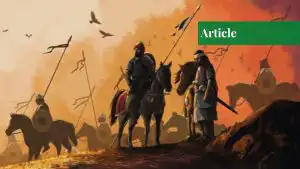
The history documents that this generation of war persisted from the ancient period to the late 19th century. This period, also called pre-modern warfare, witnessed large, centralized forces being engaged in positional warfare. In such times, emphasis was laid on line and column tactics. Battles were generally waged on a single battleground, thereby restricting the mobility of forces and resources. This era is famous for the use of smoothbore muskets and cannons.
First Generation Wars
- Battle of Megiddo
The forces of Egyptian Pharaoh Thutmose III engaged a coalition of Canaanite city-states in the Battle of Megiddo (approximately in 1457 BCE). This particular battle holds significant historical limelight as it is considered one of the earliest documented conflicts in recorded history.
- Trojan War
Within the approximate timeframe of 1194-1184 BC, the city of Troy and the Mycenaean Greeks fought this war, which was also immortalized in the Iliad.
- Assyrian Conquests
From the 14th to the 7th centuries BC the military expeditions launched by the Assyrian Empire were aimed at conquering territories and civilizations in the Near East.
- Persian Wars
During the period spanning from 499 to 449 BC, the fight of Greek city-states against the Persian Empire, which targeted the Achaemenid Empire in particular, started. Thermopylae, Salamis, and Plataea emerged as prominent battles within this historical context.
- The Battle of Marathon (490 BCE)
In this battle, which occurred during the Greco-Persian Wars, Athenians repulsed the first invasion of Greece in a single afternoon. This war resulted in the death of 6,400 soldiers from Persia while the death toll of Greek Soldiers was 192, comparatively much smaller than their rivals. This war is a notable illustration of how the superiority of weapons helped the Greeks win the war.
- The Peloponnesian War (431- 404 BCE)
This war, one of the most prominent wars of its time, was fought between two major city-states in ancient Greece, Athens and Sparta. It also included the majority of Greek city-states resulting in prominent battles between the allies from both sides. Thucydides, the greatest historian of all time, also documented it in his works.
- The Battle of Gaugamela (331 BCE)
On the Persians’ chosen ground, Alexander won an incredible victory despite being outnumbered. The Persian infantry in the center was exposed. Taking advantage of the situation, Alexander the Great and his personal cavalry broke through the Persian line and attacked their flank. As a result, Alexander seized control of Babylon, the capital of Persia, and Darius fled the battlefield. This and the other wars of Alexander employed the techniques labeled as the first generation of warfare.
- The American Revolutionary War (1775-1783)
Because of the British attempts to increase control over colonial affairs, tensions between the British crown and its colonies in North America grew. Initially, it was a civil war inside the British Empire; the fight eventually expanded its spectrum when France and Spain joined the colonies in their opposition to Britain. The British used their navy, and, thus, the outcome of the war was largely determined by sea power. In the end, the Americans were successful in breaking away from British rule.
- The Battle of Waterloo (1815)
The Battle of Waterloo marked Napoleon’s final defeat, concluding the 23 years of war between France and other forces from Europe. It was a first-generation war as it relied on the number and skills of the troops. British, Dutch, Belgian, German, and Prussian forces in alliance, against Napoleon concluded his era.
Second Generation Warfare
The timeframe continuing from the late 19th-early 20th century (1840s-1918), is discernible as the second generation of warfare. With the advent of mass production, railways, and telegraphs, warfare tactics were greatly influenced during this period. This era is notable for the deployment of industrialized mass weaponry and sophistication in weapons.
Machine guns and rapid-fire artillery, to name a few examples of technological advancements in this warfare welcomed the rise of trench systems, warfare, and attrition-focused strategies. The time period is easily referred to as the era of industrialized warfare, during which it was for the first time ever easier than ever to launch an attack and trigger massive destruction on a foreign country.
Second Generation Wars
- The American Civil War (1861-1856)
This was a war between the United States (Union) and 11 Southern American states that seceded from the Union to form the Confederate States of America. The prime cause proved to be the rights of states, or, in other words, the conflicts between pro-slavery and anti-slavery forces. The reliance on rifles, weapons, trench warfare, and so on makes it obvious that this is a second-generation war.
- The Crimean War (1853-1856)
The Crimean War was fought between Russia and the British, French, and Ottoman Turks, with support from Sardinia-Piedmont. The war resulted in major battles and sieges. This war is clearly of the second generation, as evidenced by Austria’s threat to join the Allies and Russia’s acceptance of tentative peace terms. The war further deployed artillery and musket fire.
- The Russo-Japanese War
From 1904 to 1905, Japan was being fought by the Russian Empire. This timeframe also accompanied the strategic deployment of formidable artillery, machine guns, and trenches—in other words, industrialized warfare.
- The Franco-Prussian War
In the Franco-Prussian War, Napoleon III led the French Empire, and King Wilhelm I ruled the Kingdom of Prussia. This war, encompassing the years 1870-1871 proved to be a record for assessing the effectiveness of rapid-fire breech-loading rifles, artillery, and fortifications.
- Boer Wars (1880-1881, 1899-1902)
During the aforementioned conflicts, the Boer forces engaged in guerrilla warfare, while the British employed a centralized formation consisting of infantry and artillery.
Third Generation Warfare
It continued into the mid-20th century. The recognized features of this theoretical class of warfare are maneuver warfare (aimed at perishing the human and military resources of the rival and their willpower to fight), adaptability amidst changing landscapes of battles, combined arms, and the use of indirect firepower.
The third generation marked a shift towards mechanized warfare and the integration of air power. It emphasized speed, combined arms operations, and the concept of blitzkrieg. These tactics were best illustrated as the German blitzkrieg tactics in World War II to knock out the rivals in relatively smaller assaults before the biggest blow.
Tanks, planes, and highly mobile infantry allowed for quick advances and the encirclement of the opposition. The opponents suffer severe resource loss as a result, which saps their will to continue fighting. One key advantage of this generation’s tactics is the blurred line between frontline army and combatants.
Third Generation Wars
- The Battle of France
During World War II, the German forces attacked France in 1940 using blitzkrieg strategies, marking it as a third-generation war.
- Vietnam War(1954-1975)
It was the surmounted conflict between North Vietnam in an alliance with communists and South Vietnam, which had the United States and other allies. Vietnamese forces relied on a decentralized network. Support from local villagers, for example, depicts how the military scenario shifted from conventional warfare to asymmetric warfare and the use of propaganda.
- Soviet-Afghan War (1979-1989)
It was the invasion of Afghanistan by the Soviet Union; the USSR aimed to support the Afghan communist government against the Mujahideen. The non-state actors from Afghan rebel groups utilized the tactics of the third generation of warfare. For example, local support networking, occasional attacks to deepen the damage, decentralized planning against centralized Soviet Union forces, and dependence on information warfare and propaganda.
- Gulf War (1990-1991)
Iraq invades Kuwait in the aforementioned timeframe and the United States, leading an international coalition, starts a military operation to free Kuwait. The military strategy in the war makes use of advanced technology and information warfare, such as precision-guided missiles, electronic warfare, and a network-centric approach to warfare.
- Yugoslav Wars (1991-2001)
These wars include a series of conflicts wars on ethnicity arising from the breakup of Yugoslavia. The wars in Slovenia, Croatia, Bosnia, and Kosovo are included in the series. This war also witnessed guerrilla warfare tactics, decentralized armed forces, the use of modern weapons and technology, such as artillery and long-range missiles, and aerial bombings. The use of media to inform and impact the globe about the happenings was also observed.
- War in Afghanistan (2001-2014)
The United States invaded Afghanistan after the events of September 11, 2001. NATO allies also facilitated US efforts to thwart the Taliban regime. This war, obviously dedicated to curbing the menace of terrorism, employed third-generation war tactics including but not limited to insurgency, counterinsurgency, and decentralized approaches. Taliban forces, the Afghan government, and the US allies all were found to be employing them.
- The Iraq War (2003-2011)
America’s military intervention, aimed at ending Saddam Hussein’s regime, employed non-state actors, insurgency, and asymmetrical elements. In a nutshell, a blend of conventional and decentralized expeditions characterized it as a third-generation war.
Fourth Generation Warfare
The fourth generation of warfare, first mentioned in 1989 by William S. Lind, is the current generation of war. It involves a blend of politics and armed forces. It is characterized by non-state actors and asymmetric warfare.
In contrast to the third and second generations of warfare, where the utilization of firepower is of great importance, the fourth generation of warfare is distinguished by a combination of political, economic, social, religious, and military strategies and resources. Along with unconventional tactics, guerrilla warfare, and information warfare against conventional military forces, another defining focus is the psychological dimensions of conflict.
The debate on the classification of wars in this type of warfare is far from settled. Hence, the theoretical framework of this generation does not particularly specify the wars. Military strategists and theorists label some techniques employed in the Soviet-Afghan War and the wars in Iraq and Afghanistan as belonging to this generation.
Fourth Generation Wars
Wars with tactics from the fourth generation are described below.
- War in Afghanistan
In this conflict, the strength of non-state actors (Afghan Taliban and other armed forces) deploys asymmetric strategies pertaining to the fourth generation of war. Their combat against conventional forces includes improvised explosive devices (IEDs), propaganda operations, and information warfare. The boundary between politics, the army, and citizens is also blurred, marking it as a fourth generation war as well.
- Iraq War (2003-2011)
In response to the US invasion, non-state actors such as Sunni and Shia militias, jihadist groups, and former Ba’ath loyalists began rebellion. It again includes the other tactics of the fourth generation, such as suicide bombings, guerrilla warfare, and information warfare.
- War in Syria
In 2011, the Arab Spring uprising ignited the Syrian Civil War, which grew into a multi-faceted conflict. It encompasses the armed forces of the government, rebels, extremist organizations, and local citizens. The irregularity in strategies and the power of non-state actors for example ISIS characterize it as a fourth generation war.
- Israel-Palestine War
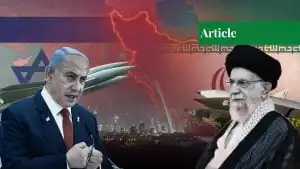
The ongoing conflict between Israel and Palestine is another manifestation of fourth generation warfare. The recent unforeseen attack launched by Hamas on Israel and the reaction by Israel stands as a prominent exemplification of this phenomenon.
Fifth Generation Warfare
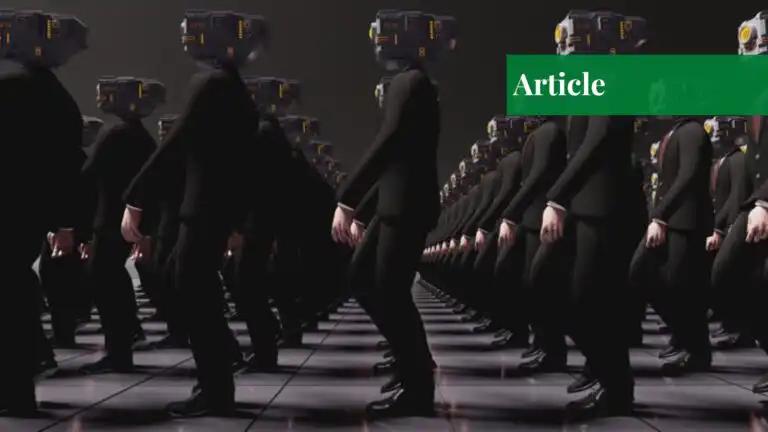
As of now, the fifth era of fighting is an idea that is arising and finding ways to execute. In this generation, conventional and non-state actors’s wars engage advanced technology, be it as an information resource, propaganda, or weaponry. The involvement of cyber and artificial intelligence warfare is the key element here.
Decentralized networking contributes to adding nuance to the identification of which actor is responsible for what to the rival. It is challenging for the opponent to understand what their rival is planning due to the dynamics of the strategy of the fifth generation. In this hybrid warfare, the focus is to manipulate and exploit weaknesses in networks and systems.
In the past, some theorists had argued it was more of an intellectual construct and not an established categorization of warfare like traditional classifications such as conventional or guerrilla warfare. However, historical evidence substantiates that the changing demands of battlefield introduced the changes in how battles were waged in years before. Thus, the dynamics of warfare will continue changing and the implications are already manifested in ongoing conflicts.
What Can Humanity Learn from the Concept of Generations-long War?
As per the demand of the dynamic situation of the military landscape, the ways of fighting have changed. The ways to exploit and defeat the opponent have progressively evolved, but the methods through which one can perish have knitted brutality in the fabric as well. In certain circumstances, the war is inevitable. One such instance is when a nation is compelled to defend itself against a clear threat to its non-violent orientation. However, the world is connected geo-strategically and geo-politically.
In the contemporary age of advancement, whether it is the traditional fields (advanced weapons and nuclear weapons, for example) or the war beyond it (such as information and cyber warfare) when one part of the world is jeopardized, the situation poses a threat to all parts of the world. The Israel-Palestine war is a current example. Thus, whatever the reasons are, it is important to prudently ensure the security and safety of innocent lives on both sides. This is the way to peace.
Conclusion
History is replete with instances of violence and bloodshed. The conception of a generation of warfare, dividing it into five generations, was introduced to find what discerns the war of one period from another. The first generation of warfare involved the concentrated use of human resources and forces with pertinence to the geographic position; the second generation involved the use of industrialized weaponry.
The use of firepower and mobile infantry discerns the third generation and the fourth involves the combination of military and political forces using a decentralized networking approach. The fifth, an emerging generation, involves the use of advanced information warfare and cyberwarfare. Thus, the dynamics of conflict necessitate novelty in the methods of conducting wars. However, because of interconnectedness in this age, mankind has yet to discover the price that a war in one region of the world may exact on the entire planet.
If you want to submit your articles and/or research papers, please check the Submissions page.
The views and opinions expressed in this article/paper are the author’s own and do not necessarily reflect the editorial position of Paradigm Shift.

Fiza Bibi Ameen is a gold medal qualifier in BS Physics from Riphah International University, Islamabad. She also contributed a prize-winning submission to the HEC inter-university essay writing competition held in 2022. She enjoys researching and writing about science, technology, and informative topics in various niches. She is also a freelance writer.