
Contrasting governance systems, democracies, and dictatorships shape the lives of millions, highlighting the spectrum of political power and citizen engagement worldwide. The world’s largest democracies showcase the power of participatory governance. On the other hand, the world’s largest dictatorships exemplify centralized control.


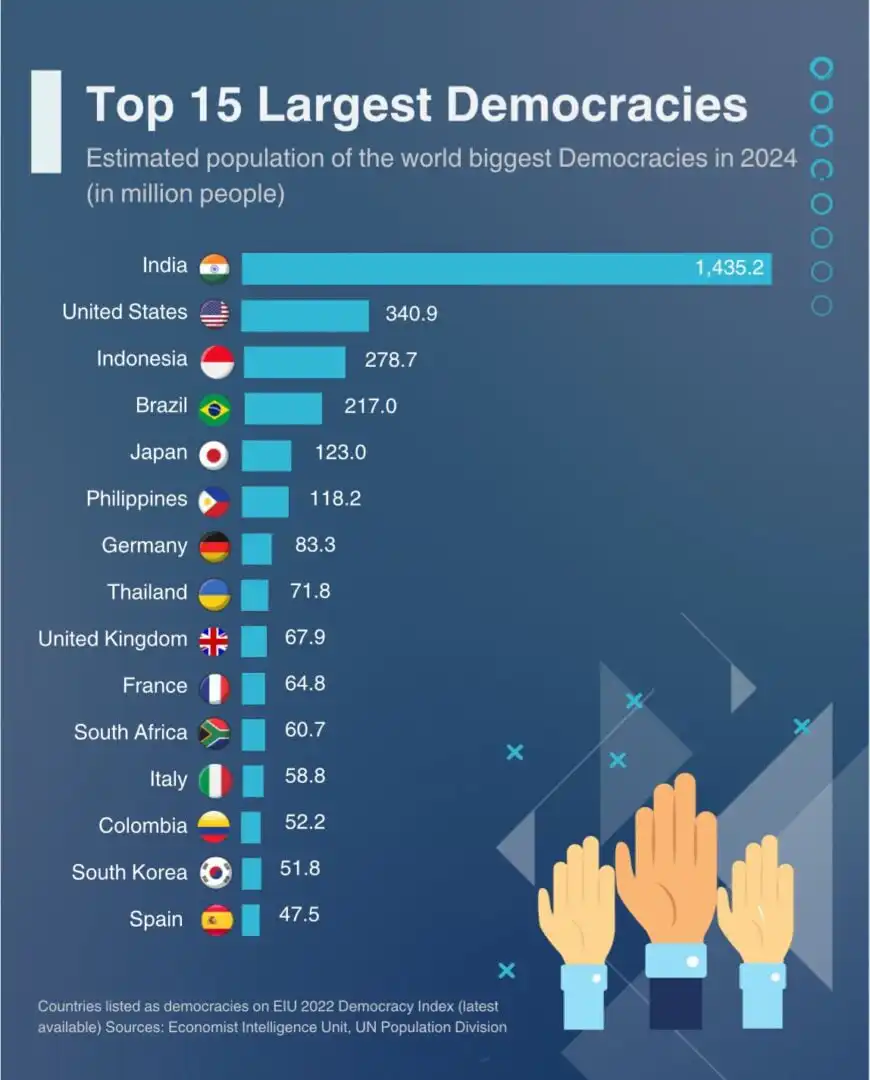
While discussing the world’s largest democracies, India, with over 1.4 billion people, is the largest democracy, operating under a federal parliamentary system with regular elections and a diverse political landscape. The United States, with a population of 340 million, is known for its two-party system and a strong framework of checks and balances. Indonesia, the third-largest democracy, governs over 270 million citizens through a presidential system with direct elections, reflecting its commitment to democratic principles.
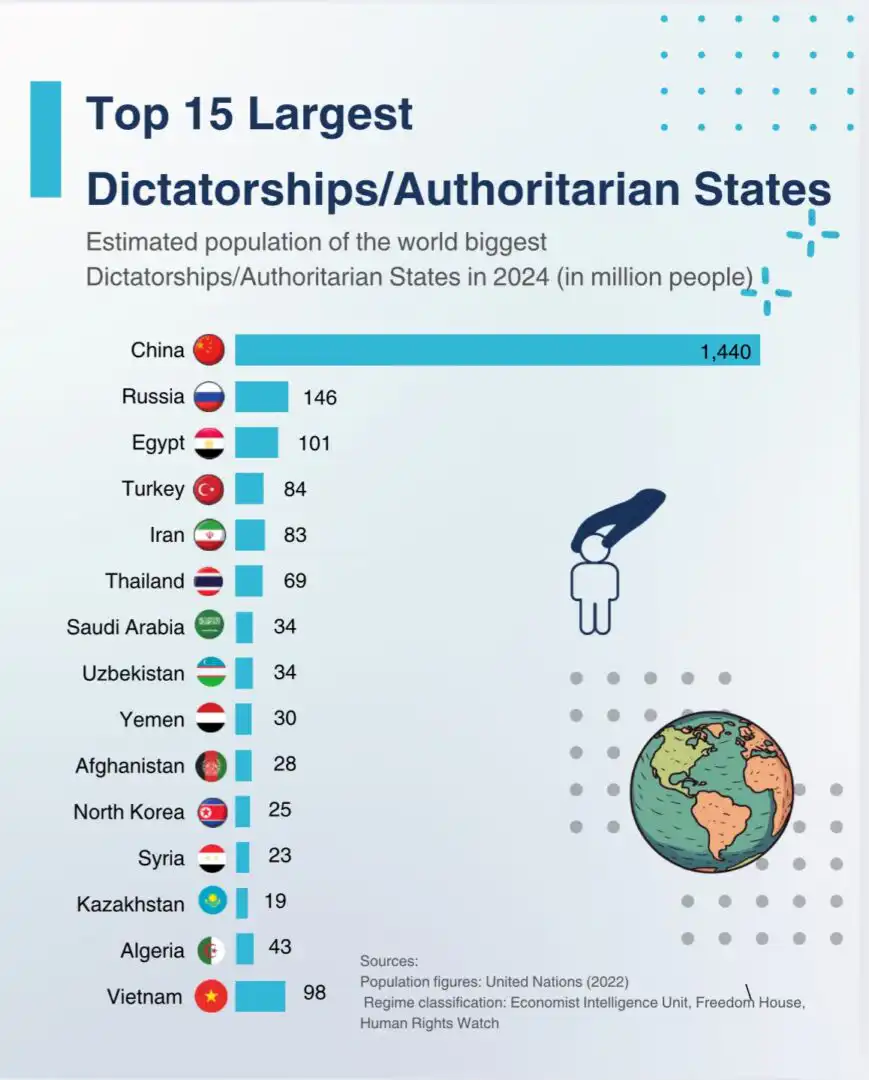
China, with a population of 1.4 billion, is ruled by the Chinese Communist Party under a one-party system. Russia, home to 146 million people, is led by Vladimir Putin in a centralized system that suppresses political opposition. Meanwhile, Egypt, with a population of over 101 million, operates under a government that tightly controls political dissent, media, and public expression.
If you want to submit your articles and/or research papers, please check the Submissions page.

Laiba Mehdi is pursuing her bachelor's in visual communication and design. She enjoys designing and hopes to use her skills to make a difference.