
The “Be Ready” Campaign
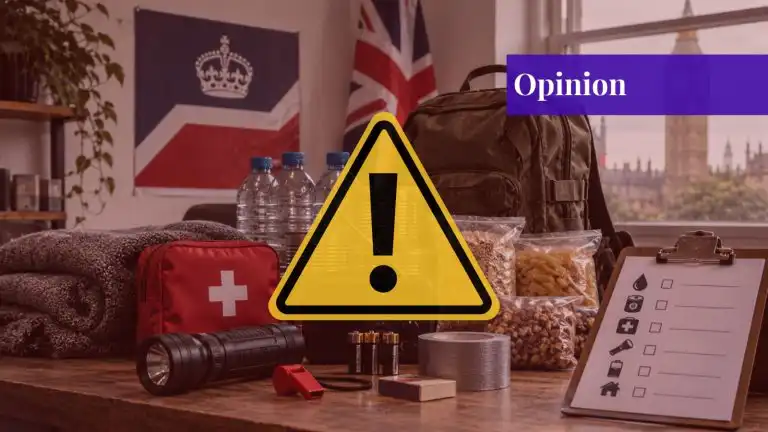
An unusual message was issued by the British government to households across the country: prepare for potential emergencies by maintaining a three-day supply of basic items. The recommended items include nine liters of bottled water per person, dried fruits, tinned meat, wet wipes, a torch, and a battery-powered radio. The campaign is called Be Ready. On October 22, the Cabinet Office launched the nationwide campaign, which is expected to continue for three years.
Government recommendations to maintain food reserves at home often create public concerns. The main question being asked by British households is whether these measures are proposed for a potential conflict with Russia or to protect households from other risks, such as cyberattacks and severe weather.
The campaign indeed addresses all three issues, yet government representatives have been cautious in explaining its objectives. Prime Minister Andy Burnham stated that the purpose was to motivate households to keep sufficient supplies for unexpected disruptions and not to incite panic. Defense Secretary Wes Streeting also emphasized that the recommendations were proposed to strengthen national preparedness and were not based on specific intelligence threats. This reassurance is partly true, but it is also partly deceptive, as the evidence demonstrates why.
The Campaign’s Concerns
The campaign highlighted three main concerns. These are as follows.
Extreme Weather
In the following year, Britain experienced five consecutive heatwaves and extended periods of dry weather. These extreme weather events posed a serious threat to agricultural production, with the potential to damage harvests, reduce food provisions, and increase dependence on foreign imports. Therefore, recommending households to maintain three days’ worth of canned food is not paranoia; it is arithmetic.
Cyber Threat
Due to persistent vulnerabilities in internet programming languages, Streeting has cautioned that cyber incidents are expected to increase in the near future. On September 4, a major security flaw interrupted the online services in Britain. Similarly, on November 2, hackers targeted supermarket freezers across the Scandinavian region, causing disruptions in food supply chains. Officials have also warned that Russian hackers are aware of vulnerabilities in the food supply system, which they might exploit. This is the central issue of the debate. A potential future conflict involving global powers might not begin with military assaults. Instead, it could start with closed ports, the unavailability of payment networks, and supermarkets struggling to maintain their shelves stocked with food.
War
Streeting has stated that Britain must be prepared for a possible war within the next 1,000 days, as its adversaries could launch an attack by 2030. Russia has also declared British amenities in Ukraine as legitimate targets. These developments suggest that the threat of war is real. However, this does not mean a military invasion. The 1,000-day warning refers to other forms of conflict, such as drone incursions, damage to undersea communication cables, sabotage, and ransomware attacks on food distributors. Therefore, maintaining basic food supplies at home can help households to cope with these challenges.
Because of these mutual concerns, governments across Europe are encouraging households to keep emergency stocks at home. Germany has advised households to maintain a three-day food supply, whereas France recommends a ten-day reserve. EU policy documents identified extreme weather, cyberattacks, and geopolitical tensions as threats to maintaining emergency supplies. These campaigns send a clear message: strong economies do not emerge by chance; they require preparation.
Limitations
However, the policy has certain limitations that deserve closer examination.
British households have raised a fundamental question, i.e., why is the government transferring the responsibility for emergency preparedness onto them instead of managing it?
This criticism needs to be addressed. Maintaining emergency supplies at home offers a practical form of protection. Disaster management experts stated that prepared households allow emergency services to assist the most vulnerable. However, the ability of a country to manage emergencies depends on much more than households’ preparedness. National resilience requires well-tested emergency plans, uninterrupted food supplies, and a reliable electricity supply. Storing emergency supplies at home cannot guarantee national security. The burden of managing emergencies will increasingly fall on households if the government relies on households’ preparedness as an alternative for infrastructure investment.
The success of the Be Ready campaign should not be evaluated by the number of households that follow the recommended measures, but rather by the government’s commitment to strengthen its emergency system. To conclude, attaining national resilience requires both households and the government to fulfill their respective responsibilities.
If you want to submit your articles and/or research papers, please visit the Submissions page!
To stay updated with the latest jobs, CSS news, internships, scholarships, and current affairs articles, join our Community Forum!
Find our FREE quizzes and MCQs here!
The views and opinions expressed in this article/paper are the author’s own and do not necessarily reflect the editorial position of Paradigm Shift.