“Be extremely subtle, even to the point of formlessness. Be extremely mysterious, even to the point of soundlessness. Thereby you can be the director of the opponent’s fate” (Sun Tzu, Art of War)
In the modern era, we are living in grey warfare zones, whereby the line between peace and conflict has been blurred. Neither absolute peace nor absolute conflict exists. Even during peacetime, clandestine operations and skirmishes occur every time. Countries are always engaged militarily with their rivals. The modern structure of warfare is just like an onion, which has so many layers, one after the other.
On the same note, wars have layers, including unconventional, conventional, sub-conventional, or covert missions. Thus, the role of special forces of a state has now become much more important than ever. Although nearly all states have elite military units, few are regarded as world-class commandos. And Pakistan’s Special Service Group (SSG) lies in this category – one of the best special forces units in the world.
What is SSG?
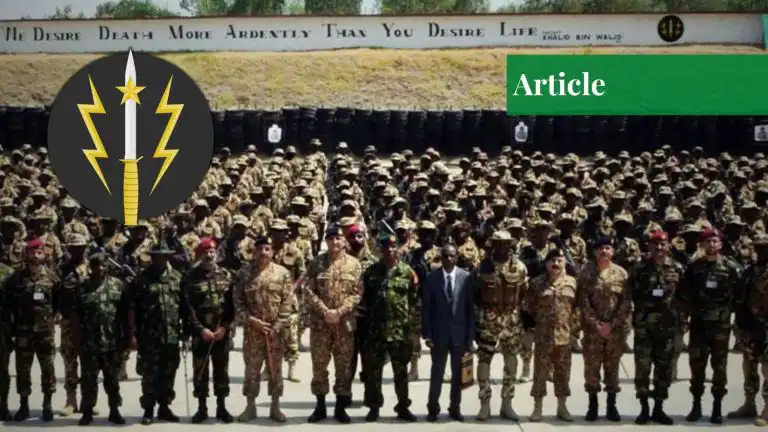
The Special Services Group is a highly specialized Special Operations Force of the Pakistan Army. They have also been referred to as the “Black Storks” and the “Maroon Berets” and are known under the Codename “SSG.” SSG is led by a Major General. The SSG force, which is a force similar to the Special Operations Forces of the US Army and the SAS of the British Army, is very important in enhancing the regular forces’ offensive power against enemies.
Formation of SSG
The establishment of SSG can be traced back to 1948, when Pakistani northern tribesmen infiltrated into the Kashmir Valley to fight the oppressive Hindu regime. The newborn Pakistan Army learned similar lessons from the roles played by Germans and allies throughout World War II about the advantages of having a skilled, elite military force capable of carrying out sabotage operations behind enemy lines.
The Pakistan Army was successful in establishing a special forces battalion inside the current Baloch Regiment in 1953–54. After establishing its new headquarters at Cherat, KPK, it was at first classified as the 10th Battalion, but it soon gained promotion to the 19th Battalion in 1956. The first CO of this battalion was Lieutenant Colonel Abu Bakr Osman Mitha.
Role of US Special Forces
As part of a mobile training team, a few special operatives of the CIA and the U.S. Army’s 10th Special Forces Group (Airborne) arrived in Pakistan in March 1964 to assist the Pakistani army in establishing its first airborne school in Peshawar. To assist in preparing SSG members for airborne missions, four riggers from the US Special Forces arrived.
The US ‘Military Aid to Pakistan’ (US MAP) initiative included this help. Additionally, Pakistani SSG officers also received sophisticated training at Fort Bragg and Fort Benning. Because of this close interaction, SSG has adopted similar training methods and operational principles to their American counterparts.
SSG Insignia
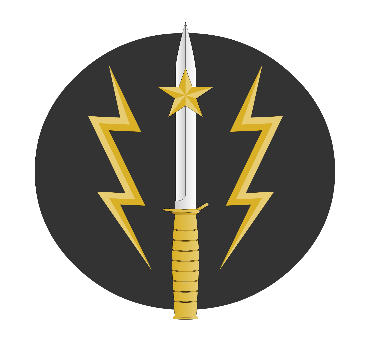
The logo of SSG represents a poniard with lightning bolts, which depicts strength, accuracy, and readiness. The motto of SSG is “Faith, Piety, and Jihad for the sake of God.”
SSG Commando Uniform
This includes a red beret with a silver-colored metal tag placed on a light blue felt square. The commandos use the United States Army woodland pattern camouflage. Furthermore, there is a golden SSG para-wing that is worn by them on the right side of their chest, which differs for master parachutists and riggers. Also, the SSG badge, which has a dagger encircled by lightning bolts, is placed on the left shoulder. While qualifications are represented on the right shoulder.
Selection Process
Only individuals who have worked in any division of the Pakistan Armed Forces for at least two years are eligible for recruitment into the SSG. Additionally, foreign nationals are also chosen via the appropriate international channels. One component of the selection process is a very competitive screening test.
In this assessment, candidates are subjected to a barrage of intelligence and aptitude tests. Following their selection, they are given a three-year assignment inside the SSG. Provided they maintain the rigorous physical routine and maintain a medical status of “aye,” enlisted men are eligible for indefinite service with the SSG.
Training Modules
Every trainee attends a nine-month foundational commando training program at Cherat. The fundamental SSG course places a strong emphasis on rigorous physical training, such as exhausting forced marches of 58 kilometers that must be finished in 12 hours. Trainees are also required to complete an 8 km run with full equipment on their bodies in less than 40 minutes. All SSG candidates must complete and pass the final four-week para-training course at the conclusion of this nine-month program.
After completing five-day and two-night jumps, SSG commandos eventually earn their wings and the much-sought-after maroon berets. The newly inducted commandos also complete a 25-week advanced commando course after finishing the fundamental commando training. Operators only become indispensable members of the SSG at the conclusion of these two demanding stages.
How do SSG commandos operate?
SGG commandos infiltrate the target area either by land, air, or sea. Land infiltrations occur through cross-border interventions. This is done through civilian-style covert movements as well as utilizing clandestine intelligence networks to penetrate the enemy’s mainland. On the other hand, free-fall parachutes are used for performing either a HALO (high altitude, low opening) or an HAHO (high altitude, high opening) jump in air insertions. With a HALO jump, the chute is opened at a low altitude on enemy territory.
But in the case of HAHO jumps, the parachute is opened at a high altitude on the home territory, near the border, and is controlled towards the specified landing zone in enemy territory. Likewise, infiltration via sea is done through small boats or cargo ships landing in enemy territory. Special Marines can also infiltrate through swimming or diving using special underwater gear and equipment.
SSG-N and SSW
The Pakistan Navy Special Services Group (SSG-N) is the elite naval unit of the Pakistan Armed Forces. It was established in March 1967. It is also known as the Pakistan Navy SEALs. These marines specialize in conducting littoral operations, maritime counter-terrorism, and underwater warfare. On the other hand, the Special Service Wing (SSW) is the elite. special operations unit of the Pakistan Air Force. It was established in 1999. Air insertions, aerial strikes, and recovery missions are conducted by SSW operatives. All these three special services units of the Pakistan Armed Forces, including SSG, SSG-N, and SSW, operate as an integrated battle force to inflict heavy blows on rival forces.
Major Operations
| Pakistan International Airlines Flight 544 hijacking (1981) |
| Pan Am Flight 73 hijacking (1986) |
| Lal Masjid siege (2007) |
| PNS Mehran base attack (2011) |
| Jinnah International Airport attack (2014) |
| Peshawar school massacre (2014) |
| PNS Mehran base attack (2011) |
| Quetta police training college attack (2016) |
International Interactions
The Turkish Special Forces, under the “Ataturk” exercises, have been participating in biannual drills with the SSG. Similarly, SSG conducted several similar training drills known as “Inspired Venture” with U.S. Special Forces. In addition to their own training course, the Chinese Special Forces and SSG have a joint training program dubbed the “Youyi Exercises.” SSG also works with several Middle Eastern special forces units, such as Saudis, Iranians, and Jordanians. These exercises include parachuting, along with mountain fighting, tactics, raids, and ambushes, and weapon handling and use.
Conclusion
The Special Service Group (SSG) not only represents the elite military unit of the Pakistan Armed Forces but also projects the invisible hands of power, deterring enemy attacks even before they emerge on the surface. Unlike regular armed forces divisions of Pakistan, the SSG works behind the scenes, preserving its secrecy while showing signs of its presence behind the enemy lines simultaneously. In essence, it’s the spirit of our Armed Forces and Special Operations Units that has enabled our country to touch the heights of strategic competence and a secure future for our people.
If you want to submit your articles and/or research papers, please visit the Submissions page.
To stay updated with the latest jobs, CSS news, internships, scholarships, and current affairs articles, join our Community Forum!
The views and opinions expressed in this article/paper are the author’s own and do not necessarily reflect the editorial position of Paradigm Shift.

Syed Hammad Ali is pursuing a BS in International Relations programme from the International Islamic University, Islamabad, and has a keen interest in research works, policy analysis, defence and strategic studies, and conflict resolution.