Bread and Circuses: An Old Formula of Control
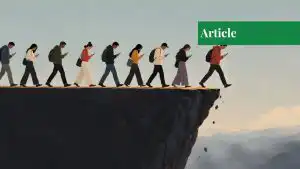
The Roman elite understood something that has never stopped being true: keep people fed and entertained, and they will not notice what is being taken from them. The formula has simply modernized. Sensational news, an algorithm engineered to hold attention, endless outrage cycles, and in a great many countries the sheer grind of getting through the day, all serve the same function they always have.
They keep the public watching the spectacle in front of it, rather than the machinery behind it. The French theorist Guy Debord called this the “society of the spectacle.” He meant that we live in a world where images take the place of life, where, instead of actually being part of what is happening, we just sit back and let images distract us.
Klein’s Sharper Name for the Pattern
Naomi Klein gave this process a sharper name in The Shock Doctrine. She explains that crises are not tragedies people simply have to deal with. Instead, crises are opportunities that get used. When there is a moment of shock—war, disaster, or economic collapse—people feel too scared or too tired to fight back. This makes a moment of shock the time to push through big changes that would never work if people were calm and thinking clearly.
This is not hypothetical; it has a well-documented track record.
After the 2003 invasion of Iraq, Iraq’s economy was quickly changed. State industries were opened to ownership. Trade barriers were removed. A new economic order was put in place while Iraq was still feeling the shock of war, with far less public discussion than a change of this size would normally bring.
Katrina, Greece, and Sri Lanka: The Pattern Repeats
After Hurricane Katrina, New Orleans’ public school system was almost completely replaced with privately run charter schools within a few years, a transformation that education reformers had wanted for decades. It happened rapidly once the disaster removed political resistance.
During Greece’s debt crisis, austerity programs were pushed through under emergency conditions. Public assets such as ports, airports, and utilities were sold at a pace that normal politics would likely never allow. More recently, Sri Lanka’s 2022 economic collapse was followed quickly by IMF-directed reforms that reshaped the country’s fiscal and ownership structures, decided while the public was standing in fuel queues and dealing with blackouts, not reading spreadsheets. Different countries, different decades, the same shape: the emergency arrives, and somewhere inside it, the deal gets done.
When Distraction Isn’t a Choice
And in a great many countries, staying focused on “elsewhere” is not always a choice. Daily violence, relentless news cycles, and social media overload keep attention fractured by design. But it is not only a distraction engineered from above; it is a distraction produced by circumstance. Unemployment, hunger, and exhaustion are not merely unfortunate side effects of dysfunction.
They are, functionally, some of the most efficient tools ever devised for keeping a population away from the room where decisions are made. A person working two jobs to keep food on the table does not have the bandwidth to interrogate a privatization deal buried on page nine. Survival mode is not a metaphor; it is a full-time occupation, and it leaves little room for anything else, including scrutiny of the people making decisions on everyone’s behalf.
A Citizenry Too Tired to Speak
The political theorist Sheldon Wolin described a version of this as “inverted totalitarianism,” a system where control is maintained not through overt repression, but through a citizenry so consumed by economic precarity and manufactured spectacle that it simply stops participating in its own governance. No one has to silence the public when the public is too tired to speak.
This is worth sitting with plainly: in a lot of countries, violence, hunger, and unemployment are not simply the unfortunate by-products of dysfunction. They are, practically speaking, among the most effective mechanisms available for pulling real-world decisions away from the eyes of the ordinary person. Whether by design or by convenient neglect, the effect is identical: the people with the least power to influence a decision are also the people with the least capacity to even notice it is being made.
It now walks through the actual loop you described: hunger keeps someone thinking about the next meal. Not the next policy; unemployment turns the day into a job search, not a search for context; daily violence keeps the body on alert in a way that makes patient reading feel like a luxury, and together they form a cycle where today’s exhaustion becomes tomorrow’s missed bill, becoming next week’s distraction, closing the loop before anyone looks up.
Closer to Home: Pakistan’s Own Pattern
Pakistan has lived a version of this story too, and it did not need a single dramatic headline; it happened in stages, spread across years, while the public was occupied with everything else. Beginning in the early 1990s, the state began selling off major public enterprises: two national banks, dozens of industrial units, and shares in the gas sector, all within a few years.
The process continued for over a decade. By 2006, more than 160 state-owned enterprises had been sold or transferred, including institutions the public had grown up thinking of as permanently national: Pakistan Telecommunication Company Limited (PTCL) and the Karachi Electric Supply Company (KESC, now K-Electric). PTCL’s sale alone brought in over two billion dollars. KESC changed hands more than once, passing between different foreign owners over the following years.
It was not only industry and utilities. Around 2008 and 2009, following a global spike in food prices, the government began offering large tracts of agricultural land, reportedly hundreds of thousands of acres, with proposals discussing millions more for lease to foreign investors, largely from Gulf states, under multi-decade agreements.
The land itself never left Pakistan, but the right to decide what grows on it and who it feeds first shifted quietly into the hands of outside investors and the economists structuring the deals. Most people were not in the room when these terms were set, and most did not hear about them until long after the ink was dry.
None of this is presented here as a scandal or an accusation against any one government. It is simply the same mechanism the rest of this piece describes, playing out on familiar ground: while public attention was on inflation, politics, or the next crisis, land and infrastructure that belonged to everyone quietly became something owned, leased, or managed by a much smaller group of people.
What Are We Not Seeing Right Now?
None of this requires a grand conspiracy to be true. It requires only what history keeps demonstrating on its own: that crises are useful to the powerful, that distraction is cheap and effective, and that a population busy surviving rarely has the room left to ask who benefits from what is happening just outside its field of view.
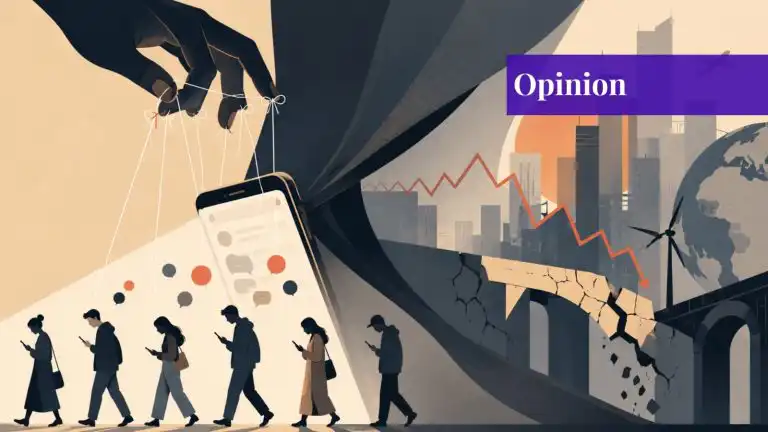
So start applying this lens to everything in front of you. The next time a scandal breaks, a crisis dominates every feed, or a tragedy pulls the entire country’s attention toward one screen, pause before getting fully absorbed into it. Ask two questions instead of one: what is happening onstage, in plain view, that everyone is being asked to watch? And what is happening behind the curtain, in the same moment, while every eye in the room is fixed on the stage? History suggests the second question is rarely asked in real time; it’s usually only answered years later, in hindsight, once the deal is already done and the moment has passed.
That is the only real shift this piece is asking for. Not outrage, not certainty about who is to blame, not a grand theory of everything. Just the habit of looking twice: once at what we’re shown and once at what moves while we’re busy watching it. It costs nothing, and it is the one thing that consistently gets skipped.
So the question worth leaving with is a simple one: what are we not seeing right now, and who benefits from our not seeing it? We are not powerless. Most of the time, we are simply distracted. The real question is what happens the moment we finally look.
If you want to submit your articles and/or research papers, please visit the Submissions page.
To stay updated with the latest jobs, CSS news, internships, scholarships, and current affairs articles, join our Community Forum!
The views and opinions expressed in this article/paper are the author’s own and do not necessarily reflect the editorial position of Paradigm Shift.

Hadia Zaman is a student of peace and conflict studies at the National Defense University, Islamabad, with a growing interest in economic inequality, financial literacy, and the systemic barriers that limit access to financial knowledge in Pakistan. She is a self-taught learner exploring investing, budgeting, and wealth-building not as an expert, but as someone who believes these are skills every student should have access to. She currently works as a Business Development Executive and is the founder of HZ Atelier, a platform for business insights and lead generation. Her work reflects a curiosity about how education, economic empowerment, and social change intersect.