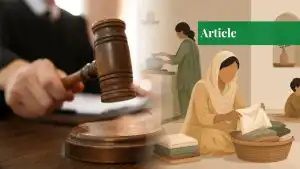
“The words we use describe the world and shape it.”
In Pakistan, “inclusion” is a term often thrown around in political speeches, HR or CSR policies, and intellectual debates on various forums. Yet, the language to advocate for itself contradicts the cause, promoting ableism in Pakistan. While organizations claim to support and facilitate “differently abled” individuals, official documents, job postings, and even laws still use the term “disabled” for them. Does merely offering reserved seats count as inclusivity if the language continues to underscore limitations rather than abilities?
Words have an impact on our perceptions, self-worth, and societal attitudes. By labeling some individuals as “disabled,” we stamp them as inferior or incapable and highlight what they lack rather than what they offer. The objective is not political correctness but dignity, respect, and changing how society values them.
How Our Words Exclude Instead of Include
By referring to them as disabled, handicapped, or special cases, we exclude them rather than including them. We unconsciously reinforce their limitations, fueling an “us vs. them” mindset and pushing them to a disadvantage regarding employability and other opportunities by framing them as obligations rather than assets, as human capital with talent, knowledge, and skills to offer. Using alternate and decent terms like “differently abled” shifts the focus to their capabilities and contributions.
Why Language Change Matters
“Language is the roadmap of a culture. It tells you where its people come from and where they are going.”
Rita Mae Brown
Many dismiss words as inconsequential, but words shape perception, access, and dignity. A simple change in our choice of words can change the value society places on its people. It is not simply about words but about who belongs and who is marginalized.
Promoting Ableism in Pakistan
“The test of a civilization is how it cares for its most vulnerable members.”
Pearl S. Buck
While global organizations embrace and lead by example in adopting inclusive languages and accessible workspaces – showing a strong dedication towards the true spirit of corporate social responsibility – many Pakistani institutions still lag even in the basic changes required to eliminate discrimination in the system. The corporate sector still labels opportunities as a “disabled quota” rather than inclusive hiring.
Moreover, rather than integrating students with special needs, universities and other educational institutions segregate them. Furthermore, even in public spaces, the boards have “disabled parking” instead of accessible parking, which is also true if one exists. Language must evolve alongside policy if we genuinely aim for inclusivity and progress.
Accountability Look: What Should Change?
- Rewrite policies, job postings, and workplace norms with inclusive language.
- Schools must replace the derogatory terms in their admission policies and then educate their faculty and students on proper and respectful language use.
- Avatars of government and the media should take this initiative to bring new power narratives by replacing more inclusive terminologies in the legalese.
- People have to acknowledge that change starts in your day-to-day dialogue.
The Digital Matrix: Catalysing Linguistic Inclusivity
In today’s digitally obsessed and highly interconnected social world, the internet—especially social media—plays a pivotal role in challenging and reshaping conventional norms. In the form of hashtags, campaigns, and other content, it has deliberated thought-provoking subjects, raised awareness, and helped defy stereotypes and fortify new standards. While it is also true that the humorous meme world is insensitive on many subjects and continues to use derogatory language to roast others, topped with the idea of what they believe is funny, despite this, we cannot undermine the tool it can be to catalyze linguistic inclusivity.
The influencers can harness the reach of digital media to advocate for the cause and initiate campaigns guided by the digital activism spaces to communicate what impact our words have, how they hurt the sentiments of those we continue to unconsciously sideline and label as inferior, and how we can improve this through the adoption of a more inclusive language. Moreover, educational content and celebrating milestones achieved by differently-abled individuals can help further dilute the entrenched perceptions.
Furthermore, government authorities can also use this medium to disseminate their revised policies, paving the way for others to take action through official communication. By leveraging this efficient and effective medium, we can address this issue as well, just the way we did for numerous others—to meet the evolving contemporary values as well as the very basics of our religion, Islam. Islam commands us to treat everyone with respect, dignity, and empathy without any discrimination and, in fact, to facilitate those who need assistance from among us in any way.
“…..And speak to people good [words]…”
Surah Al-Baqarah (2:83)
Real inclusion is not box-checking. It’s about dignity, respect, and our sense of belonging. The question isn’t really, “Should we change our language?” It’s, “Why haven’t we changed it already?”
If you want to submit your articles and/or research papers, please visit the Submissions page.
To stay updated with the latest jobs, CSS news, internships, scholarships, and current affairs articles, join our Community Forum!
The views and opinions expressed in this article/paper are the author’s own and do not necessarily reflect the editorial position of Paradigm Shift.

I am an aspiring entrepreneur, activist, and critic of traditional and conventional norms, committed to challenging barriers that hinder progress. As I approach graduation, I blend business expertise with a passion for social justice and equality, actively challenging systems that uphold outdated limitations. Honesty and resilience have shaped my journey, and I use my experiences to inspire, advocate, and drive meaningful change wherever I can. Through my work, I strive to create impact-driven solutions that empower individuals and communities to break free and move forward.