

Introduction
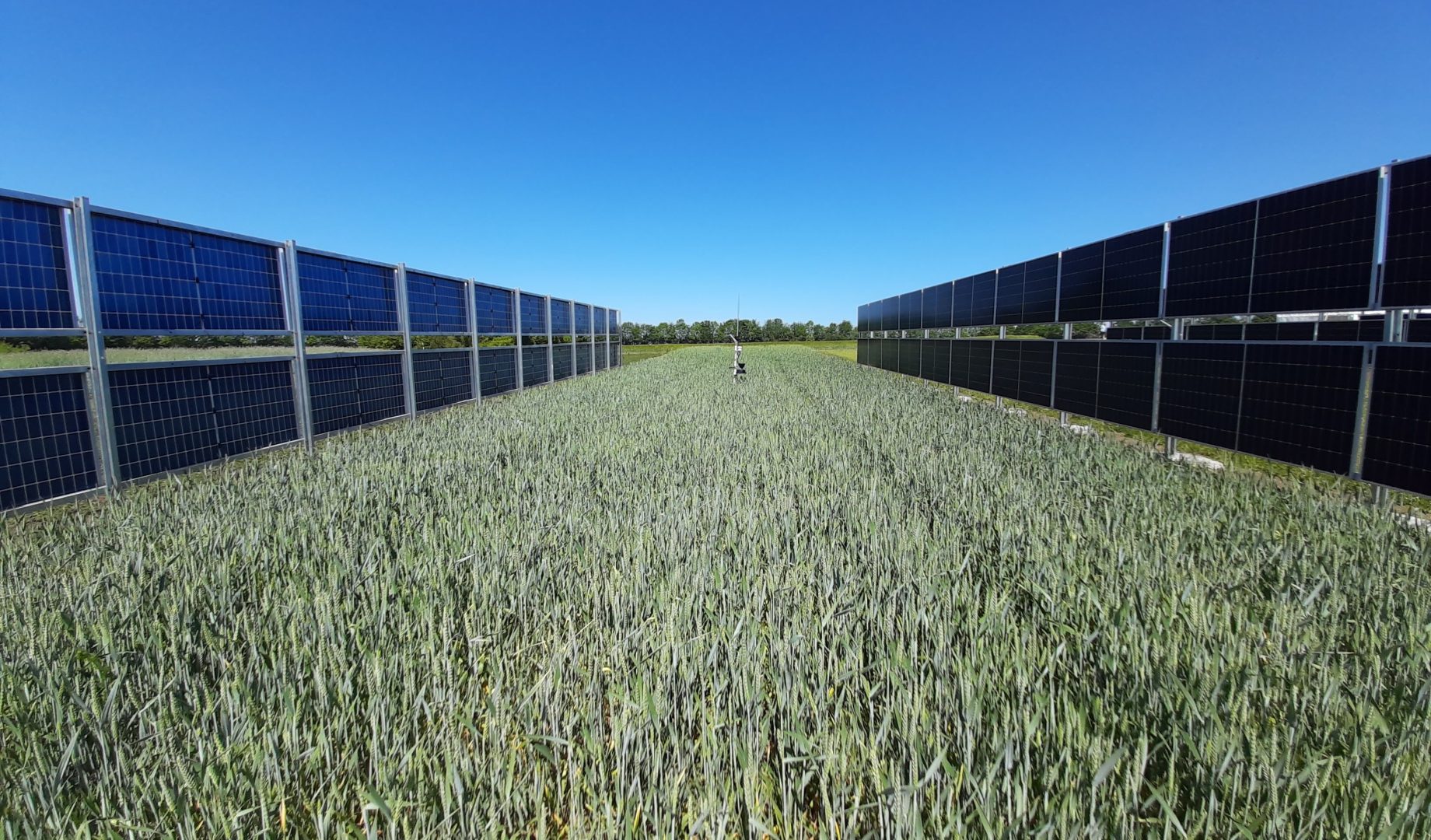
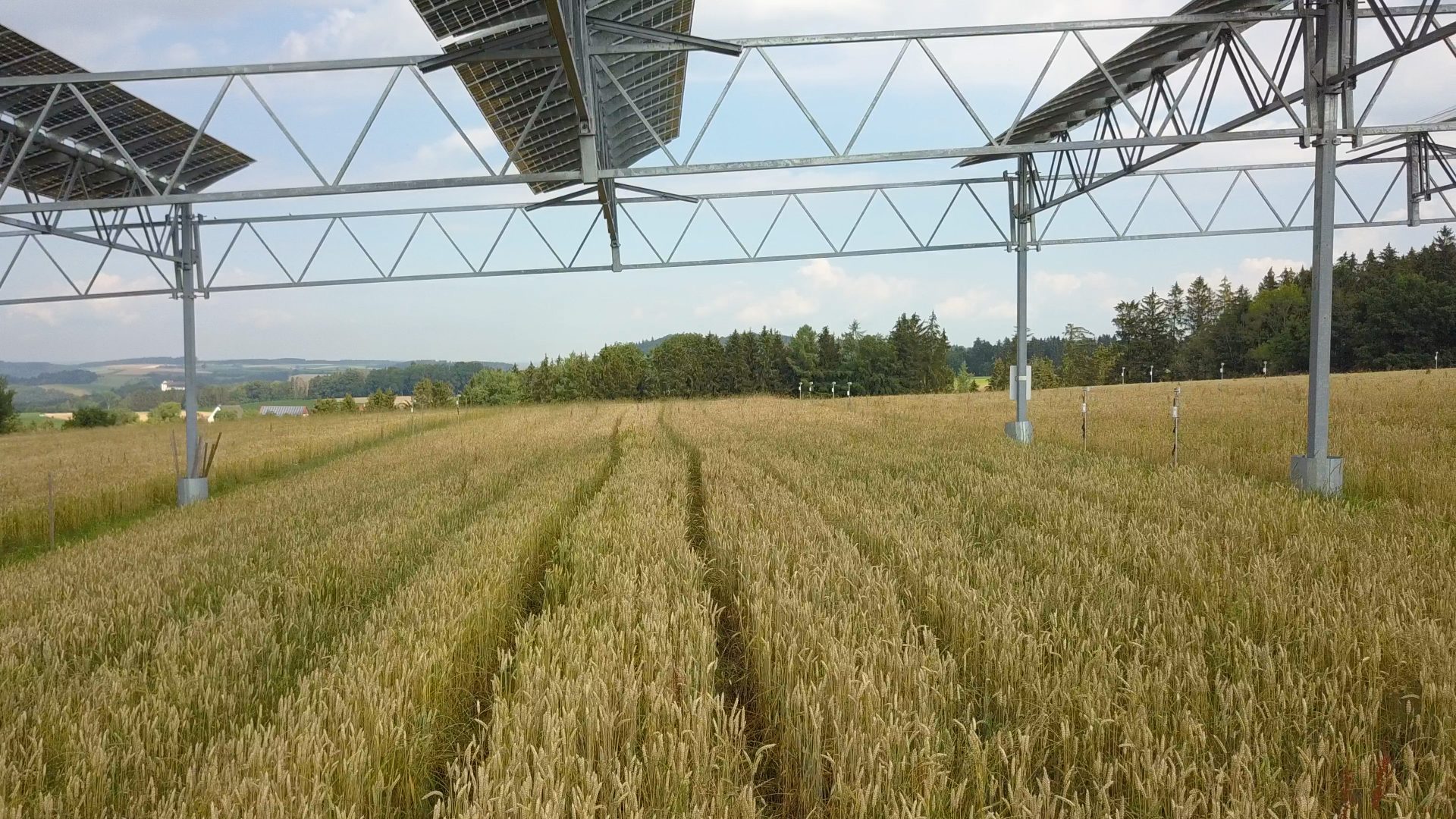
Agrivoltaics is a concept that combines agriculture and photovoltaics. It means growing crops and generating solar energy at the same time on the same land. In an agrivoltaic system, solar panels are installed 2 to 5 meters above the ground, and inter-row spacing is kept at a minimum of 2 meters so that crops can still grow and machinery can work. The height, spacing, and angle of the panels can be adjusted depending on the type of crop being grown.

The idea of agrivoltaics is not new. The first idea of agrivoltaics was given by two scientists, Goetzberger and Zastrow, in 1981. They proposed this idea because they recognized that large solar energy projects might compete with agricultural land in the future.
Although this concept existed for several years, it gained popularity in the last 10 years. The panels provide partial shade to the crops, which reduces heat stress and water evaporation from the soil. The crops beneath the panels keep the panels cool, and cool panels work more efficiently. Both systems benefit each other, and this is called a synergistic effect. This works well for crops like lettuce, spinach, and herbs.
This system provides several benefits for both crops and panels. Agrivoltaics offers a promising solution to the global challenges of energy demand by producing both crop and energy from the same land. This is what makes agrivoltaics a truly remarkable and efficient land use system.
Global Adoption of Agrivoltaics
In the world, Germany is one of the leading countries in agrivoltaics due to its research institutions, pilot projects, and policy support. The first large-scale agrivoltaic project was tested here. The Fraunhofer Institute in Germany has done major research on agrivoltaics. Germany conducted large-scale agrivoltaics experiments to test whether solar energy and farming can coexist on the same land. These studies helped researchers with further projects in other countries.
In Japan, agrivoltaics started due to the very limited farmland. They installed solar panels over rice paddies and called it solar sharing. The panels generated 44,000 kWh of electricity annually, and their estimated lifespan was 20 years. In this way, farming was continued, and electricity was being generated. Agrivoltaics allowed farmers to generate energy and crops from the same land. Farmers earned income from both crops and electricity. After this success, Japan expanded solar sharing to more farms.
In the USA, Jack’s Solar Garden in Colorado installed over 3,000 solar panels over fruits, vegetables, and herbs. The panels powered around 300 homes. The farm owner confirmed that electricity income was higher than traditional hay farming. Water use was reduced by 35% in Arizona farms, and crops were protected from extreme heat and harsh sunlight.
In France, Dupraz et al. (2011) conducted the first scientific field experiment on agrivoltaics. Both wheat and lettuce grew successfully under the panels. The total output was 35% more than using land separately for farming or solar alone. This proved that agrivoltaics are more productive than single land use.
In China, agrivoltaics has been successfully applied on aquaculture farms in Shandong Province. Shrimp and sea cucumber yields increased by 50%. Panels kept the water temperature cool, which is beneficial for aquatic animals. They also produced enough electricity to power 113,000 houses. This example proved that agrivoltaics works not just for crops but also for aquaculture.
Solar Energy Calculation
To estimate the energy production of this system, it’s important to analyze the available agricultural land and the potential solar capacity that can be installed. For this study, one acre of agricultural land is considered. One acre is equal to approximately 4047 m², which will provide enough space for installing solar panels and growing crops beneath them.
In agrivoltaic systems, solar panels are installed at some width and height so that sunlight can reach them and farm machinery can easily move. Due to this arrangement, about 350 to 450 solar panels can be installed on one acre of land (INOX Solar). Panel technology has been improved over the years; now modern panels have power ratings of 550 to 650 W (residential panels) per unit. The amount of energy produced depends on the amount of available sunlight. Countries that have high solar potential receive about 4 to 6 hours of peak sunlight. Since Pakistan is among these countries, an average value of 5 peak sun hours can be used for estimation.
Energy produced from this system can be estimated by the simple formula E=P×H×PR, where P is the power produced from the system, H is peak sun hours, and PR is the performance ratio of photovoltaic systems (0.75-0.85).
Total solar capacity is equal to the number of panels x panel power. For this case, let’s use a panel power of 0.58 KW and 400 panels.
P = Number of panels (N) x Panel power (W)
Let’s now calculate electricity production in one day.
E daily = N × W × H × PR
E daily = 400 × 0.58 × 5 × 0.8
= 928 kWh/day
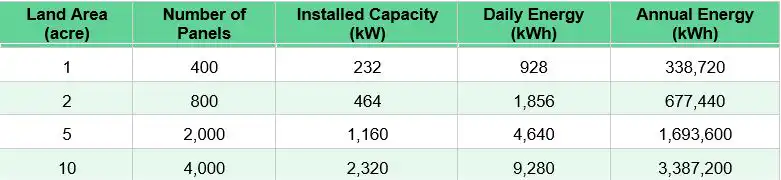
The annual energy production from this system is 338,720 kWh/year per acre, and its estimated lifespan is 25 years. This calculation shows the significance of this system while the farm is simultaneously producing crops.
Residential Electricity Supply and Profit Potential
The electricity produced from this system can be used for different types of households depending on their usage. Households can be divided into two major categories: those who use electricity for essential daily needs and those who consume more due to high comfort and high-tech appliances. According to WAPDA, the consumption of an average household is typically around 2-5 kWh per day. Luxury households consume more electricity for a wide range of high-power devices (central cooling systems). These households typically consume around 15-30 kWh per day.
One-acre agrivoltaic systems producing approximately 928 kWh per day will be able to supply electricity to 185 average households, which use 5 kWh per day. Or it will be able to supply power to 28 luxury households, which use about 37 kWh per day. By selling the whole energy generated from a 1-acre agrivoltaics system to the national grid, you can earn money at the rate of Rs.11 or $0.0392 per kWh.
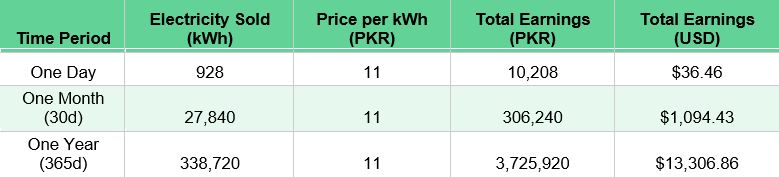
This system provides a source of income for farmers to make additional money by selling surplus electricity to the national grid, making it a solution for many future problems.
Investment and Payback Period of Agrivoltaics
For a 1-acre agrivoltaics system (230 kW capacity), the financial investment is higher than standard solar because of the elevated steel structures required for farming. According to DeltaEnergy, the total project cost is about USD 75K, which translates to roughly PKR 20.88M. This includes high-efficiency 580W+ bifacial panels, heavy-duty galvanized steel mounting (8-10 feet high), industrial-grade inverters, and labor. While the initial cost is significant, the system generates approximately 338,000 units (kWh) of electricity annually. In Pakistan’s current energy climate, where commercial/agricultural unit prices are low (11 Pkr/unit), this translates to an annual revenue of about PKR 3.7M (USD 13.3K).
The Return on Investment (ROI) for agrivoltaics is exceptionally fast because you are earning from two sources simultaneously: “free electricity” and “crop yield.” You can expect your full investment to be recovered in 6 years. After this period, in the upcoming years, your energy costs become practically zero, and your land continues to produce food, creating a pure profit stream. According to the Global Solar Atlas and NEPRA tariff benchmarks, the high solar irradiation in South Punjab ensures that your system operates at peak efficiency (around an 18-20% capacity factor). This model perfectly fits the WEF Nexus (Water-Energy-Food) by saving up to 30% of irrigation water due to the shade provided by the panels, making your farm more resilient to the intense heat.
Why Is It Important for Pakistan?
Instead of choosing between food and power, agrivoltics allows farmers to install solar panels directly above or between crops. It could be particularly beneficial for Pakistan due to the country’s ongoing energy insecurities and strong solar potential. Pakistan receives 4 to 6 hours of sunlight daily, making it ideal for solar. A 400 kW system can generate an average of 2,000 kWh per day, providing a reliable power source for energy-intensive farm operations like irrigation.
By ensuring that only 60% to 70% of land is covered by panels and leaving the remaining area open for tractors, maintenance, and most importantly, crop growth. In hot regions, shading from panels reduces water evaporation and protects sensitive crops. Farmers can bypass rising grid electricity prices, significantly lowering the operational cost of their agricultural business. They can get double profit from crop production as well as from electricity generation.
Conclusion
In conclusion, this system presents a practical solution in which crop productivity and renewable energy generation take place on the same land. The calculations in this work demonstrate how much electricity a 1-acre agrivoltaic system can produce. How many households can use the power generated from this system, and how much money can you earn? This approach is mainly for countries like Pakistan, where electricity prices are high, energy shortages, and abundant sunlight creates a need for this type of sustainable solution. By enabling farmers to use their land efficiently, agrivoltaics not only provide economic benefits but also a source of environmental sustainability by reducing dependence on fossil fuels. Therefore, it holds great potential for both the energy and agriculture sectors.
If you want to submit your articles and/or research papers, please visit the Submissions page.
To stay updated with the latest jobs, CSS news, internships, scholarships, and current affairs articles, join our Community Forum!
The views and opinions expressed in this article/paper are the author’s own and do not necessarily reflect the editorial position of Paradigm Shift

Fahad Abdullah is a BSc Agricultural Engineering student at Bahauddin Zakariya University (BZU), Pakistan. He has a strong interest in sustainable agriculture, modern farming systems, and the integration of renewable energy in agriculture. His work focuses on exploring innovative solutions to improve agricultural productivity and environmental sustainability.

Hani Ahmed Rana is an agricultural engineering researcher at Bahauddin Zakariya University (BZU). His work focuses on the intersection of autonomous systems and sustainable agriculture, with specific interests in smart farming, robotics, and the integration of AI-driven drone technology. In addition to his engineering background, he has experience in web design and digital systems, which informs his approach to AgTech development and user-centric technical solutions.

Tuba Fatima is an agricultural engineering student from Bahauddin Zakariya University, Multan, Pakistan. Her research interests include agrivoltaics and modern farm machinery. She aims to bridge the gap between renewable energy and traditional agriculture.