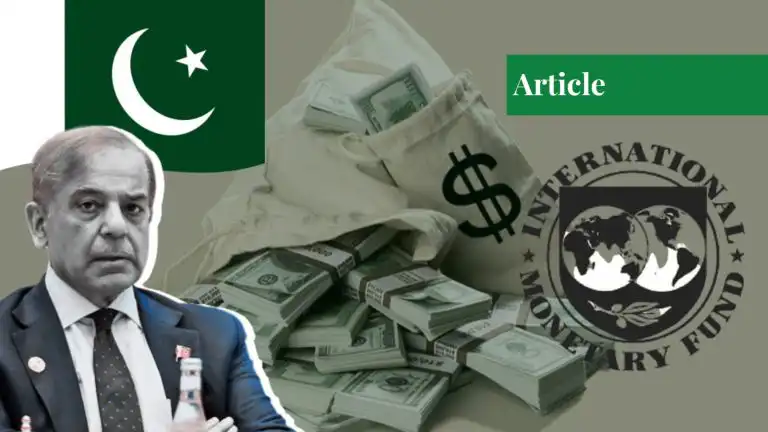
The International Monetary Fund has acknowledged that Pakistan’s policy efforts under the ongoing program have “helped stabilize the economy and rebuild confidence.” The statement comes at a time when foreign reserves have considerably improved, the currency exchange rate is relatively stable, and immediate external financing pressures are at ease.
On paper, the economic outlook remains stable, but new poverty estimates show that nearly 70 million Pakistanis are living below the poverty line of Rs 8,484, an amount that hardly covers basic human needs. Therefore, the contrast between stabilization and deepening economic hardships for a large population raises a question for the policymakers: Stability for whom and inclusivity on what terms?
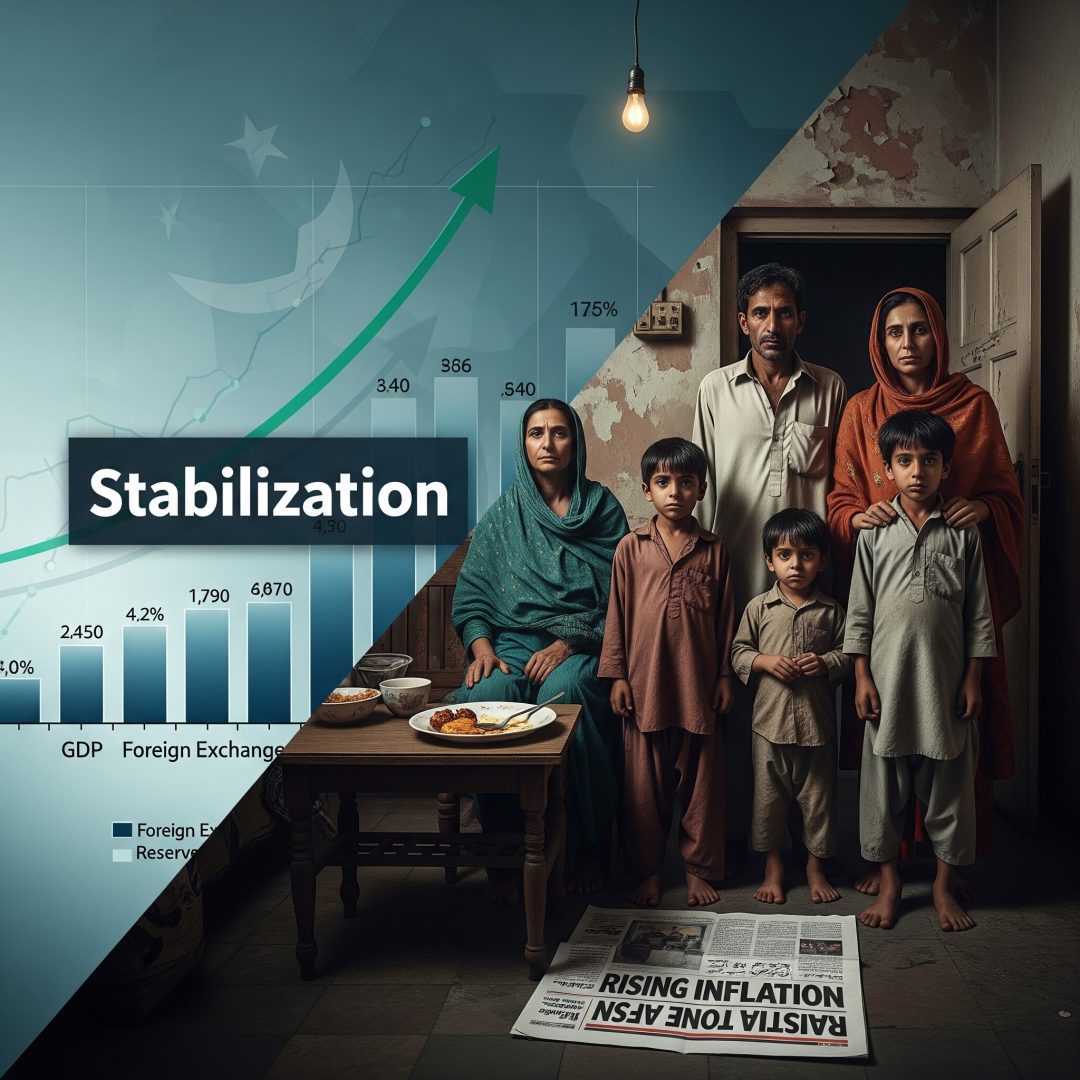
During 2023, stabilization was unavoidable with depleting reserves, current account deficits, external debt pressures, and currency devaluation. To avoid a sovereign default, an IMF program was necessary, and for the IMF program, monetary tightening, fiscal consolidation, and control of currency fluctuation were also required. These measures were essential to restore the trust of local and foreign investors and to portray the seriousness of the government towards uplifting the decaying economy.
In that sense, they have achieved their objectives in stabilizing the economy by controlling inflation, lowering interest rates, slightly improving investor confidence, and keeping the currency stable. But stabilization is not prosperity.
The tools that were used to restore macroeconomic equilibrium impose a short-term cost on the consumers. Energy prices were adjusted, raising household utility bills; indirect taxation was used to expand revenue, pushing the burden onto ordinary consumers, and higher interest rates in the beginning phase led to a decline in private investment. Therefore, real income, which was already low, has been unable to recover from this shock.
These pressures are not mere adjustments, but rather daily calculations of survival for households that live near or below the poverty line. Households with income around Rs 8,484 per adult have very limited access to basic amenities of life, including nutrition, healthcare, education, and decent housing. When prices remain volatile and income streams are stagnant, the phase called ‘stability’ can feel like prolonged austerity.
On the contrary, without the IMF program, things would have been even worse with a deeper economic crisis and more chaotic hardships. Reuters in 2023 reported, “Pakistan’s benchmark share index scored its biggest single-day jump in 15 years on Monday, gaining 5.9% on the first trading session after the country secured a last-gasp funding deal from the International Monetary Fund (IMF).”The fund’s intervention has provided a breathing space and opportunity to manage the country’s economy in a better manner.
Historically, Pakistan has been facing these boom-bust cycles where there is an expansion phase, followed by crisis, stabilization, and eventual reform fatigue. Each time they can restore the temporary stability, however, they have never been able to convert this stability into long-term economic growth. Tax reform initiatives are mostly hollow, and tax base broadening is used as rhetoric but never in practice. Energy sector inefficiencies persist. Political instability often becomes the single most important reason for the discontinuation of economic policies.
Eventually, this results in shifting the weight of these economic disruptions onto the segment of the population least equipped to absorb them. Indirect taxes are easier to collect than a progressive wealth tax. People already in the tax net are further taxed rather than broadening the tax base or passing the burden onto the untaxed affluent population, with 59% of national wealth owned by the top 10%. Overall, the imbalance in the burden sharing is at the core of the current debate.
The challenge now is to attain sustainable growth, which demands investments in productivity/human capital, export competitiveness, and long-term policy planning. It also requires social protection mechanisms to protect the underprivileged population during the adjustment period.
Prime Minister Shehbaz Sharif said, “We have a very young population, a youth bulge. We are offering them vast opportunities for vocational training with international certification. They will find productive jobs not only in Pakistan but abroad, making Pakistan richer and more prosperous.” This suggests that governments do acknowledge that job creation and income expansion are integral to uplifting the living standards of the vast young population of Pakistan.
Economic management cannot be measured solely through aggregate indicators. A stable currency rate or relatively higher reserves do not mean better living standards. Macro-economic situation and social resilience are both interconnected and cannot be measured individually.
Having said that, the IMF program has helped in stabilizing the economy, and the emergency is over now; however, it does not assure long-term prosperity and growth. The low FDI numbers of under $2 billion per annum suggest that investors are reluctant and waiting for structural reforms to take place before they inject funds into projects in Pakistan.
Stabilization can evolve into durable economic growth if structural reforms are carried out, including tax base broadening, energy efficiency, contract enforcement, political stability, and public sector productivity. In the absence of meaningful reforms, the cycle is likely to recur, potentially leading the country back into a state of imbalance, further damaging the brand image of Pakistan as an emerging market. Finance Minister Muhammad Aurangzeb, in an address earlier this year, stated: “There are firms that are leaving Pakistan, which is true, and we must acknowledge if the taxation is high, energy cost is high, or financing cost, those have been real issues”.
Pakistan has stepped back from the brink of default, and the achievement of this government must not be understated by any means. However, the true test would come when, along with improved reserves and better fiscal balance, the poverty level starts to shrink, when employment rises, and the effects are felt in the everyday economic conditions of an ordinary household.
Macroeconomic stability that comes at the cost of depriving your citizens of basic needs cannot form the foundation for durable progress. Confidence in capital markets does return quickly; however, confidence amongst citizens takes time to rebuild. Either this stabilization will evolve into inclusive growth, productivity, and structural reforms, or yet another temporary calm before the storm.
If you want to submit your articles and/or research papers, please visit the Submissions page.
To stay updated with the latest jobs, CSS news, internships, scholarships, and current affairs articles, join our Community Forum!
The views and opinions expressed in this article/paper are the author’s own and do not necessarily reflect the editorial position of Paradigm Shift

Khawaja Abdul Wase is a senior-year undergraduate student at LUMS with an interest in Pakistan’s political economy, public policy, and governance. His writing focuses on how state decisions, institutional frameworks, and market dynamics shape economic outcomes and social inequalities.