Introduction
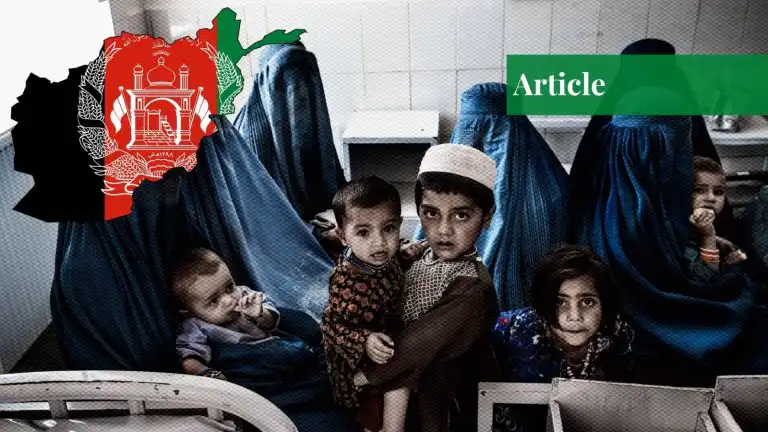
Afghanistan’s already fragile healthcare sector, weakened by decades of conflict and reliance on foreign aid, has faced severe strain since the Taliban returned to power in August 2021. The abrupt reduction in foreign aid, dire financial conditions, deteriorating medical infrastructure, skilled workforce shortage, and restrictions on women’s participation in the health sector have widened a disparity between healthcare demands and services.
Although the Taliban have continuously boasted about improvements in the country’s health sector, the ground reality shows a more troubling picture. In Afghanistan, structural deficiencies, chronic funding shortages, and policies that deny women access to healthcare persistently compromise the delivery of basic healthcare, which exposes millions to a growing healthcare crisis.
Understanding the Healthcare Landscape Prior to Taliban Rule
After decades of conflict, the Islamic Republic of Afghanistan inherited a healthcare system that was severely weakened when it came to power in 2001. In response, the post-2001 Afghan government made a strong effort to rehabilitate Afghanistan’s health sector with extensive support from the international community as a part of broader state reconstruction.
The foundation of Afghanistan’s health sector recovery was built on a donor-supported public health model, designed around two packages: the Basic Package of Health Services (BPHS), initiated in 2003, and the Essential Package of Hospital Services (EPHS), initiated in 2005, which were funded by international donors such as the World Bank, the United States Agency for International Development (USAID), and the European Union (EU) to strengthen basic and advanced healthcare services. Both packages were backed by the donor-funded Sehatmandi Project, which served as the backbone of Afghanistan’s healthcare delivery system and supported more than 2,331 health facilities across the country until 2020, serving 30 million people across 34 provinces.
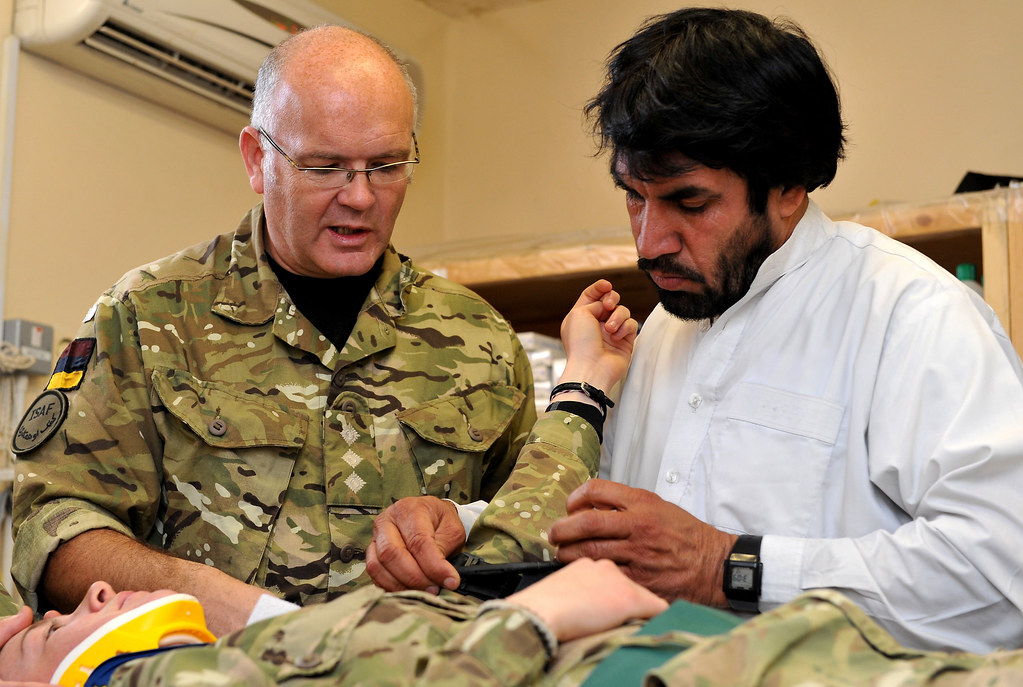
Despite the government’s limited ability to fund and manage the healthcare system between 2001 and 2020, Afghanistan’s healthcare sector made notable strides in increasing access to essential health services. According to the World Health Organization (WHO), in 2019, nearly 3,135 healthcare facilities were operational and serving healthcare services to 87 percent of the population.
However, the Ministry of Public Health was allocated only 4 percent of the budget by the national government, and nearly 80 percent was financed by foreign donors, underscoring the systematic reliance of Afghanistan’s healthcare system on foreign aid. Although the healthcare system expanded across Afghanistan, it remained fragile due to management capacity, healthcare staff shortages, and lack of supplies and equipment, especially in rural and conflict-affected areas. Reliance on imported medicines and lack of female healthcare workers also remained below global standards.
The Taliban’s Takeover and Its Impact on Afghanistan’s Healthcare Sector
In August 2021, the Taliban’s takeover sparked a rapid decline in Afghanistan’s aid-dependent healthcare model. Foreign donors suspended aid due to concerns over the recognition and funding of the Taliban administration. This particularly affected the Sehatmandi project, thereby stripping the financial backbone of its health sector. The consequences were immediate. Around 2,000 donor-supported health centers faced operational challenges and eventually ceased operations. Healthcare professionals fled the country, while those who remained faced salary issues, and shortages of essential medical supplies became widespread.
Moreover, the Taliban’s limited prioritization and severe fiscal constraints were reflected in the health sector’s budget allocation, which declined from $211 million under the Republic government to $80 million, accounting for only 2.4 percent of the total government spending. After 2022, some services came back in the healthcare sector through the interventions of United Nations agencies in response to urgent humanitarian needs. However, the risk of health system collapse continued due to reliance on short-term foreign funding.
Alongside this, a lack of transparency and accountability in Taliban rule, coupled with limited domestic resources to fill funding gaps, became increasingly apparent. Afghanistan had more than 3,000 health facilities between 2015 and 2020. Due to persistent funding gaps, this number declined to 1,547 by 2024. In addition, health workforce gaps have highlighted the system’s inadequacy in providing medical services to its population.
Taliban policies have restricted female employment and replaced many female workers with men in essential sectors such as healthcare and education. This limited women’s participation in areas where female professionals were critically needed. The World Health Organization (WHO) in 2021 reported that there were 2.8 doctors, nurses, and midwives per 10,000 people in Afghanistan, significantly lower than the minimum of 23 health workers per 10,000 people needed to provide essential health services.
The fragility of this funding model became clear again when US aid was halted in 2025 and almost 422 health facilities ceased their operations. The World Health Organization (WHO) recorded clinic closures in 28 out of Afghanistan’s 34 provinces, with more than one-third of facilities shut down in the worst-affected areas. In early 2026, an additional 150 health centers faced closure due to continued funding shortages, further restricting access to healthcare, particularly for vulnerable populations.
Taliban’s Healthcare Commitments vs. the Reality on the Ground
Despite the Taliban’s claims of strengthening Afghanistan’s healthcare system with the support of humanitarian donors, significant differences remained between the official narratives and the realities faced by the Afghan population. In early 2026, Minister of Public Health Mawlawi Noor Jalal Jalali stated “that providing fair, accessible, and high-quality healthcare services to all Afghan citizens remained a key priority,” reflecting the administration’s efforts to present healthcare development as a central objective. Nevertheless, the fragility of the health sector in Afghanistan is evident in budget constraints, chronic funding shortages, disparities in access between rural and urban provinces, and limitations to women’s participation in the sector.
Budget Constraints
The Taliban’s initial budget revealed a lack of priority, with only 2.4 percent allocated to the health sector versus 16.5 percent for defense and security in late 2021. At present, the World Bank data reveals that nearly half of budget spending has been allocated to security, showing the same pattern. Despite claims of improved health services, the lack of implementation data indicates a gap in accountability mechanisms.
Rising Health Needs
The high visibility of unmet healthcare needs highlights the limited ability of the healthcare system to serve its population independently. According to the World Health Organization (WHO), over 22 million individuals in Afghanistan require humanitarian aid, and among them, 14.4 million need health services because of growing humanitarian demands, poverty, and structural vulnerability.
Healthcare Financing Crisis
The healthcare sector still lacks stable domestic financing and remains heavily dependent on foreign humanitarian aid. This reliance has created a fragile healthcare base, with any decline in aid directly threatening the healthcare delivery system. Funding shortages have delayed healthcare workers’ payments, resulting in resignations and migration. The World Health Organization (WHO) reported that the 2026 Health Response Plan received only 17 percent of the required $190.8 million in funding by June 2026. This funding gap has disrupted healthcare provision and undermined the stability of the health system.
Unequal Access Between Urban and Rural Areas
Afghanistan’s mountainous terrain, poor transport infrastructure, and high travel costs limit access to medical facilities, especially in remote areas. Around 33 percent of Afghanistan’s population resides in underserved regions, where few healthcare centers are available, and people rely on either traditional healthcare or travelling to provincial capitals and even to Kabul for advanced healthcare. These barriers disproportionately affect women, with 32 percent reporting difficulties compared to 25 percent of men, indicating a reality of unequal and non-universal healthcare access.

Affordability and Economic Barriers to Healthcare Access
The lack of effective policies has deepened poverty and economic hardships, preventing people from receiving timely treatment. Limited financial resources continue to force families to delay treatment or forgo healthcare. These economic challenges impact women, displaced populations, and low-income families who have to afford transportation fees or even access private healthcare, further restricting equal access to healthcare.
Women’s Participation and Restrictions on Female Healthcare Workers
The Taliban’s deliberate exclusion of women from healthcare represents a policy failure that has weakened the overall healthcare system. Women accounted for only 27 percent of non-specialized physicians versus 73 percent of men, 18 percent of specialized physicians versus 82 percent of men, and 29 percent of nurses compared to 71 percent of men. Instead of fixing this labor shortage, the Taliban further restricted Afghan women by banning them from studying medicine, including nursing and midwifery courses, in December 2024.
The United Nations Children’s Fund (UNICEF) projects that Afghanistan might have lost up to 5,400 female healthcare workers by 2030 if these restrictive policies persist; this approach will affect the long-term sustainability of Afghanistan’s healthcare system.
Restrictions on Women’s Access to Healthcare Services
Despite the Taliban’s claims of fair healthcare access to all Afghans, restrictions on women’s movement have created major barriers that contradict this narrative. The necessity of a male guardian (mahram) limits the accessibility and provision of healthcare to women, especially widows and female-headed households without male relatives. Such limitations have exacerbated maternal health issues, with Afghanistan recording one of Asia’s highest and seventh-highest global maternal mortality rates at 638 per 100,000 live births in 2024.
The Urgent Need for Taliban Accountability: Policy Recommendations
- The Taliban should be more responsible for maintaining the domestic financing system of Afghanistan’s healthcare system; overreliance on variable donor funding exposed health services to frequent shocks.
- The funding partners must come up with viable monitoring systems to ensure that resources reach the targeted healthcare facilities and manage funding shortages, monitor their operations, maintain service quality, and encourage equal access to healthcare for all Afghans.
- Expand and maintain the healthcare workforce through enhanced training, recruitment, and incentives for healthcare professionals, particularly in underserved communities.
- Ensure the availability of required healthcare infrastructure and access to it to support medical education in both the private and government institutions.
- The international community must call on the Taliban to acknowledge that limiting the role of women in healthcare weakens the female health workforce, deteriorates healthcare outcomes among women, and jeopardizes the escalation of the current health crisis in Afghanistan.
Conclusion
The history of the healthcare system in Afghanistan shows a shift from precarious gains to a state of increasing vulnerability during the Taliban rule. Although the sector still offers the much-needed services, lack of finances, institutional inefficiencies, and restrictive policies have greatly hampered the ability of the sector to serve the increasing demands of the population. Sustainable recovery needs to put healthcare as a basic human security issue on the agenda by being more responsible, including long-term investment
If you want to submit your articles and/or research papers, please visit the Submissions page.
To stay updated with the latest jobs, CSS news, internships, scholarships, and current affairs articles, join our Community Forum!
The views and opinions expressed in this article/paper are the author’s own and do not necessarily reflect the editorial position of Paradigm Shift.

Nayab Zubair recently graduated with a BS in International Relations from the International Islamic University Islamabad. She is currently working as a researcher at the Institute of Regional Studies (IRS), Islamabad. Her previous research experience includes working with the Institute of Strategic Studies Islamabad (ISSI) and Inter-Services Public Relations (ISPR).