
On Monday, July 6, 2026, dozens of gunmen attacked a police outpost in the Ziarat district of Balochistan, surrounding the Mangi Dam project. Eighteen policemen were kidnapped and later murdered in the incident; nine others were killed during the assault. Two days later, militants ambushed a military convoy in Lasbela, killing 11 soldiers. On Wednesday, Pakistan’s military spokesman, Lieutenant General Ahmed Sharif Chaudhry, stated that forty-two people, including four civilians, had been killed in the attacks. ″We will chase you, and we will hurt you″ he warned during a televised press briefing, adding that fifty-four militants had been killed by security forces in response.
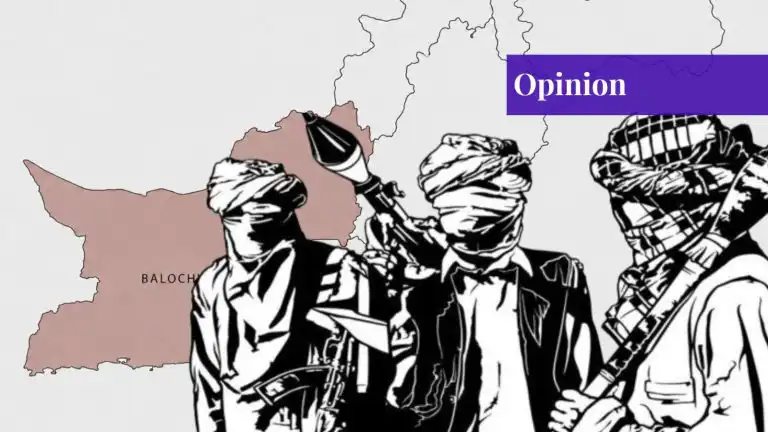
The attack was the latest in an insurgency that predates Pakistan’s current government and political class. In Balochistan, five separatist upsurges have occurred since 1947. The last two years have seen two insurgent groups, the Balochistan Liberation Army (BLA) and the Pakistani Taliban (TTP), simultaneously take part in the unrest, vying for resources and influence. The BLA’s ethno-nationalist agenda focuses on attacking infrastructure and foreign interests, whereas the TTP, which receives logistical support from the Afghan Taliban, primarily operates in Pakistan’s tribal belt of Khyber Pakhtunkhwa and Northern Balochistan, targets security installations, and proclaims jihad. The Pakistani Taliban’s attacks have been blamed on both Afghanistan and India, claims that Islamabad has denied. Despite Pakistan’s accusations, the BLA and TTP find safe havens and sources of recruitment in Pakistani territory.
Pakistan has primarily responded to intensifying violence with kinetic means. Since 5th July, Pakistan has announced the killing of over a hundred militants in Balochistan. Weeks of operations have resulted in hundreds of casualties on both sides, with Pakistan’s military announcing a fresh wave of condolence donations to the Afghan people. This approach will not be sufficient, however, because, despite Pakistan’s vast experience countering insurgencies, its coercive tactics are failing to close the loop between the tempo of operations and insurgent recruitment.
Partly because of this tactical and strategic myopia, Pakistan’s National Counter Terrorism Authority (NACTA) has remained toothless since its inception. NACTA’s jurisdiction only extends as far as its ability to organize inter-agency conferences, issue threat assessments, and recommend measures to the provinces, none of which are obligatory or enforceable. Pakistan’s national security establishment has recognized this void, and the National Action Plan (NAP), launched in 2017, has been working to plug the governance gaps that allowed terrorism to fester. The NAP’s counterterrorism campaign bore fruit, securing Pakistan’s strategic interests, curtailing terrorist financing, and helping to delist Pakistan from the FATF’s grey list. Simultaneously, however, justice sector reforms have stalled, with NACTA’s resource constraints persisting despite the 2021 NAP recommendations. Inconsistent oversight and inadequate counterterrorism judicial infrastructure have undermined Pakistan’s nationwide campaign.
Tactical coordination problems stem from Pakistan’s overall inability to balance law-and-order reforms. Violent extremist organizations (VEOs) exploit the absence of effective governance in Pakistan’s tribal belt and in its underdeveloped regions. They provide services such as protection and employment, particularly in areas with weak judiciaries or healthcare. The merger of the former FATA with Khyber Pakhtunkhwa (KP) in 2018 was supposed to counter this imbalance. Still, eight years later, KP’s policing and administrative systems remain underdeveloped and unable to provide basic security in many areas. The same can be said for Balochistan, with locals feeling neglected as China’s infrastructure projects overshadow Pakistan’s federal presence. The lack of services fuels the appeal of the BLA and TTP.
Several Asian states have countered VEOs while simultaneously repairing their social fabric. Indonesia’s national health insurance program (JKN) and Malaysia’s cash assistance scheme (STR) helped extend the state’s reach, particularly in conflict-affected areas, thereby reducing channels for radicalization. Similar programs, including Pakistan’s Benazir Income Support Program (BISP) and Sehat Sahulat, promote stability, although Pakistan continues to struggle to synchronize its development aid with its national security policy. In areas of Pakistan affected by insurgencies, development and counterterrorism programs remain separate, operating under different budgets and lacking interagency oversight. This results in both ordinary and marginalized areas being underserved, with locals unable to access healthcare or justice efficiently.
Three measures can help Pakistan address the tactical and strategic deficiencies in its counterterrorism campaigns. First, the National Action Plan should give NACTA the authority and resources it needs to coordinate federal and provincial resources more efficiently across law enforcement, defense, and intelligence agencies. Second, the development and health sectors must be prioritized in Pakistan’s most underdeveloped areas, particularly Balochistan and KP. Pakistan’s merger of FATA with KP highlighted the locals’ desire for better services, which neither Islamabad nor KP’s capital is currently prepared to deliver consistently. Finally, Pakistan’s federal and provincial governments must enhance counterterrorism financing transparency and establish clear spending audits to ensure effective oversight. These budgets should also be synchronized with development aid to ensure that both areas operate cohesively and plug existing capability gaps.
This week’s attacks will not be the last, as the BLA and TTP remain prepared to test Pakistan’s resolve. Pakistan’s security establishment has already announced its intent to kill more insurgents and deny them safe havens in Pakistan. Despite its tactical successes, Pakistan’s coercive approach to counterterrorism rarely produces lasting results. The resurgence of TTP and BLA shows Pakistan’s counterterrorism operations to be more of a performance for domestic and international audiences rather than a genuine attempt to balance national security and development. The BLA and TTP fill the power vacuum created by Pakistan’s institutional underdevelopment by using insurgency to announce their presence. Pakistan has the capacity to occupy these power vacuums, but it has so far been unwilling to do so in its tribal belt and border regions.
If you want to submit your articles and/or research papers, please visit the Submissions page.
To stay updated with the latest jobs, CSS news, internships, scholarships, and current affairs articles, join our Community Forum!
The views and opinions expressed in this article/paper are the author’s own and do not necessarily reflect the editorial position of Paradigm Shift.

Azhar Ud Din is a student of international relations at Government College University, Lahore.