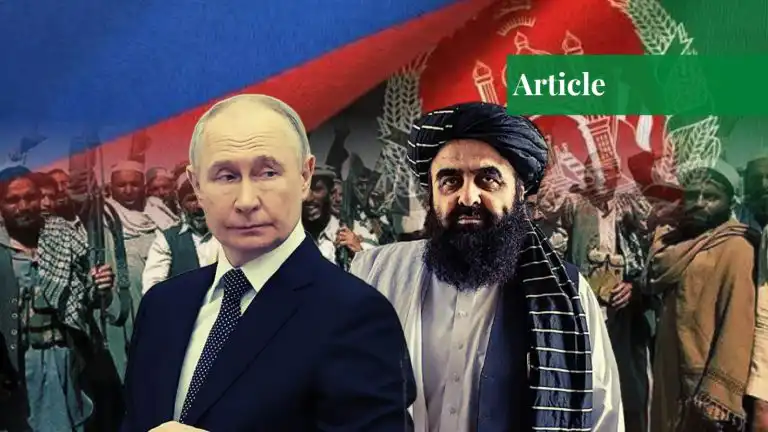
While Pakistan has been busy brokering peace deals, the Moscow-Kabul military agreement presents a more complicated picture for Pakistan’s security. Russia-Afghanistan relations have become the centre of attention recently, after Russia signed a strategic military deal with the Afghan Taliban during a security event that took place in Moscow on May 27, 2026.
Russia and Afghanistan have both downplayed the details of this agreement. Russia’s special envoy for Afghanistan, Zamir Kabulov, stated that the agreement focused primarily on repairing Russian-made equipment, but added that future defence contracts were possible. Pakistan needs to remain cautious of this growing defence cooperation between the two capitals.
Russia-Taliban: The Road to the Agreement
The roots of the strategic military agreement between Russia and Afghanistan can be traced back to April 2025, four years after the Taliban returned to power in Kabul, when the Russian Supreme Court suspended the ban on the Taliban, which was earlier listed as a terrorist organization. This event was then followed by the formal recognition of Afghanistan’s Taliban regime by Russia in July 2025, becoming the first and the only country in the world to do so till present day.
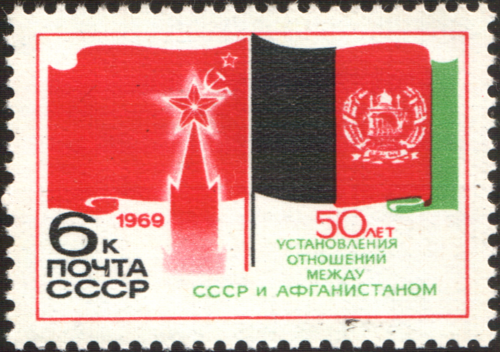
In the broader context, there are various events that highlight a diplomatic trajectory that has led to this point. Alexander Bortnikov, Director of Russia’s Federal Security Service, recently claimed that the Islamic State of Iraq and the Levant-Khorasan (ISIL-K) was actively recruiting citizens from Tajikistan, Uzbekistan, Kyrgyzstan, and Kazakhstan, as well as migrant workers in Russia with the support of the UK. Moscow perceives this as a direct threat. As fears of Western interference in Central Asian politics increase, it creates a justification for maintaining close ties with the Afghan Taliban to help counter this threat.
Besides the security concerns, Russia has economic interests as well in Afghanistan, which include using Afghanistan as a transit hub to transport Russian gas, investing in infrastructure projects like the Turkmenistan-Afghanistan-Pakistan-India (TAPI) gas pipeline, the Trans-Afghan Railway Project, and a desire to exploit Afghan mineral resources. Moreover, Russia has been facing Western estrangement for quite some time now in the form of sanctions following its invasion of Ukraine. So, Afghanistan seems like Russia’s ticket to Central and South Asia.
Russia’s invitation to Taliban officials to its International Security Forum meeting held on May 26, 2026, in Moscow, where Taliban Defence Minister Mullah Mohammad Yaqoob Mujahid met Russian Security Council Secretary Sergei Shoigu, and the military-technical cooperation agreement was formalized, took place against the backdrop of the aforementioned developments.
The Deal in Strategic Context
To understand the underlying strategic underpinnings of this deal, we must explore the motivations of both parties deeply. The Russian rationale for this deal is not just a single motive but several overlapping interests. Firstly, by formalising its influence in Afghanistan, it aims to counter the Western agenda. The day the deal was signed, the chief of Russia’s FSB, Alexander Bortnikov, accused British intelligence of supporting ISIL-K, justifying it as a reason for developing counterterrorism contacts with Afghan colleagues. Secondly, through a militarily strengthened Afghanistan, Russia also gains leverage over countries like Pakistan that have quietly drifted away from Russia since the Russia-Ukraine war, as Pakistan maintained a neutral position throughout, repeatedly abstaining from UN General Assembly votes rather than condemning Russia openly. Pakistan has also been seen edging closer to the West, keeping its longstanding ties with the US intact, which is uncomfortable with Russia. Afghanistan also offers Russia something it badly needs right now: an alternative route to move its energy exports south and eastward, toward the markets of South and Southeast Asia, at a time when Western sanctions have shut off its existing trade networks.
While Russia’s motivations are rooted in security, geopolitics, and economics, Afghanistan’s agenda in signing this agreement is equally deliberate. For the Taliban, a formal defence agreement with a P5 member of the UN Security Council carries significant weight that no other bilateral relationship has offered since their return to power in 2021. Since international recognition has been something the Taliban still lack after five years of government, Russia’s willingness to not only recognize the Taliban but to formalize military ties sends a signal to the international community that the Taliban are a legitimate governing authority and worthy of state-to-state engagement. Sergei Shoigu, Secretary of the Russian Security Council, earlier in May, called this relationship a “full-fledged partnership” while encouraging other countries in the region to expand cooperation with Kabul. But what is more pressing than this for the Taliban is to gain an upper hand on Pakistan, given its military vulnerability that became evident most recently in February 2026 when Pakistani jets hit targets across Nangarhar, Paktika, and Khost, targeting the TTP and ISIL-K positions as part of its operation called “Ghazab-Lil-Haq”. The Taliban have had little ability to respond to or deter these strikes. Hence, a military cooperation with Russia might open doors for broader exchanges of weapons, spare parts, or military technology, which would fundamentally alter that equation by giving Afghanistan, for the first time, a credible means of challenging Pakistani operations on Afghan soil. This prospect was hinted at by the Taliban’s Defence Minister Mullah Mohammad Yaqoob Mujahid, who, upon his post-deal return from Moscow, spoke in a warning tone that Pakistan now wouldn’t dare to strike Afghan territories.
Pakistan’s Security Dilemma
What both parties gain from this agreement is clear. What remains to be examined is what Pakistan stands to lose, and the answer, across military, strategic, and diplomatic dimensions, is considerable. Pakistan’s primary tool against the Tehrik-i-Taliban Pakistan (TTP) safe-havens in Afghanistan has been air power. Pakistan, with its modern air force and a 660,000-strong active military, can strike deep into Afghanistan with high precision and low risk, all the while protecting its own airspace. This advantage has been central to Pakistan’s counterterrorism strategy and has gone unmatched by the Taliban, who have had no meaningful air defence capability so far.
The Russia-Taliban military-technical agreement may be limited to the repair of Soviet-era equipment for the moment, but it changes the situation, nonetheless. Yuri Lyamin, a military analyst and a senior researcher at the Moscow-based Centre for Analysis of Strategies and Technologies (CAST), said that the Taliban are particularly interested in acquiring spare parts, ammunition, military gear, low-cost drones, and air defence systems. Even the prospect of future air defence transfers is enough to instil uncertainty into Pakistan’s policy towards Afghanistan.
The danger, however, does not end with the Taliban. Given that the TTP are the Taliban’s ideological brothers, the chances that Russian equipment could find its way into the TTP’s hands and be turned against Pakistan are real. And now that the Taliban are more confident in their deterrence against Pakistan, the possibility of them acting against the TTP is low.
With Moscow now offering Kabul arms, legitimacy, and the backing of a P5 power, the Taliban has little incentive to accommodate Pakistani demands.
Pakistan’s Diplomatic and Geopolitical Fallout
Pak-Russia
Pakistan and Russia’s relationship has been quietly deteriorating since 2022. While Pakistan maintained a public stance of neutrality on the Russia-Ukraine matter, leaked documents and procurement data revealed that Pakistan had signed contracts worth $364 million with American defence companies for the supply of 155mm artillery shells, weapons that made their way to the Ukrainian battlefield. This did not go unnoticed in Moscow. Even Russia’s decision to de-list the Taliban as a terrorist organisation in April 2025 was viewed as a retaliatory action, disregarding Pakistan’s concerns about Afghan Taliban supporting the TTP. Further straining the relationship are underlying suspicions that Russian intelligence may have maintained some level of contact with the TTP. Although it was never proven, but never entirely dismissed either. While Afghanistan has already turned its frontier into a source of threat, Russia too has now become a structural part of that problem. By formalising a defence relationship with the Taliban, Russia acquires leverage over Pakistan’s western border without deploying a single soldier.
Pak-India
While Pakistan has much to lose due to this relationship, India, on the other hand, indirectly gains a lot. India has maintained a pragmatic relationship with Russia and a deep engagement without recognition approach with the Afghan Taliban, where Russia has been a longstanding, all-weather friend of India and Afghanistan as an economic partner. Now this triangular dynamic between Russia, the Taliban, and India is hard to ignore for Pakistan as it shifts the regional power balance. While Afghanistan already provided an opportunity for India to expand its economic operations into the Eurasian region, this deal will strengthen India’s position against Pakistan.
Pak-China
But this dilemma doesn’t end here; China’s growing closeness with the Afghan Taliban presents another side of the picture. The recent China-led mediation at Urumqi, Xinjiang, on April 1-7, 2026, between Afghanistan and Pakistan is an indication that China has a direct interest in seeing Afghanistan and Pakistan patch things up. While the peace had been held previously, on 10 June, 2026, Pakistan launched deadly air strikes along its border with Afghanistan. According to Pakistani Information Minister Attaullah Tarar, it was in response to recent terrorist incidents in Pakistan. This is precisely the kind of instability that China, with its significant regional investments, including CPEC, cannot afford to ignore. This means that fixing ties with Afghanistan is not just something Pakistan needs to do for its own sake but because it’s also being pushed by its most important strategic partner, as well.
Pak-Afghan
Back to Pakistan and Afghanistan, the relations have been strained lately. Even though both sides reached an informal understanding to de-escalate the ongoing volatility after the Urumqi talks, it barely held. Just a few weeks later, on April 27, Afghanistan accused Pakistan of striking a university and a residential neighbourhood in Kunar province with mortars and missiles, killing seven people and wounding at least 85. While a second round of talks has been under discussion, both sides still remain inflexible on major issues such as the Durand Line, the TTP, and border crossings, as the border remains largely closed. A Russian-backed Afghanistan will be a challenge for Pakistan, since Afghanistan will be negotiating from a position of considerably greater confidence while Pakistan would have lost any leverage it may have had earlier.
Conclusion and the Way Forward
The Russia-Taliban military agreement is a turning point for Pakistan. Pakistan now faces a more confident Taliban in a conflict that has shown no signs of resolution in the past few months. The way forward requires a fundamental rethinking by shifting from military-centric approaches towards genuine diplomatic engagement that addresses both the Durand Line and the TTP through a political rather than a hard-power approach, and a realistic assessment of what Pakistan’s interests in Afghanistan actually are in 2026. In addition, internal strength and better governance in the border regions of Pakistan will make any Afghan misadventures against Pakistan difficult.
If you want to submit your articles and/or research papers, please visit the Submissions page.
To stay updated with the latest jobs, CSS news, internships, scholarships, and current affairs articles, join our Community Forum!
The views and opinions expressed in this article/paper are the author’s own and do not necessarily reflect the editorial position of Paradigm Shift.

Hijab Fatima is a final-semester student of Public Policy at National Defense University with a keen interest in international relations, contemporary policy issues, and governance.