
The “Three Cs” Framework: Strategic Ambition vs. Political Reality
“Sublata causa, tollitur effectus – Remove the cause and the effect will cease,” a Roman maxim from Roman Law, describing poor governance.
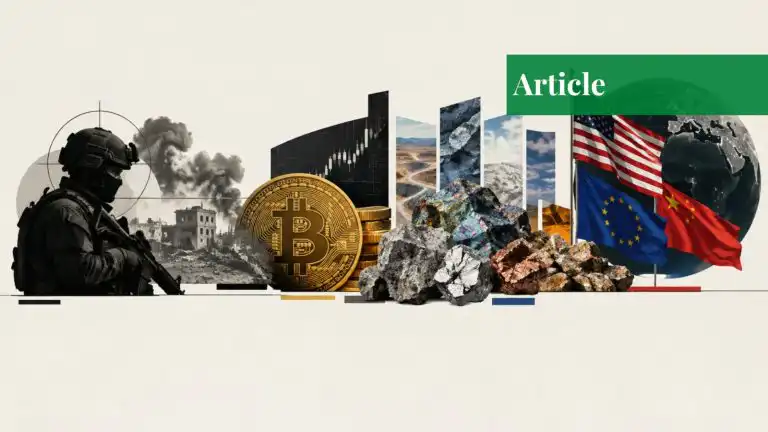
Pakistan appears to be entering a new strategic phase, one increasingly organised around three emerging priorities: counter-terrorism, crypto and critical minerals. There is nothing inherently wrong with any of these priorities. Counter-terrorism is an unavoidable security requirement. Digital assets and blockchain technology may become important components of the future financial system. Pakistan possesses significant mineral potential which, if responsibly and transparently exploited, could contribute substantially to national wealth.
The question, however, is not whether the three Cs are important. The question is, at what cost? For Pakistan, this question cannot be separated from the political and institutional circumstances in which these priorities are now being pursued. The removal of a government through the 2022 vote of no confidence may have been constitutionally permissible in form, but the political circumstances surrounding it raised serious questions about manipulation and the use of institutional power. The subsequent caretaker period extended beyond what many regarded as its constitutional purpose, and the country proceeded towards the February 2024 general election amid growing allegations of prepoll engineering and political manipulation.
The results themselves became deeply contested. The discrepancy between Forms 45 and 47 generated a dispute over the integrity of the electoral process that remains unresolved in the public mind. The consequence was a government whose representative legitimacy was questioned from the outset. Political parties that had performed poorly at the ballot box nevertheless became central components of the governing arrangement, while parties that had secured substantial popular support found themselves excluded, constrained or deprived of political space.
Thus we see today the phenomenal aberration suffered by the KP government, where elected representatives have been denied access to the necessary instruments of administration and governance – bringing into conflict the political masters before their own civil servants. The constitutional machinery continues to operate, interpreted as convenient, making the deeper question of political legitimacy and propriety highly questionable.
Legitimacy is not merely a product of constitutional procedure. It ultimately rests upon the consent of the governed. When that consent is seriously questioned, governments may retain office, but they begin to lose the moral authority required to govern effectively. This creates a dangerous condition: a government can remain legally constituted while becoming politically disconnected from the people it governs.
A government is thus compelled to look outward rather than inward. When a government does not believe it derives its authority from the people, it is unlikely to feel genuinely answerable to them. That is where the problem becomes more profound. The issue is no longer simply whether political power has been acquired legitimately. It is whether those exercising power begin to regard the preservation of that power as more important than the national interest itself.
Political Survival over National Interest
When political survival becomes the overriding objective, governance changes character. Institutions are no longer strengthened because they serve the state. They are manipulated because they serve the incumbent. The Constitution ceases to be a restraint upon power and becomes an instrument for protecting power. The judiciary becomes politicised. The police become an instrument of political coercion. Elections become contests not merely over votes, but over who controls the machinery that counts and validates them. And constitutional amendments increasingly risk becoming solutions to immediate political problems rather than mechanisms for dispensing good governance.
The objective becomes simple: stay in power—by constitutional means where possible, by political engineering where necessary, and by institutional control when required. That is how a state can gradually arrive at the absurdity of having a government sitting like a king would, in a castle governing a graveyard: secure within the machinery of power, yet increasingly disconnected from the people outside it.
Manufacturing Threats to Justify Control
It is against this background that Pakistan’s emerging strategic priorities deserve scrutiny. Counter-terrorism, crypto and critical minerals may indeed offer new opportunities. But there is a danger that they could also create an exclusive strategic space—one in which security, technology and resource extraction become sufficiently important to justify exceptional methods of governance. Once such a space is created, the language of national necessity becomes extraordinarily powerful.

A threat is identified and is described as existential. Exceptional measures are introduced. Political opposition begins to be portrayed not simply as political opposition but as a potential security problem. Institutions are encouraged—or pressured—to toe the line. Accountability is sacrificed at the altar of stability. And eventually, what began as an exception becomes the normal method of governance – a new normal.
Exceptionalism becomes institutionalised, and from threat to exceptionalism a character is defined. The danger is not that every threat is imaginary. Terrorism is real, external interference can be real, economic warfare can be real, and geopolitical competition is real. Security threats are real, but a functioning state must distinguish between a genuine threat and the political exploitation of a genuine threat. False narratives, manipulated information, exaggerated threats, and, where they occur, manufactured incidents can all serve the same purpose: creating an environment in which extraordinary action begins to appear ordinary.
The critical question must therefore always be: Who independently determines that the threat exists—and who holds those making that determination accountable? Without such safeguards, the definition of a threat itself becomes a political instrument. And once that happens, almost anything can be justified in the name of national security; anyone can be declared a threat, and anything can be labelled as an existential hazard.
How Political Instability Deters Capital and Growth
In such an environment of political ambiguity and flexible/selective governance, the problem is exacerbated when political authority begins to operate according to the principle of “my way or the highway”. Arrests without convincing due process, allegations of enforced disappearances, prolonged detention of political opponents, pressure on politicians, restrictions on political activity, and constitutional amendments designed around immediate political necessities all contribute to the same institutional danger – of being held hostage to the instinct of political survival.
The issue is not merely who happens to occupy government. It is whether the rules of the state are becoming subordinate to the requirements of those who temporarily control the state. Once that happens, constitutionalism is inverted. The Constitution should determine how power is exercised and executed universally. Instead, power begins determining how the Constitution can be conveniently interpreted, amended, or applied to suit individual interests.
The same principle applies to accountability. Accountability cannot be selective, where some are more equal than others. The higher the office, the greater the responsibility as well as culpability for the omissions and commissions that are witnessed. In a constitutional democracy, those who exercise the greatest power should ultimately be subject to the greatest scrutiny. A state that progressively removes its most powerful individuals from meaningful accountability risks creating two classes of citizens: those who govern and those who are governed – the elite and the others.
That is not institutional stability; it is institutional imbalance and the erosion of the state, the consequences of which extend far beyond politics. A politicised police force cannot provide impartial law enforcement. A judiciary whose independence is questioned cannot provide the certainty upon which investment depends. An election process whose credibility is disputed cannot provide durable political legitimacy. An administration perceived as partisan cannot command the confidence of citizens or investors. And when several institutions begin to suffer simultaneously, the damage becomes cumulative. The state may continue to function administratively, but the legitimacy and credibility of its institutions begin to diminish.
That deterioration has an economic price: capital becomes cautious, investors wait, businesses reduce exposure, entrepreneurs move capital elsewhere, skilled people leave, young professionals seek opportunities abroad, industrial capacity weakens, infrastructure deteriorates, and those who remain increasingly discover that political access can matter more than productivity. This is how political instability becomes economic instability. And economic instability eventually becomes a national security problem.
This cycle or phenomenon leads to a huge economic contradiction. Pakistan cannot become strategically powerful by weakening the foundations of its own strategic power – the national economy – the edifice upon which the country stands. The relationship is straightforward: political certainty produces economic resilience, which in turn produces strategic autonomy. If this process is reversed, the state is substantially affected negatively.
While economic dependence mounts on external sources, the state then becomes more vulnerable precisely when it believes it is becoming more strategically important by the mindless and aimless policies it follows. The energy policy illustrates this contradiction particularly clearly. An industrial economy cannot flourish with unreliable electricity, expensive gas, uncertain fuel supplies and poorly managed energy resources.
Industry requires predictable costs and predictable supply. The same principle applies to agriculture, transport, telecommunications and infrastructure. One cannot demand strategic autonomy while allowing the productive machinery that sustains that autonomy to collapse.
Why Mineral Wealth and Technology Require Sound Institutions
So we come to the question – when all else has failed, can the three Cs replace the economy and give us the governance and cohesion we are so much in need of? In this vein, what must be determined is: can counter-terrorism replace industrialisation? Can crypto replace exports? Can critical minerals replace a productive manufacturing sector? Of course not.

Each can contribute to national wealth and strategic relevance. None can substitute for the fundamentals of a modern economy. Critical minerals can attract foreign investment—but only if investors trust the legal and regulatory environment. Crypto can create new financial opportunities—but only if regulation is credible and institutions are trustworthy. Counter-terrorism can make Pakistan strategically relevant—but security cooperation cannot permanently substitute for economic development.
A country cannot become prosperous simply by becoming useful to other countries. It must also become productive for itself. So what looms above the national economy is predominantly the investor’s question – which is where the strategic paradox becomes most obvious. If Pakistan wants investment in minerals, technology, finance and infrastructure, it needs stronger institutions, greater transparency and greater predictability.
Strategic Relevance Without National Resilience
Yet if the pursuit of strategic objectives produces greater political control, weaker accountability and institutional uncertainty, it creates precisely the environment that sophisticated investors seek to avoid. A foreign investor looking at Pakistan’s mineral wealth will not ask only, “What is beneath the ground?” He will also ask, “Who owns it? Who grants the concession? Can the rules change? Are contracts enforceable? Are the courts independent? Can my investment be protected from political interference?” The same questions apply to digital finance, infrastructure and industry. Natural resources do not create prosperity by themselves. Institutions can only convert resources into prosperity.
Yet the people cannot become irrelevant in this equation. Perhaps the greatest danger is that the state begins to confuse its own strategic interests with the interests of the people. A state exists for its citizens, security exists to protect society, and the economy exists to provide livelihoods. Institutions exist to protect rights and regulate power. The Constitution exists to establish the rules by which the citizens are protected from an over-enthusiastic government allegedly representing them, while operating on some self-created doctrine of necessity.
If these relationships are reversed—if citizens become secondary to the requirements of the state—then national security begins to acquire a meaning very different from the security of the nation. A country can possess missiles, minerals, intelligence agencies, strategic geography and international partnerships and still remain insecure if its people have lost confidence in their institutions. The ultimate source of national power is not the state alone; it is the confidence of its people in the state.

Thus, in the end, I would say, Pakistan, therefore, needs to ask a very fundamental question: can the three Cs make the country strategically relevant? It must ask: Can Pakistan become strategically indispensable to the outside world while making its own citizens economically and politically dispensable at home? If the answer were ever to become yes, that would represent a peculiar form of strategic success. The state might become increasingly valuable to foreign powers because of its geography, minerals, security role, and financial potential, while simultaneously becoming less valuable to the people whose taxes, labour, businesses, and sacrifices sustain it. That is not sustainable national power. It is strategic relevance without national resilience.
Pakistan does not have to choose between security and democracy, between strategic interests and economic development, or between strong government and accountable government. It needs all of them. The three Cs may indeed become important pillars of Pakistan’s future. But they cannot become three excuses for exceptionalism. Counter-terrorism must not become a permanent state of emergency. Crypto must not become a substitute for economic reform. Critical minerals must not become an excuse for opaque control of national resources.
Perceived strategic necessity must never become a licence to place institutions, constitutional safeguards and citizens beneath the interests of those who happen to exercise power. The real measure of Pakistan’s strategic success will therefore not be how much of the world needs Pakistan. It will be whether Pakistan can make itself strong enough that its own people no longer need to fear the state upon which they depend. That is the real strategic objective. Everything else—including the three Cs—is secondary to it.
“A parliament that had ceased to serve the purpose for which it existed had itself become the grievance. You have sat too long for any good you have been doing lately. You are no parliament. In the name of God, go.”
Oliver Cromwell, 20th April, 1653.
If you want to submit your articles and/or research papers, please visit the Submissions page.
To stay updated with the latest jobs, CSS news, internships, scholarships, and current affairs articles, join our Community Forum!
Find our FREE quizzes and MCQs here!
The views and opinions expressed in this article/paper are the author’s own and do not necessarily reflect the editorial position of Paradigm Shift