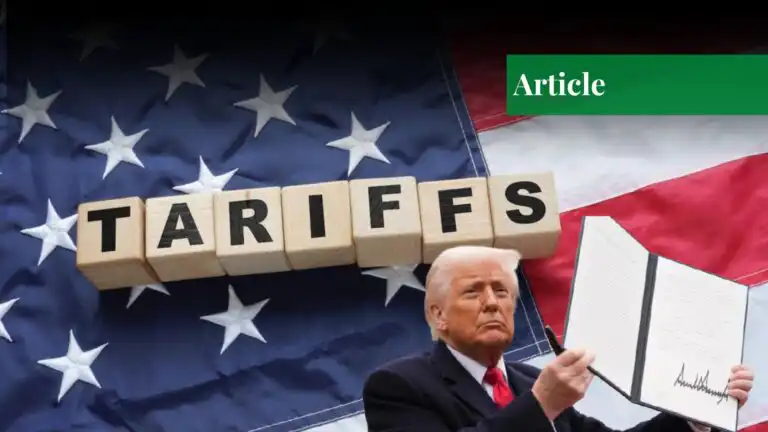
In 2025, US President Donald J. Trump’s aggressive tariff impositions have redirected and reshaped the global trade landscape, marking one of the most significant disruptions to international commerce in decades. By leveraging the International Emergency Economic Powers Act (IEEPA) and Section 232, Trump has imposed sweeping tariffs on a number of countries and a wide range of goods imported by America. The president has made a point to impose tariffs to address the issues concerning national security and interests, including trade deficit, illegal immigration, and smuggling of drugs. These tariffs, often branded as a tool to put “America first,” have perpetrated retaliatory measures, supply chain disruptions, and global economic uncertainty.
Countries Targeted and Tariff Rates
Trump’s second-term trade policy, presented in early 2025, imposed a baseline 10% tariff on all trading partners, with higher reciprocal tariffs for 57 countries based on unfair trading practices. Below is a detailed look at the countries and sectors affected as of August 2025:
- Canada: The 25% tariffs on most goods were escalated to 35% by America in August 2025, citing the inability of Canada to curb fentanyl smuggling. Goods covered under UMSCA remain exempted, but autos lost their exemption in April 2025. The tariff on energy products and potash remains at 10%.
- Mexico: A 25% tariff on most goods remains imposed, with a 90-day negotiating window to avoid a 30% hike.
- China: Combined tariffs on many of the goods reached 145% in April 2025. Recent negotiations led to a reduction to 30% temporarily.
- European Union: The initial tariff rate of 25% was later reduced to 15% after negotiation. The UK secured a 10% rate through a separate deal. The tariffs counter high EU value-added taxes and trade regulations.
- Japan: Products from Japan face a 15% reciprocal tariff after a deal, reducing the rate by 9% from the initial announcement. The 50% tariff imposition on copper imports, however, will cause significant volatility in Japan’s stock market.
- South Korea: Initially announced at 25%, a trade deal reduced the rate to 15%. The shipbuilding partnership was key to locking the deal.
- Brazil: Brazil was slapped with a 50% rate on most of its goods. The hike was linked to a former Brazilian president, Jair Bolsonaro’s criminal case.
- Taiwan: The initial 32% tariff rate decreased to 20% temporarily. The rate for semiconductors and IT products will be determined separately.
- Switzerland: The tariff rate increased from the initial 31% to 39% after failed negotiations. Pharmaceuticals are currently exempt but may face tariffs in the future.
- Others: Vietnam (20%), South Africa (30%), India (25%), Pakistan (19%), and countries like Myanmar, Cambodia, and Tunisia face variable tariffs.
- Sector Specific Tariffs: Include a 50% tariff rate on steel and aluminum, 25% on automobiles and auto parts, 50% on copper products, and a closed de-minimis exemption, affecting e-commerce platforms like Temu and Shein.
Economic Impacts of the Tariffs on America
Trump’s aggressive tariff policy has significantly altered the American economic landscape with intended and unintended consequences. The tariffs will result in a tax increase with an estimated $1,300 annual cost per household, according to the Tax Foundation. The Centre for American Progress estimated in April 2025 that the tariffs would cost $5,200 to US households, citing the potential price hikes across the sectors of electricity, food, and automobiles.
The tariff-induced prices will lead to stagnation or decline in real income, leading to higher inflation. As the stockpiled items are depleting, the impact is striking hard in the form of increased consumer prices. Big companies and brands are already transferring the pressure of cost increases to their consumers. Driven by tariff hikes for aluminum, auto parts, and steel, vehicle prices are also expected to rise sharply.
On the fiscal side, the recent tariff rates, as of June 2025, were expected to generate an increase of 0.67% in GDP by adding $200 billion in annual tariff revenue. However, Trump’s tax cuts from the One Big Beautiful Bill offset these tariff gains by increasing $3.4 trillion deficit over the period of 10 years. The trade deficit peaked at $162 billion before falling to $86 billion in June, largely due to pre-tariff import stockpiling. However, arguments are being presented to justify that structural factors like consumption behavior and currency imbalances drive the deficit, challenging the effectiveness of tariffs.
Global Economic Implications
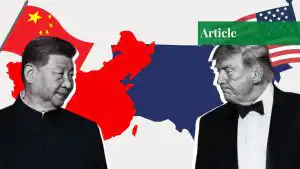
Trump’s tariffs have far-reaching impacts on geopolitical relations, supply chains, and trade routes, creating a ripple effect of economic challenges. Countries have responded with retaliatory tariffs on America. China imposed a 10-15% tariff rate on US imports such as LNG, coal, agricultural machinery, and crude oil in February 2025. However, constant escalation by the US resulted in fluctuating tariff rates by China. The two countries are officially at a trade war with a tit-for-tat tariff policy working from both ends.
Canada enacted a 25% tariff rate on US-originated vehicles in April 2025. The EU threatened with strong retaliatory measures, which were later suspended due to a controversial deal with the US. Brazil projects the loss of 0.15 to 0.20 % over the period of 12 months, starting from August. The IMF and OECD have downgraded the 2025 trade forecast due to rising trade uncertainty. Global GDP is expected to drop from 3.3% to 2.9% in 2025 and 2026 due to increasing tariffs and their implications. JPMorgan estimates a 60% recession in the global economy if the tariffs are sustained.
Companies are responding by rerouting and diversifying their supply chains. Apple is moving its iPhone and iPad production for US consumers to India and Vietnam, respectively. Fastenal has opted for direct routes to Mexico and Canada, bypassing the US states to avoid inflated costs. Nike has been planning to mitigate the tariff hike by shifting sourcing and implementing price escalations. Though smaller economies may gain from the supply chain redirections, they will have to face higher input costs and a potential blow to domestic industries.
Critical Analysis
Trump’s tariffs aim to add to the revenue and neutralize the trade imbalances, but their effectiveness is questionable. Supporters argue that the tariffs provide an open window for negotiations, as seen in the recent temporary pacts with the EU and China. They present the benefits of Trump’s first-term tariffs as evidence to substantiate their claim of improved manufacturing returns. However, things are not that simple under the rug.
Consumers bear most tariff-induced costs, as seen in the tariff imposition on washing machines back in 2018, which resulted in a 12% price hike for consumers. Tariffs do not increase employment in protected sectors due to automation and uncertainty. Targeting trade partners like the EU and Japan risks compromising the bilateral ties between the two sides. Households, especially the humble classes, might as well face the strong blow of inflation, resulting in decreased consumption of imported items. The long-term benefits can only be yielded by balancing domestic fiscal growth with global cooperation, but current evidence suggests that the tariff policy is resulting in a global economic rivalry.
Conclusion
In conclusion, Trump’s America first tariffs policy has led to a significant disruption in global trade, triggering a chain of retaliatory measures, supply chain disruptions, and economic instability. The long-term implications of these tariffs are evident in the estimated increase in taxes per household and price hikes. As more countries respond with retaliatory tariffs, the global economy is expected to face significant challenges. The projected GDP drop and potential recession risks underscore the policy’s far-reaching and potentially devastating impacts. The benefits of this aggressive tariff policy are questionable, and its impact on global economic cooperation is a pressing concern for many countries. Ultimately, Trump’s tariff war may have lasting consequences for the US and global economies, potentially leading to decreased consumption, inflation, and strained bilateral ties with key trade partners.
If you want to submit your articles and/or research papers, please visit the Submissions page.
To stay updated with the latest jobs, CSS news, internships, scholarships, and current affairs articles, join our Community Forum!
The views and opinions expressed in this article/paper are the author’s own and do not necessarily reflect the editorial position of Paradigm Shift.
Laiba Khalid is a university student and emerging content writer with a keen focus on socio-political issues, governance, and policy. With a background in English and an interest in current affairs, she brings a critical and youth-driven perspective to contemporary debates. Laiba is particularly interested in bridging academic insight with real-world challenges. She writes with a commitment to clarity and research-based analysis.