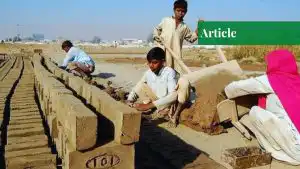


As climate change threatens communities globally, one of its severe consequences is climate-induced migration. The International Organization for Migration (IOM) defines climate migration as “the movement of a person or groups of persons who, predominantly for reasons of sudden or progressive change in the environment due to climate change, are obliged to leave their habitual place of residence, or choose to do so, either temporarily or permanently, within a state or across an international border.”
 You will find more infographics at Statista
Pakistan’s Vulnerability to Climate-Induced Migration
Lately, there has been an alarming increase in people displaced due to climate disasters, mostly in countries such as Pakistan that are highly vulnerable to climate change. The catastrophic 2022 monsoon floods affected 33 million people around the country and forced over 7 million people to leave their homes. Around 40 ‘calamity-hit’ districts in Sindh welcomed 800,000 refugees, and the devastating floods made Karachi the home of 50,000 climate migrants.
Coastal communities are at high risk of flooding due to rising sea levels and are at high risk of being displaced by 2060. These risks need to be mitigated to minimise migration, and local communities need to be empowered with alternative means of livelihood. Irregular rainfall patterns and droughts also threaten the livelihoods of smallholder farmers in rural areas, particularly in Sindh and Balochistan, pushing them to relocate to urban centres.
It was reported in a study by Climate Action Network South Asia that Pakistan’s present preparedness and institutional capacity are insufficient to deal with the harsh impacts of climate change on highly vulnerable rural areas. Therefore, when these communities are unable to handle climate disasters like floods and droughts, they are left with no choice but to leave their homes and migrate for better prospects.
Causes and Effects of Climate Migration in Pakistan
Climate effects, such as prolonged droughts or flooding that destroy agricultural output, lead to an increase in seasonal migration among young men hoping to find employment and better economic prospects in urban areas. Evidence suggests that “extreme weather patterns, shrinking viable land for agricultural production, sea erosion and lingering dry spells” have caused widespread internal migration in Pakistan within the last ten years.
Migration caused by climate change is not restricted to a single region in Pakistan, but rather it is on the rise all across the country. Different provinces face multifaceted challenges based on their local contexts; for example, in Khyber Pakhtunkhwa, the migration challenges due to Glacial Lake Outburst Floods (GLOFs), flash flooding, and riverine flooding are exacerbated by ‘cross-border conflict spill-over’. Residents near the coast in Sindh are the main victims of rising ocean levels and seawater intrusion. The present data shows that if sea levels keep rising at the current rate, Karachi will be completely underwater by 2060, and Thatta and Badin in the Indus Delta could be submerged as early as 2050.
Karachi, which serves as Pakistan’s main business and commercial centre, may welcome 2.3 million climate migrants by 2050. The arrival of such a high number of climate migrants in the country’s major cities will cause serious damage to the city infrastructure and burden the limited resources, resulting in severe water shortages, difficulties in transportation and inadequate housing. As Karachi already grapples with intense and deadly heatwaves, rapid population growth, poor waste management, and high crime rates, an influx of climate migrants will worsen the living standard in the world’s 7th largest urban area.
Women are more vulnerable to climate change and face unique challenges when being displaced due to climate-related hazards. They face health risks such as diarrhoea, skin diseases, snake bites, and anaemia due to food insecurity, water shortages, and transportation issues. Many pregnant women face miscarriages as a result of these health complications. Climate-induced migration also has psychosocial effects on women, such as depression and anxiety, as they have to fulfil added responsibilities and an increase in workload, yet lack decision-making power at home. Women are also vulnerable to sexual abuse and assault during migration. Moreover, after migrating, women from rural communities are usually located in informal settlements in urban centres where they face inadequate access to healthcare, water, shelter, and sanitation.
Migration Patterns and the Role of the International Community
Multiple studies from around the world fail to find consistent patterns of climate-induced migration. Even for apparently straightforward climate effects such as sea-level rise, where it is assumed that coastal erosion and flooding forcefully displace coastal communities, research finds that whether and how people migrate depends on a variety of socioeconomic, demographic, and cultural factors. Migration trends and patterns depend on the degree of climate threat, social and economic setting and the community’s resources, connections and ideas.
Countries in the Global South, such as Pakistan, suffer disproportionate effects of climate change despite having negligible contributions to global greenhouse gas emissions. Therefore, when climate-related disasters force vulnerable communities in these countries to migrate, it becomes the Global North’s ethical responsibility to ensure their safety, protection, and well-being, as well as support their growth and development.
The international community should encourage the formation of legally binding policies to protect climate migrants and add to climate financing efforts that increase developing countries’ ability to adapt to climate change. Wealthier nations must step up and shoulder the responsibility of supporting low-income countries in managing the effects of climate change to pave the way for climate justice.
 You will find more infographics at Statista
Policy Recommendations
The government needs to have a well-prepared response to climate-induced migration, as it is a rising crisis for Pakistan in the coming years. All future climate plans and policies should include migration management as a top priority. The focus should also be placed on building climate-resilient cities with a strengthened capacity to withstand an influx of climate-induced migration. Climate experts, indigenous communities and urban planners should share knowledge and help form innovative solutions to problems related to climate migration. Both government and civil society organisations must research to improve the understanding and data related to climate change, migration patterns, and their socioeconomic impacts, especially highlighting vulnerable populations.
If you want to submit your articles and/or research papers, please visit the Submissions page.
To stay updated with the latest jobs, CSS news, internships, scholarships, and current affairs articles, join our Community Forum!
The views and opinions expressed in this article/paper are the author’s own and do not necessarily reflect the editorial position of Paradigm Shift.

Jawairiya is a final-year Development Studies student at Bahria University Karachi with a passion for social justice, inclusive development, and community empowerment.