(In War) it will always happen that he who is not your friend will demand your neutrality, whilst he who is your friend will entreat you to declare yourself with arms. And irresolute princes, to avoid present dangers, generally follow the neutral path, and are generally ruined. But when a prince declares himself gallantly in favor of one side, if the party with whom he allies himself conquers, although the victor may be powerful and may have him at his mercy, yet he is indebted to him, and there is established a bond of amity; and men are never so shameless as to become a monument of ingratitude by oppressing you. Victories after all are never so complete that the victor must not show some regard, especially to justice. But if he with whom you ally yourself loses, you may be sheltered by him, and whilst he is able he may aid you, and you become companions on a fortune that may rise again.
Niccolo Machiavelli, The Prince
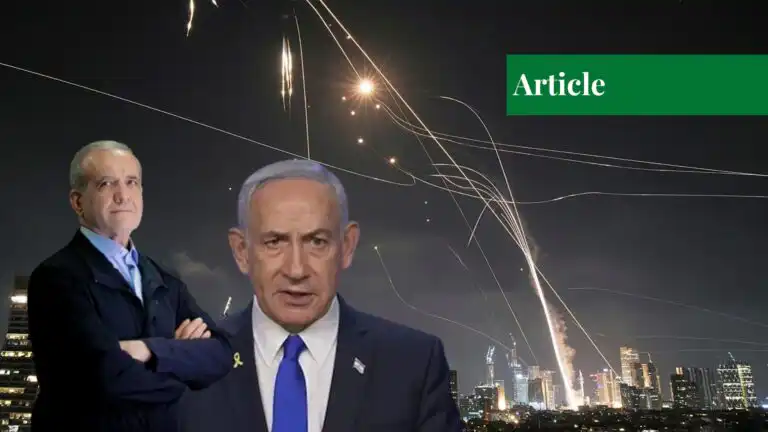
In my last article about Israel, I explained how the Israeli state’s genocidal impulses will lead to its ultimate and inevitable destruction. Well, Israel is at it once again. It has once again torn international law and the “rules-based order” to shreds by launching an unprovoked offensive against a country in the Middle East. The USA, as always, stands at Israel’s back and encourages its depredations. However, the USA and Israel aren’t quite seeing eye to eye this time around. Despite Trump’s bombastic statements in favor of Israel after the Israeli strikes on Iran, it is clear to all astute observers that while Israel and the USA have clearly colluded in this brazen aggression, they have different end goals.
The USA and its Bully Businessman President Donald Trump encouraged Israel to attack Iran in the hope that some devastating strikes might bring Iran to its knees and lead it to accept the conditions dictated by the US for the nuclear deal (Iran would have to cease the enrichment of Uranium utterly if it complies). Basically, Trump wants a “Gaddafi Solution” for the USA’s Iran problem. The first step is to denuclearize Iran with the promise of sanctions relief, and then, at the opportune moment, Iran can be embroiled in a devastating civil war like Libya.
Israel’s Prime Minister Benjamin Netanyahu has quite different and more ambitious goals in mind. His stance is mostly dictated by internal Israeli politics, but it also has an interesting international and strategic angle. Netanyahu is facing serious corruption charges in Israel, and the only way for him to stay out of prison is to stay in power. That is why he has been trying to prolong the carnage in Gaza, despite the fact that his own generals declared months ago that the war against Hamas has turned into a stalemate and Hamas cannot be defeated by the Israeli Defence Forces (IDF). Netanyahu knows that as long as there is a war going on, he cannot be displaced from his position of “wartime PM”. However, a significant segment of the Israeli populace has become somewhat desensitized to the war in Gaza and now wants Netanyahu to answer for his corruption and failures on 7th October. Recently, the opposition was heartened enough to bring a motion to dissolve the Knesset (Israeli Parliament) during the “War” on Gaza – an unprecedented development. Netanyahu needed a new war, and hence he began one against Iran through targeted killings on flimsy pretexts.
Since the fall of Assad in Syria, Israeli strategic experts have been buzzing about a new danger to Israel: Turkiye. It is widely understood that Ahmed al Sharaa’s regime in Syria is a vassal of Erdogan’s Turkiye and the beginning of the “neo-Ottoman” project. Netanyahu himself recently declared in the Knesset, “Although some may disagree with me, I do not believe the Ottoman Empire will return anytime soon.” At the same time, many Israeli analysts believe that with the fall of Assad and the weakening of Hezbollah, Iran is at its weakest point in the last 2 decades. They are of the opinion that it is necessary for Israel’s survival that Iran be taken out before the rise of Turkiye. Otherwise, according to them, Israel will have to face the nightmare of a two-front war. Seen from the perspective of both Netanyahu’s domestic political troubles and the paranoia of Israeli strategists about a rising Turkiye, the key strategic goal of the current Israeli aggression is the utter destruction of the current regime in Tehran and the subsequent denuclearization of Iran.
If Israel doesn’t achieve this goal, Netanyahu will have to face the music in Israel. He is a politician who eagerly embraces dirty political tactics (in 1995, he inflamed Israeli passions against then Israeli PM Rabin after the Oslo Accords so much that a Zionist zealot murdered Rabin, and Netanyahu became PM in 1996!). He will wreak havoc in Israel with his right-wing zealots, and as a result deepen the fissures in Israeli society (Secular vs religious Jews, Tel Aviv vs Jerusalem, etc). However, Israel itself doesn’t possess enough power to bring about regime change in Iran, a task that can only be achieved through a successful ground invasion of Iran. Netanyahu knows this, and he is hoping to bring the USA into the war and do the dirty job for him. Donald Trump is thought of as a man averse to wars, but the Israeli lobby will exert every ounce of influence to make him follow in George W. Bush’s footsteps.
Now, let’s discuss what role Pakistan can play in this war. In this case, Machiavelli’s dictum (neutrality is a path to ruin) holds. The Israel-Iran war is no ordinary war. The world has been moving inexorably towards a cataclysmic conflict, and this war is part of a series of recent conflicts that have been breaking out at an alarming rate since the Russian invasion of Ukraine. The battle lines for the next cold war or world war are being drawn right now. Weak countries that try to ride both boats will get ripped apart. Pakistan must choose a side.
The USA, whether it invades Iran or not, expects Pakistan to bow before it and follow its directives like Musharraf did in 2001. The so-called War on Terror turned out to be very lucrative for the Pakistani elite, who have fond memories of the Musharraf era. The elite was, and is, supremely unconcerned with the thousands of Pakistani coffins that found their way home as Pakistan fought America’s war. If the USA invades Iran now and Pakistan replicates Musharraf’s obsequious policy, the coffins won’t number in thousands but in lakhs, and Balochistan will be transformed into a furnace. The gulf between the military and the people will widen into a torrential sea, and Pakistan would be in grave danger of a civil war. Here, it must be remembered that China considers Iran a key ally, and if Pakistan colludes with the USA against Iran, it might lose its partnership with China, something we can ill afford with Hindutva-crazed fascists knocking on our Eastern borders. Even if Pakistan remains neutral, it will only cement our reputation as a confused state that is suffering from a severe identity crisis and whose elite is completely enslaved by the West because it is evident to all and sundry that even if the Iranian regime falls without Pakistani help, the fallout will engulf Pakistan and the spillover would jeopardize the security of Western Pakistan, not to mention the horrendous economic effects that might crash an already ailing economy. Modi and his goons would be salivating!
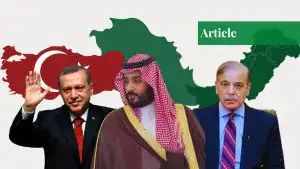
So far, Pakistan hasn’t played any meaningful role in support of Palestine and Gaza as the genocide has raged on. The Pakistani government even cracked down on peaceful protests against Israel in deference to US sensitivities. Now, Israel’s genocidal war machine has brought the flames of war to our doorstep. This is a chance for course correction. Pakistan and Iran have a torrid history of their own. Just last year, they exchanged missile strikes over the issue of terrorism in Balochistan (both Iranian and Pakistani). Both Iran and Pakistan have powerful Western-backed enemies in Israel and India. However, unlike India and Israel (who have developed very close relations and even some synergy), Pakistan and Iran have remained embroiled in petty squabbles. Pakistan has been too submissive to the USA, whereas Iran has bizarrely prioritized ties with India over Pakistani friendship. This needs to change now. Iran did take a slightly pro-Pakistan stance in the recent Indo-Pak Four-Day War (which led to the Iranian Foreign Minister getting abused by the Godi media). Now, Pakistan can take a huge leap towards securing its Western border and pacifying Balochistan by offering help to Iran in its time of need. Today, Iran is facing the gravest crisis in its post-revolution history since the US-sponsored Iraqi invasion of Iran in 1980. Nations like Iran, which have a keen sense of history, seldom forget those who aided them in a time of peril. We must remember that the deep Pak-Turk friendship is rooted in the fact that the Turks haven’t forgotten that the subcontinental Muslims did what they could for them during and after the 1st World War (when Turkiye was fighting for its survival). The help we gave was little in magnitude, but the Turks knew that their enslaved and colonized Muslim brothers did all that they could. Since that day, every Turkish government, whether secular or Islamist, has had a soft corner for the subcontinental Muslims and Pakistan. Iran won’t forget any help we give now. It won’t also forget if we stab it in the back (just as a significant faction of the Taliban hasn’t gotten over 2001 yet despite the fact that Pakistan also aided many factions of the Taliban during the American occupation). This is a golden opportunity. We need to secure our Western borders in order to confront India effectively, and a friendly Iran would almost ensure this. Fortune, and history, only favor the brave. This could be the beginning of a Pakistan-Iran-Afghanistan-Turkiye-Russia-China bloc in Asia that might turn the nightmares of Dr. Samuel Huntington into reality. If such an alliance can be forged, the Zionist-Hindutva axis in Asia will be checkmated. History is offering us its hand. Will we grab it or will we spurn it again so that our elite can settle their families in palaces in the West while the weeping mothers of Pakistan receive the coffins of their children?
Fear robs the foot of strength to rove abroad,
And filches from the brain the power of thought.
Whatever evil lurks within thy heart,
Thou can be certain that its origin is fear:
Fraud, cunning, malice, lies all these flourish on terror, who is wrapped about with falsehood and hypocrisy for veil,
And fondles foul sedition at her breast.
And since it is least strong when zeal is high, it is most happy in disunion.
Who understands the Prophet’s clue aright sees infidelity concealed in fear.
Allama Iqbal, Rumuz-e-Bekhudi
If you want to submit your articles and/or research papers, please visit the Submissions page.
To stay updated with the latest jobs, CSS news, internships, scholarships, and current affairs articles, join our Community Forum!
The views and opinions expressed in this article/paper are the author’s own and do not necessarily reflect the editorial position of Paradigm Shift

Dr Hassaan Bokhari is a graduate of Rawalpindi Medical College, Rawalpindi. In 2018-19, he cleared the CSS exam and was 34th in Pakistan. However, he declined to join the civil service in order to pursue his passion for the study and analysis of history more freely. Presently, he is running a YouTube channel "Tareekh aur Tajziya (History and Analysis)" which focuses on the objective analysis of history and current affairs. Dr. Hassaan Bokhari has authored a book titled "Forks in the Road" about the 1971 fratricide and has also headed the India Desk at South Asia Times Islamabad. He aims to play a part in the process of enabling the nation to understand its history in a perspective marked by objectivity, honesty, and confidence.