
The period of peace following the end of the Napoleonic Wars, known as the “Long Peace,” brought relative stability to Europe until the onset of the First World War. This stability is often attributed to the diplomatic framework, the Concert of Europe, established. This approach influenced later institutions like the League of Nations and the United Nations by promoting international cooperation and the concept of collective security, shaping modern-day international relations. To sum up, the achievements of the Concert of Europe shed light on the attempts of superpowers to work together to maintain peace in an era of great political volatility, signaling a shift in international politics. After the fall of Napoleonic rule, the kingdoms of Europe had a vague understanding of keeping the existing political and territorial status known as the Concert of Europe. This phrase suggested that the great powers had the obligation and the right to intervene in a state likely to face an internal conflict. The great powers suppressed uprisings in Italy (1820) and Spain (1822) yet, later endorsed Belgium’s revolution and declaration of independence in 1830.
The Concert of Europe continued well into the 19th century, with the Great Powers deliberating over land disputes. However, this was done in a form rendered outdated by the revolutions of 1830 and 1848 and, alternatively, the unification of Italy and Germany.
The Congress of Vienna
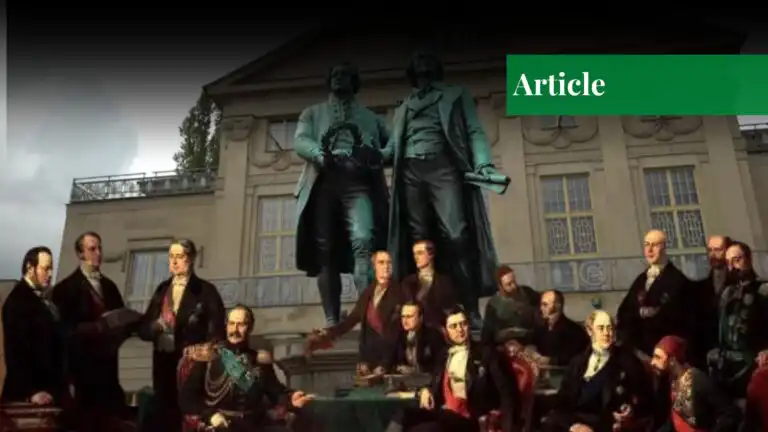
The period between 1814 and 1815 saw the Congress of Vienna take place, effectively marking the zenith of the Napoleonic Wars and serving as a turning point in European history. It also signaled the commencement of the Concert of Europe system. Important individuals such as Tsar Alexander I of Russia, Prince Klemens von Metternich of Austria, and Charles Maurice de Talleyrand of France played key roles in shaping the outcomes of the Congress of Vienna, with their priorities influencing its decisions.
Metternich, who was an avid rival of liberalism, viewed the revolution as a threat that needed to be controlled, with the order before the War of 1812 as the goal. Fearing that France would face severe repercussions for its past hostilities, Talleyrand, representing France, sought to negotiate more favorable terms through diplomacy. As a product of the congress, the previously mentioned borders of France and Germany were altered along with the nationalist sentiments of the German states, the Kingdom of the Netherlands, and the impact Austria’s newfound strength had on Central Europe.
One of the main goals of the Concert of Europe was to provide a balance of power and prevent a single nation from overpowering others. This was done through several methods, such as the principle of collective security, which required states to aid one another if any member was under attack. The great powers of Europe had learned that collaboration was essential to maintain stability and, therefore, created mutual defense alliances that suppressed violence. This concept made resolving arguments easier and more civilized because combat was not the preferred means to settle the conflict. Unlike many other theoretic escapades, the balance of power never ceased being a practical idea. For decades, this idea influenced European powers’ relations with one another, which is a sadder yet more realistic outcome.
The period of 1815-1914, which came after the Congress of Vienna, is also known as the Long Peace, during which superpowers’ wars and conflicts took a particular backseat. Because of the tranquility of this age, national identities, intercultural movements, and even economic booms were possible. The War of Greek Independence and other revolutions in Italy were internal struggles that remained relatively contained but did not escalate to the same levels of warfare common in prior decades. These relatively peaceful circumstances resulted from the diplomatic efforts of the Concert of Europe and the existing balance of power, which enabled states to pursue their interests without resorting to war. Nevertheless, rising nationalism and the complex interplay of interests among the Great Powers would soon jeopardize this legacy of peace and set the stage for future conflict.
Mechanisms of Cooperation
The Congress System was a fundamental vehicle for cooperation in the Concert of Europe periods when the great powers constantly met and carried out diplomatic discussions. The major countries could coordinate their responses to the new problems, iron out differences, and discuss burning issues at the conferences. One of the many congresses, the Congress of Aix-la-Chapelle in 1818, decided to withdraw occupying military forces from France and reinstate it as a great power. The Congress of Verona in 1822 was equally important because it reviewed the case of Spain and the possible intervention to re-establish the Bourbon monarchy. Beyond this goal of fostering communication, these meetings created a norm of making group decisions, thus making the impression even stronger that international cooperation is a precondition for preserving peace and security in Europe.
The collaboration systems created by the Concert of Europe were very much dependent on diplomatic communication. Major Powers understood the imperatives of keeping communication channels open to avoid misinterpretations and the contemplation of clashes. The negotiation of treaties, the changing of ambassadors, and the development of procedures for complaints all became dependent on diplomacy. As long as diplomacy had allowed states to resolve their differences without resorting to war, its importance in conflict resolution increased. The ability to have viable dialogue reduced tension and produced respect among the powers for each other, which, therefore, added to the general stability of the political landscape in Europe at the time.
Another integral feature of the Concert of Europe was interventionist policy. It truly expressed the determination of the great powers to act collectively against revolutionary movements and in preference to conservative governments. The powers believed that upholding the old monarchs and shunning thoroughgoing reforms that might lead to general dissatisfaction was necessary for peace in Europe. The expressions of the great powers in Greece between 1821 and 1832 in assisting the Greeks gain independence from the Ottoman Empire, thus leading to the emergence of the independent Greek state, Austrians, and other states in the restoration of social order after several revolts in Italy between 1820s-1830s shows the emphasis of such interventionist measures on two things: The Concert’s determination of preserving the status quo, and the emergence of demands of the principle of stability versus nationalism and liberalism until it, in the long run, challenged the fundamental credo of the Concert of Europe.
The Seeds of Discord
New demands for nationalism and ethnic conflicts inside the Concert of Europe created seeds that eventually threatened its established order. During the latter part of the 19th century, numerous nationalist movements developed because ethnic populations felt greater pride in their identity and wanted independence. Nation-building movements sought to establish independent states that embodied their people’s historical and cultural identities while separating from multinational empires. The advancement of nationalism produced two major examples when Germany and Italy fought to unify.
The German official Otto von Bismarck and other Prussian officials employed nationalist sentiment to build German unity by uniting various German states under Prussian leadership. The period brought together different forces that enabled the creation of the German Empire in 1871. Italian unification achieved several states’ political union through the initiatives of Giuseppe Garibaldi and Count Camilo of Cavour. These nationalist movements became a danger to the established conservative social order of the Concert of Europe by provoking tension between major powers as different nations sought to manage evolving nationalistic interests.
The main powers of the Concert of Europe made the organization’s disagreements worse through their competing aims. Each power maintained different national goals that repeatedly opposed other political interests. Russia had contrasting views with Great Britain regarding European powers and their development, especially in their disagreement about the Eastern Question and its implications for the future power arrangement in the Balkans.
Russia sought to expand its influence in the Balkans under the pretext of protecting Slavic populations, while Britain focused on maintaining imperial dominance and curbing Russian expansion. The powers failed to agree because their different goals and aspirations were not resolved.
Conclusion
The Concert of Europe lost its collaborative framework because major powers failed to achieve consensus, thus creating distrust among them. The period after the Napoleonic Wars experienced long-term peaceful conditions because the Concert of Europe established operational cooperative methods through the Congress of Vienna framework. International relations exist in a state that shows both conciliation and disharmony. The final result faced threats from growing nationalistic movements alongside opposing national interests, which became apparent through German and Italian unification and British-Russian territorial conflicts. The Crimean War started while the Concert lost its political power due to this development. Although the world remains divided, history underscores the importance of diplomacy and collaboration in maintaining stability.
If you want to submit your articles and/or research papers, please visit the Submissions page.
To stay updated with the latest jobs, CSS news, internships, scholarships, and current affairs articles, join our Community Forum!
The views and opinions expressed in this article/paper are the author’s own and do not necessarily reflect the editorial position of Paradigm Shift.