The Middle East at a Political Crossroads
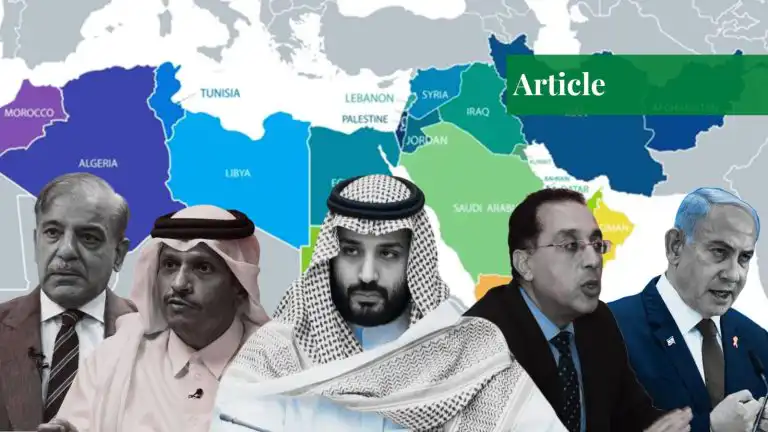
The Middle East is commonly portrayed as a region of conflict and instability. While this characterization is not entirely misleading, it is also insufficient. Today, the Middle East finds itself at a momentous political crossroads, where the old order of governance is being challenged, the balance of power in the region is shifting, and, most importantly, societies across the region are quietly but steadily demanding change. The seeming tranquility that pervades much of the region today hides the region’s underlying, and increasingly deep-seated, economic, political, and social fault lines that continue to shape its future.
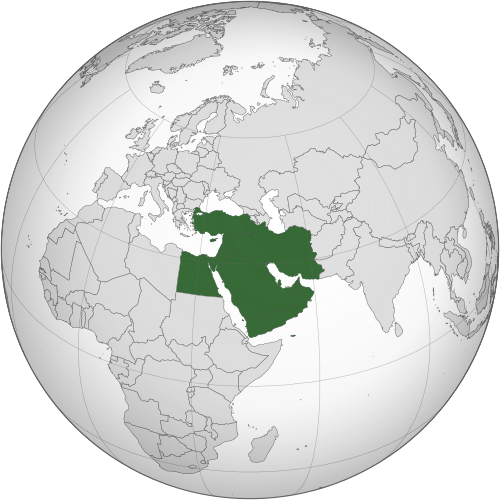
More than a decade after the Arab Spring, the region has neither fully changed nor fully returned to its pre-Arab Spring trajectory. Rather, it has settled into a precarious state of being simultaneously in a state of survival and transformation.
“Those who make peaceful change impossible make violent change inevitable.”
— John F. Kennedy
The Return and Reinvention of Authoritarian Rule
Perhaps the most profound consequence of the post-Arab Spring era has been the resilience of authoritarian rule. Rather than failing, regimes across the Middle East have either adapted or survived. Rather than making the same mistakes of 2011, regimes across the region have come to rely not only on Instead, they have come to rely not Instead, they have come to depend not only on repression but also on sophisticated surveillance, managed political participation, and carefully crafted nationalist discourses.
In Egypt, the state has positioned itself as the sole guardian of order in the face of chaos, justifying its repressive political rule in the name of security. In the Gulf states, political authority is centralized, but it is justified through economic incentives, public sector employment, and massive schemes for modernization. Saudi Arabia’s Vision 2030 is one such example, in which social reform is introduced incrementally, and political opposition is firmly under control.
This kind of political system may well offer a temporary guarantee of stability, but it does absolutely nothing to address the underlying issue of political legitimacy, which cannot be finessed indefinitely through control alone.
Economic Anxiety and Restless Youth
Economic pressure has become the most destabilizing force in the Middle East. The youth of the Middle East constitute one of the largest populations in the world, but employment opportunities are limited. Unemployment, inflation, and a deterioration of living standards have called into question the traditional social compacts that once sustained authoritarian politics.
Lebanon and Tunisia are cases in point for the dangers of economic mismanagement. Lebanon’s economic collapse has stripped its political elite of all legitimacy, while Tunisia’s democratic experiment has stalled under the weight of economic crisis. Even more stable regimes, such as Jordan, continue to experience periodic protests based on economic grievances rather than ideological ones.
Not even oil-rich regimes are immune. As the world’s demand for oil increasingly turns away from fossil fuels, Gulf regimes are confronted with the urgent imperative of economic diversification. Economic transformation without political liberty, however, threatens to open a chasm of inequality and social alienation.
Regional Rivalries in the Multipolar Middle East
The system requires both oppressive methods and advanced monitoring systems together with restricted political involvement and specially developed national identity stories.
The Egyptian government presents itself as the only force that protects the country from instability and uses this power to enforce strict political control for security reasons. The Gulf monarchies maintain their political control, yet their rulers obtain legitimacy through economic benefits, public sector jobs, and major development initiatives. The Vision 2030 program of Saudi Arabia demonstrates this method by implementing selected social changes while maintaining strict restrictions on political opposition.
The governance system provides temporary peace to the region, yet it fails to create fundamental political authority, which cannot be sustained through power enforcement.
Palestine: The Unfinished Political Question
The Palestinian issue maintains its strong influence throughout the Middle East, even though Israel has established normalization agreements with multiple Arab countries. The people maintain strong support for Palestinian rights, while the ongoing violence in Gaza and the West Bank demonstrates that the conflict remains a priority issue.
Regional governments must show support for public views about Palestine because failure to do so will damage their legitimacy among citizens. The inability of external parties to find real solutions to the problem causes ongoing disturbances in the region. The Palestinian issue continues to exist because peace treaties that disregard public needs will never achieve stable peace.
Stability Today, Uncertainty Tomorrow
The political future of the Middle East will develop through a core struggle between governmental authority and societal progress. Economies will continue to grow their economic disparities because governments can only suspend public protests while they handle current emergencies.
The recent events in Pakistan hold great significance for this nation. The Middle East serves Pakistan as a vital economic partner, while its labor force travels there, and it participates in international diplomatic activities. The region’s changing dynamics require all foreign policies and economic activities to be based on a thorough understanding of its current situation.
The Middle East presents a continuous state of evolution. Political systems will determine the future of the countries through their capacity to implement either gradual changes or complete system overhauls. History shows that stability exists because governmental control will maintain its existence for a limited time period, but it will not last indefinitely.
“History teaches us that societies which refuse to reform eventually force change upon themselves.”
— Samuel P. Huntington
If you want to submit your articles and/or research papers, please visit the Submissions page.
To stay updated with the latest jobs, CSS news, internships, scholarships, and current affairs articles, join our Community Forum!
The views and opinions expressed in this article/paper are the author’s own and do not necessarily reflect the editorial position of Paradigm Shift.