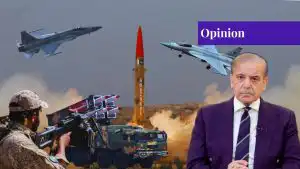

The great wars of the past were fought with tanks, jets, and artillery. Wars today-and tomorrow-are fought in mute silence, on glowing screens, and invisible domains. Here, Pakistan is not an unknowing spectator to cyber security or insecurity, as a line or two of malicious code can kill the economy or incapacitate the command systems of a country. It is indeed a state that understands the stakes, acknowledges the existential dangers, and is diligently building a cyber shield capable of safeguarding sovereignty against the most elite of adversaries.
There is a distinction between a tale of catching up for Pakistan in cyber evolution and a tale of smart adaptation. Where countries boast about huge cyber budgets, Pakistan knows how to achieve the strategic effect with precise tools and asymmetric capabilities. In this region, the digital battlefield is as active as the Line of Control; hence, Pakistan’s resolve to defend its networks now, counter hostile narratives, and prepare for future cyber offensives is not just commendable but essential for its survival and rise as an emerging digital power in South Asia.
The Evolution of Cyber Security in Pakistan
In recent years, with the explosion of cyberattacks on an international level — from financial scams to shutdowns of power grids — it became necessary for countries to rethink their overall strategy toward cyber warfare.
Cyber preparedness entered its national security agenda in Pakistan by the mid-2010s. This was not just about imitating superpower doctrine; rather, it was about being placed into a framework that matched Pakistan’s threat environment with its resource realities. The transition was away from pure defensive posturing toward developing offensive capabilities for use against imminent threats.
The approach was similar to the doctrine of “strategic depth” in terms of conventional warfare-but it was actually in cyberspace. Pakistan would include efficiency in the ability to operate in enemy networks, locate intelligence, and disrupt hostile systems, rather than perimeter defence.
Security Needs: Offensive and Defensive Capabilities
Defensive cyber capabilities of Pakistan have transformed enormously over the last decade. There are secure, air-gapped military networks that prevent any remote infiltration; all sensitive data is secured by sophisticated firewalls and intrusion detection systems that are layered. Moreover, in real time, the Security Operations Centres (SOCs) can assure that any anomaly will be detected and neutralized before any major damage is caused.
To use an offensive metaphor, it is demonstrated that Pakistan is not only able to defend but also attack. It has systems that can conduct a targeted disruption at enemy communication, penetrate secure networks for intelligence-gathering purposes, and conduct tactical action in information warfare to counteract hostile propaganda. Like special forces in traditional combat, these cyber attack teams operate quietly, strike precisely, and disappear without leaving a digital fingerprint.
Cyber Forces Organizational Structure in Pakistan
The cybersecurity architecture of Pakistan is not a single monolithic body but a coordinated ecosystem. Each strategic-level command at the top aligns cyber policy with national security objectives. Each arm maintains its own specific cyber unit, whose responsibilities include protecting branch-specific systems and supporting field operations.
The online combat potential of the civilian sector lies within agencies such as the FIA Cyber Crime Wing that prevent cybercriminal activities, interrupt extremist propaganda, and provide assistance in international investigations concerning cybercrime. As academia and the private sector in technology engage more extensively, they become a part of varied solutions that range from encryption software to AI-oriented threat detection.
Civil-military integration is structured like combined operations for conventional warfare: with armies, air force, and the navy working together toward strategic dominance. In cyberspace, it may be invisible, but it is no less important.
Vulnerability Assessment of Civilian Infrastructure
The advancement notwithstanding, there are areas in Pakistan that lie outside direct military control and remain vulnerable. Civilian infrastructure, be it power grids, hospitals, transportation systems, or banking, falls far below anything approaching military grade in terms of cybersecurity. In military parlance, these constitute national defence soft targets that are easy to hack and control.
The adversaries are cognizant of this imbalance and would rather attack the properties of the civilian sector to instil terror, disrupt economic stability, and build political pressure without crossing any threshold that would amount to direct military retaliation. Therefore, fortifying civilian infrastructure becomes, thus, not a secondary priority of sorts; it is, in fact, part of the frontline against modern hybrid warfare.
Talent Challenge
The ultimate definers of Pakistan’s cyber capabilities have been its human capital. Every year, Pakistan produces thousands of IT graduates; however, only a small number receive advanced training in cyber warfare, a fierce competition for skilled personnel who are lured abroad with attractive offers from tech giants and foreign defense contractors.
This means that, on a conceptual level, the trained pilots or elite soldiers are being taken away by another nation out of Pakistan’s hands. Without any retention strategies, such as competitive salaries, research opportunities, and national recognition, Pakistan may end up destroying the very basis of its cyber power.
Reliance on Foreign Technology
While very little progress has been made in indigenous software development in Pakistan, much of the hardware, such as processors, routers, and communication equipment, is still imported. In this sense, it is a strategic vulnerability, similar to being dependent on foreign ammunition during war.
An aggressive state could embed backdoors in hardware or disrupt the supply chain in times of crisis. True cyber sovereignty would mean investing in secure, domestic manufacturing, while researching alternative supply routes.
Strategic Advantages in Pakistan’s Cyber Defence Posture
In spite of its vulnerabilities, Pakistan has certain advantages that bolster its cyber posture. Geographically, it occupies a vantage point at the intersection of South Asia, Central Asia, and the Middle East, a location that would allow it to influence data flow across the region.
In contrast to countries with far greater budgets for cyber warfare capabilities, Pakistan has had several opportunities to understand hybrid warfare in which kinetic operations are supplemented by information operations. Cooperative defence agreements with friendly nations also provide access to specialized training, shared intelligence, and technology acquisition, thereby multiplying the capability without a commensurate increase in cost.
Artificial Intelligence as a Force Multiplier
Artificial intelligence is changing the face of the cyber landscape. In their application to defence, AI systems will function for Pakistan much like advanced radar would in air warfare: faster threat detection, prediction of potential attack vectors, and automated countermeasures.
Machine learning can scour millions of random data points in real time, differentiating between anomalies that practicing analysts might miss and identifying them. It can help counter propaganda operations speedily and accurately within the information battlespace.
Cyber Sovereignty and National Resilience
Cyber sovereignty signifies virtual control over the airspace of a nation. It also implies having government and defense data stored within the national territories, managing the country’s internet gateways, and protecting the citizens from foreign surveillance.
On the other hand, national resilience describes enduring and recovering from a prolonged cyber-onslaught without strategic collapse. It requires redundancy in core systems, periodic stress testing of networks, and establishment of a common response protocol between civil and military sectors.
Prospective Trajectories of Cyber Strength
To safeguard Pakistan’s future with regard to cyberspace, it must consider melding its military and civilian cyber assets under a single umbrella of a National Cyber Command, much like it has done for integrated theatre commands for conventional warfare. This will facilitate speedy decision-making, present an unambiguous chain of command, and optimize resource allocation.
Private-public partnerships should be extended, especially in the case of indigenous manufacturing facilities. Operating cyber training academies linked directly to military programs could yield a steady stream of specialists to defend, and when needed, counter-attack in cyberspace.
The war of the digital age is forever alive, silent, and merciless. Survival and strength within the arena require Pakistan not just to withstand pressures, but to master them. The country has already proved that, with strategic foresight, disciplined execution, and targeted investment, it can withstand overwhelming opposition.
Among countries taking lessons from war history, none has ever perished by mere defeat in a battle or two. Such powers have fallen because they could not learn how wars could be waged differently in different times. Pakistan has proved to be an excellent quick learner, faster than expected by critics. Of all components used by Pakistan, sophistication, innovation, and resolve are on the list of protection of interests. In the cyberspace age, with a national-inclusiveness approach, focus on indigenous development, and the will to defend the digital frontier, Pakistan will not just survive; it will thrive.
If you want to submit your articles and/or research papers, please visit the Submissions page.
To stay updated with the latest jobs, CSS news, internships, scholarships, and current affairs articles, join our Community Forum!
The views and opinions expressed in this article/paper are the author’s own and do not necessarily reflect the editorial position of Paradigm Shift.

Mian Masood Tariq is a research intern at the Centre of Pakistan and Gulf Studies, Islamabad. He is a writer and an independent researcher. He can be reached at [email protected]