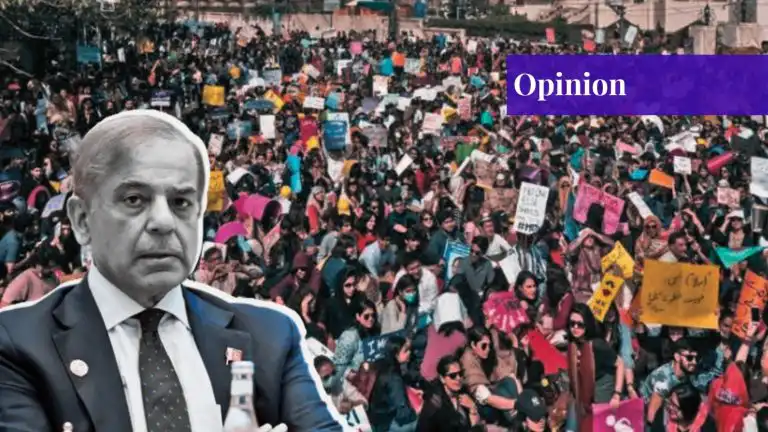
“We will die before we let the province be divided.” Variations of this sentiment increasingly surface whenever the question of new provinces is raised. Such slogans are politically powerful because they turn an administrative proposal into an existential question of identity and belonging. But a federation cannot govern itself through sentiment alone. There is a familiar metaphor for societies resisting change: when the road finally reaches the village, some stand in its path because the unfamiliar is easier to fear than to examine. The point is not that every proposed change constitutes progress, but that resistance itself cannot be treated as an argument against reform.
Perhaps the debate on new provinces has been asking the wrong question. The issue is not whether the country should be divided further, but whether power should remain concentrated so far from the citizens it is meant to serve.
Unfortunately, among the masses, the concept of federation has not evolved from the map of territory. In reality, it is also a map of access. It is access to power, public money, political representation, hospitals, universities and the institutions that shape everyday life. Pakistan’s debate on creating new provinces should therefore move beyond the language of “division”. The more important question is whether a country of around 260 million people can still be governed effectively through only four provinces. It is neither convincing nor humanely possible.
Pakistan has reached a point where creating more provinces should be treated not as a threat to national unity, but as an instrument of better government. We are not in the year 1947, when five provinces were enough (including East Pakistan).
Consider the scale. Pakistan Bureau of Statistics, 7th Population and Housing Census 2023 recorded Punjab alone at nearly 128 million people. Sindh has more than 55 million and Khyber Pakhtunkhwa more than 40 million. These provinces contain regions with very different economies, geography, and social needs. A government may represent all of them, but administrative distance can still produce unequal access to attention and resources.
More provinces can reduce that distance.
The case is important in education. Pakistan’s household survey reports that 28% of children aged five to sixteen are out of school. Educational disadvantage is not evenly distributed. A smaller provincial unit can plan around its own teacher shortages, school distances, girls’ enrolment and rural infrastructure rather than competing for attention within a provincial system. A new province would have its own education department, development priorities and political accountability. When educational failure has a clearer institutional owner, it becomes harder to hide behind the averages of a large province.
The same logic applies to health. Healthcare is experienced locally: whether a woman can reach a maternity facility, whether a district hospital has specialists, whether medicines are available and whether preventive programmes reflect local needs. Pakistan’s 2024–25 household data still show urban-rural differences in reproductive health access. More manageable provincial systems could place planning, budgeting and specialised healthcare institutions closer to underserved populations. The point is not that drawing a new boundary automatically builds a hospital. It is that it creates another centre with the authority and budget to decide that one should be built.
There is also a gender dimension that deserves more attention. Article 106 of the Constitution reserves seats for women in provincial assemblies. If that principle is carried into newly created provinces, provincial political centres can widen the space in which women enter legislatures, ministries, committees and public leadership. Representation is about multiplying the places from which leadership can emerge, for women from regions that remain politically peripheral.
Constitutionally, the idea is neither alien nor revolutionary. Article 239 provides a route for altering provincial limits, while Article 140A establishes devolution of political, administrative and financial authority as a constitutional principle. More provinces can be understood as an extension of that logic. Power should travel closer to those affected by it.
Whatever the road map for this novel initiative is, one aspect must be ensured: new provinces must be economically viable and administratively rational. They should not be created merely as ethnic rewards, electoral bargains or new layers of bureaucracy. Population, geography, revenue capacity, service-delivery gaps, infrastructure and public consent should determine their design. Strong local governments must accompany them, because decentralisation cannot simply stop at a new provincial capital.
The real argument, then, is not that smaller is always better. It is that government should exist at a scale at which citizens can meaningfully reach it, scrutinise it and influence it.
Pakistan has changed dramatically while its provincial map has barely changed. Its population has expanded, cities have multiplied, and expectations of the state have grown. The architecture of government should evolve with that reality.
More provinces would not mean less Pakistan, nor would it erase your ethnic identity. Rather, it will give you more job opportunities and centers of representation and focus on grassroots issues. We will have more locally responsive education and healthcare, more political participation and a shorter distance between a citizen and the state.
At this stage of Pakistan’s development, that is not fragmentation. It is institutional maturity. It is not division of land; it is distribution of resources. As a nation, we have to understand that it is time to move on and let go of the things that do not serve the common good.
If you want to submit your articles and/or research papers, please visit the Submissions page.
To stay updated with the latest jobs, CSS news, internships, scholarships, and current affairs articles, join our Community Forum!
The views and opinions expressed in this article/paper are the author’s own and do not necessarily reflect the editorial position of Paradigm Shift.

The writer is a researcher and analyst of international relations.