
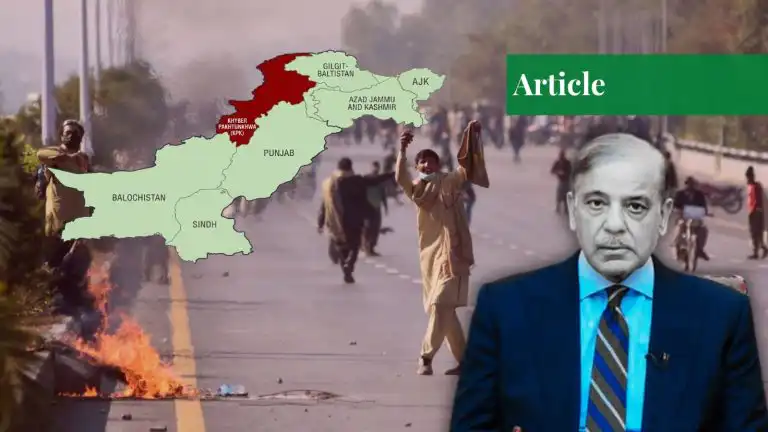
On 11 October 2026, the federal government placed Khyber Pakhtunkhwa (KP) under emergency and Governor’s Rule. A day later, the province’s Apex Committee met under the new setup and promised coordinated action against terrorism, as Dawn reported. Promises are easy to make. The hard part is what comes after them. The Pakistan Institute for Conflict and Security Studies counted 1,232 militant attacks across the country in the first nine months of 2026, most of them in KP and Balochistan, according to Al Jazeera. A “Governor’s rule” can change who makes decisions in Peshawar. It cannot, on its own, make the state stronger on the ground.
Governor’s Rule: Administrative Solution or Political Risk?
The centre used two constitutional tools. Article 232 allows an emergency when an internal disturbance is beyond a provincial government’s control, and Article 234 allows Governor’s Rule when a province cannot be run according to the Constitution, as Al Jazeera explains. The federal government says the previous provincial administration did not own the fight against terrorism. PTI rejects this and asks why the whole province is under Governor’s Rule when the emergency covers 12 districts. The same report notes that ministers’ claims of links with militants were made without public evidence. A Dawn editorial argued that a targeted emergency under Article 232 would have been enough.
The case for the move is practical. One chain of command could cut delays between the police, the CTD, intelligence agencies, the army and Islamabad. The risks are real too: sharper polarisation, weaker democratic legitimacy, and security turning into a party fight. Centralising decisions does not guarantee better governance. If the new setup shows no results, political tension will grow, and security will not improve.
From Announcements to Operational Coordination
Radio Pakistan’s account of the Apex Committee meeting lists clear aims: coordinated action against terrorism, stronger police and CTD with modern equipment and more staff, continued intelligence-based operations, and more attention to education and health in affected areas. Dawn adds that the governor promised regular Apex Committee meetings, and that the interior minister handed 10 armoured vehicles to the KP police.
These are good starting points, but four things will decide whether they work. First, intelligence must move quickly between agencies through clear channels. Second, police and CTD need training, forensic skills, protective gear, mobility, and the ability to trace terror financing. Third, every operation needs a named leader, named support, and an agreed way to judge the result. Fourth, regular security reviews with measurable targets must replace meetings and statements. The critical question is whether the Apex Committee will build a permanent system, or whether coordination will keep depending on whoever holds office today.
Why Military Operations Alone Cannot Guarantee Peace
Intelligence-based operations against armed groups that kill civilians and soldiers are necessary. But force only disrupts. Peace also needs police who can investigate, courts that can convict, and action against the money and recruitment that keep militants going. It needs protection for civilians, no arbitrary detention, and answers when abuses happen.
That is why one detail deserves attention. Al Jazeera reports that the order creating the 12 designated districts suspends the separation of the judiciary from the executive there, so executive officers can perform judicial functions. Areas cleared of militants also need schools, clinics, working local offices, jobs, and justice that people can reach. Tactical success means breaking militant networks. Lasting peace means making sure they cannot easily return. Negotiations cannot replace law enforcement, and military action cannot replace governance. Each has its own job.
The Afghan Border and the Regional Dimension
Pakistan says the Tehreek-e-Taliban Pakistan (TTP) uses Afghan territory. Dawn notes that Pakistan keeps raising cross-border terrorism from Afghanistan, and it links the governor’s remark that policy will now come from Islamabad, not Kabul, to that argument. Dealing with the problem needs intelligence cooperation, border surveillance, diplomacy, and verifiable action against sanctuaries. Relations with Afghanistan also involve trade, refugees, and border management, so the policy cannot have only one dimension. Domestic coordination in KP must be matched by a steady national policy towards Kabul. Border security matters, but it cannot replace better governance and public trust inside KP.
Practical Recommendations: What Should Happen Next?
This is where good intentions need detail. Here is what should happen next.
Begin with a 90-day action plan that publishes priorities, responsible institutions, deadlines, and progress indicators.
Fund the police and CTD fully and on time. Dawn reports that the governor promised better pay and equipment, and that the interior minister promised funds as needed. Those promises should be written into budgets.
Review the National Action Plan, especially stalled work on terror financing, banned organisations, hate-based recruitment and terrorism prosecutions.
Hold district-level security reviews in the worst-hit areas, using incident data and community feedback.
Keep political channels open. The interior minister said consulting tribal elders is the most important step right now, according to Dawn. PTI, other parties, local representatives and civil society should be heard as well, without demanding agreement on everything. Parliament must approve the emergency by 21 October, Al Jazeera notes, which gives it an early chance to ask hard questions.
Protect schools, clinics, livelihoods and development spending in conflict-hit districts. Then measure results: civilian and security-force deaths, repeat attacks, convictions, public complaints, and the return of normal economic life.
The aim should be a state that protects citizens every day, not an administration that only issues stronger orders.
Peace Must Outlast Governor’s Rule
So the first question remains open. Was the Apex Committee meeting a real change in how Pakistan fights terrorism, or one more administrative arrangement? The Centre and the new administration in KP have a chance to fix institutional gaps, strengthen law enforcement and improve life in the affected districts. Their legitimacy will rest on results, constitutional accountability and public safety. Khyber Pakhtunkhwa has heard enough declarations of resolve. It needs a state that turns that resolve into security, justice, and ordinary life restored.
If you want to submit your articles and/or research papers, please visit the Submissions page.
To stay updated with the latest jobs, CSS news, internships, scholarships, and current affairs articles, join our Community Forum!
Find our FREE quizzes and MCQs here!
The views and opinions expressed in this article/paper are the author’s own and do not necessarily reflect the editorial position of Paradigm Shift.

Azhar Ud Din is a student of international relations at Government College University, Lahore.