
Introduction
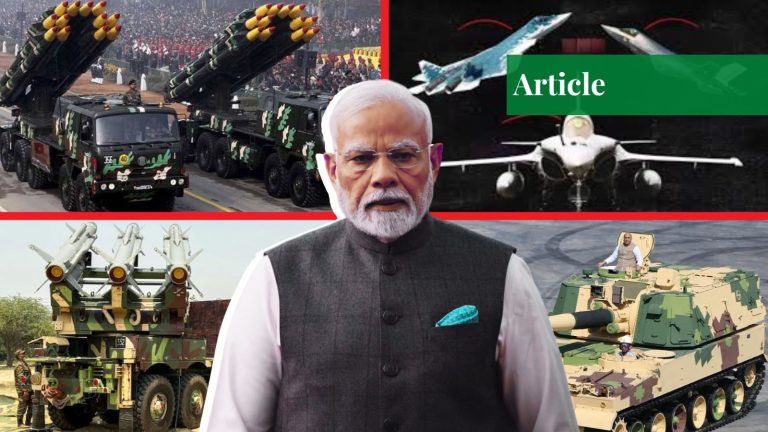
Indian defense modernization indeed is one of the most dramatic changes in the strategic environment in South Asia. New Delhi, the military developments of the country are transforming the deterrence relationship with Pakistan and China since the induction of Rafale fighter jets and the testing of hypersonic missile systems. This modernization does not solely involve the acquisition of hardware; it is also an indirect expression of Indian ambitions to dominate the region and establish a hub in the Indo-Pacific security architecture. The ripple effects of these developments are significant, affecting alliances, doctrines, and the delicate balance of power in South Asia.
India’s Strategic Imperatives
The process of modernization in India is based on the feeling of a dual-threat surrounding. On the one hand, Pakistan is still guided by the principles of nuclear deterrence and asymmetric warfare, whereas on the other hand, the aggressiveness of China in relation to the Line of Actual Control (LAC) has increased since the 2020 Galwan Valley confrontations. The Doklam standoff of 2017 further highlighted the urgency of ensuring that the armed forces of India become modernized to be able to counter Chinese aggression. The defense planners in India are well aware that modernization is not simply about parity, but strategic freedom. Investing in sophisticated technologies, India aims to minimize its reliance on other suppliers, enhance deterrence, and project power in the Indo-Pacific. Modernization as practiced by India is therefore a reaction to both the short-run fears and a long-term plan of gaining the leadership of the region.
Rafale Acquisition and Air Power Transformation
The introduction of the Rafale fighter jet was a landmark in India’s air power. Mounted with Meteor beyond-visual-range missiles, state-of-the-art avionics, and electronic warfare equipment, Rafales give India a qualitative advantage over Pakistan’s F-16s and China’s J-20 stealth fighters. In the recent past, India bought 36 Rafales in 2016, and there are consequent negotiations to purchase 114 additional Rafales, which is likely to become the biggest fighter aircraft acquisition in Indian history. This increase would take the Indian fleet to more than 150 Rafales, which would make the Indian Air Force (IAF) one of the strongest in the Indo-Pacific. Case Study: An incident that happened in 2019 in the Balakot crisis in India, as the country depended on aging aircraft, revealed the necessity of modernization. Rafales, which also have their precision strike capability, are meant to ward off such weak points in future conflicts. The Rafale procurement is an attempt at showcasing India’s will to capture the art platforms and strengthen aerial superiority in South Asia.
Hypersonic Weapons and Strategic Stability
The Defense Research and Development Organization (DRDO) is spearheading a hypersonic missile project in India, which has brought India a step forward in terms of next-generation warfare. India also achieved a hypersonic missile in 2024 with an estimated range of 1,500 kilometers, and it can carry a variety of payloads. India would also test a Mach 8 hypersonic cruise missile in 2025, under Project Vishnu, which showed maneuverability and, as a strike weapon, precision. Hypersonics are also putting strain on the current missile defense systems, and this may weaken the deterrence posture of Pakistan. Analysts caution that hypersonics encourage a pre-emptive route, elevating the chances of calculation error. Hypersonic weapons increase the deterrence stance of India and, at the same time, may lead to the destabilization of the South Asian region by fueling the arms race.
Naval Modernization and Indo-Pacific Strategy
The modernization of India goes into maritime power. The pictures of the commissioning of INS Vikrant, the growth of submarine fleets, and the deployment of BrahMos cruise missiles accentuate the desire of the Indian government to dominate the Indian Ocean. The Indo-Pacific policy of India focuses on alliance and freedom of passage as per the Quad system. Such projects like the SAGAR vision and the Indo-Pacific Oceans initiatives underscore the efforts of India to be regionally stable. Case Study: In 2023, more than 60 Chinese naval ships were spotted off the exclusive economic zone of India, in the contest for sea dominance. Indian modernization of its navy is therefore defensive and strategic in nature, which is meant to counter the increasing presence of China in the seas. Naval modernization puts India at a key point in Indo-Pacific security, balancing the Chinese maritime aggressiveness and strengthening the security of the area.
Pakistan’s Response and the Security Dilemma
Pakistan considers Indian modernization an immediate danger to its security. Though Islamabad has depended on realistic minimum deterrence, it has tried to modernize its traditional forces with Chinese aid, such as JF-17 fighter jets or modern air defense systems. Pakistan declared the establishment of a separate missile wing known as the Rocket Force in 2025 because of a four-day conflict with India. This is an effort by Islamabad to match the modernization of India, even with economic limitations. The modernization of India continues the pattern of mistrust and a weapons race with Pakistan, negating the hope of long-term stability.
The China Factor
The military emergence of China towers large over the modernization agenda of India. The introduction of high-tech systems such as the LAC and the strengthening of its defense relationship with Pakistan will make Beijing act more quickly in response to India’s modernization. The introduction of the stealth fighter J-36 and the amphibious assault ship Type 076 into China points to the growing discrepancy in military prowess. The modernization of India is therefore not just concerning the parity with Pakistan but also the counteraction of the technological superiority of China. Modernization in India cannot be completed without the Sino-Indian rivalry, as South Asia stands in a greater battle: the Indo-Pacific rivalry.
Regional and Global Implications
India’s military modernization is reshaping both regional and global security in ways that are not entirely straightforward. On one hand, the steady buildup of advanced systems and doctrines strengthens India’s role in the Indo-Pacific, giving the United States and its allies a stronger partner to balance China’s growing influence. This progress enhances India’s credibility as a global power, improves interoperability with major militaries, and signals its readiness to play a larger role in collective security. On the other hand, the same modernization creates unease among smaller South Asian states, which often view India’s expanding military power as a bid for regional dominance.
For Pakistan, it intensifies the security dilemma, pushing Islamabad to maintain credible minimum deterrence while modernizing selectively to avoid falling behind. For neighbors like Nepal, Sri Lanka, and Bangladesh, India’s growing capabilities risk being seen less as reassurance and more as coercion, complicating efforts to build cooperative security frameworks. In short, modernization boosts India’s international standing but risks alienating its immediate region, making trust and collaboration harder to achieve.
Conclusion
The development of India into hypersonics since the Rafales is the highlight of its pursuit of strategic independence and regional superiority. Although modernization enhances deterrence in the event of war with Pakistan and China, it causes more instability in the South Asian region as it enhances the arms race. The ripple effect goes into the Indo-Pacific, where the alliances of India strengthen its maritime stance. In conclusion, the modernization of India is a double-edged sword; at the same time, it increases security due to deterrence but encourages the growth of insecurity by creating regional animosities.
If you want to submit your articles and/or research papers, please visit the Submissions page.
To stay updated with the latest jobs, CSS news, internships, scholarships, and current affairs articles, join our Community Forum!
The views and opinions expressed in this article/paper are the author’s own and do not necessarily reflect the editorial position of Paradigm Shift.

Manahil Tariq Manj is a student of defence and strategic studies at Quaid-i-Azam University, Islamabad. She has previously interned at the Ministry of Defence (MOD) and is currently interning at the Ministry of Foreign Affairs, Islamabad. Her research interests include conventional and hybrid warfare, strategic deterrence, military diplomacy, regional conflict dynamics, and evolving doctrines of modern warfare.