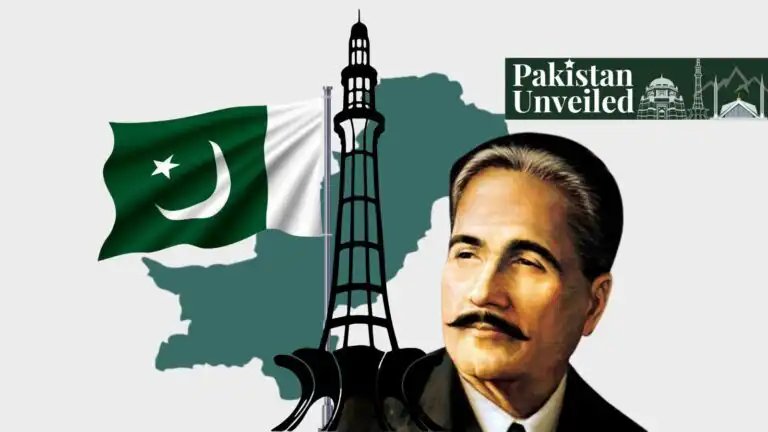

Allama Muhammad Iqbal is regarded to be the most distinguished personality across the globe, particularly in the subcontinent. His presence among the pioneers of the campaign for an independent Muslim homeland is also regarded as the guiding principle for the Pakistani people. Iqbal was born on 9th November 1877. He made contributions to numerous literary writings in the Urdu and Persian languages that became a beacon of light for people. Achieving the honorifics of ‘Sir’ and ‘Poet of the East,’ Iqbal worked hard throughout his lifetime to infuse life into the stagnated soul of the Muslim Ummah. With his poetry, he awakened the dormant feelings of Muslims of the subcontinent and readied them to fight for their rights against the dictatorial regimes. Accordingly, the State of Pakistan announced 9th November as Iqbal Day, which is being celebrated as a holiday to remember and honor the life of the national hero of Pakistan.
Understanding the Vision of Allama Muhammad Iqbal
Concept of Selfhood
Iqbal preached ‘Khudi,’ or selfhood. The word refers to discovering your inner strength. He stated that every individual has to come up on merit and with belief. In his poetry, Khudi relates to nationalist pride. It reminds Muslims to stand up tall. For instance, in “Asrar-e-Khudi,” he commands individual development. This concept assists Pakistanis in enduring challenging times. It builds a robust sense of who we are and educates us about the universal lessons of humankind. Khudi is not merely a theoretical idea; instead, it forces an individual to act accordingly.
Concept of Shaheen
Iqbal cherished the Shaheen, a soaring eagle. It represents youth who fly high among multitudes—the bird preys by itself, free and fine-tipped. The Shaheen in “Bal-e-Jibril” instructs the youth to think high. Do not make nests in ease; it instructs to ascend heights. This symbol ignites passion in education. Young people employ it to pursue dreams in their future goals and objectives.
Poetic Nationalism
Iqbal wished Muslims to lead with spirit and knowledge. His thoughts ignited the struggle against British domination. Today, they remind us of our past glory. Iqbal’s poems instigated change. They awakened people from slumber. His Urdu poems, i.e., Shekwa and Jawab-i-Shekwa, addressed the masses. They pose and respond to God’s summoning of Muslims. These creations gave impetus to the freedom struggle. His Persian works reached scholars far and near. Poetry was used as an instrument of politics. It influenced rights and reform debates. Iqbal’s verses continue to resonate in speeches and songs.
Islam and Modernism
Iqbal demanded Ijtihad, or new thinking in Islam. He advocated that old rules must be revised for new times. Learn science, he encouraged, but keep God at the center. His religious thought book demonstrates how. He admired thinkers such as Newton while respecting prophets. That mix allows Muslims to lead in labs and mosques. Students these days apply their thinking in classroom debates.
Western Criticism
Iqbal cautioned against mimicking the West thoughtlessly. He viewed their emphasis on money as vacuous. Authentic development requires spirit, not only gadgets. For example, construct houses with soul, not merely walls. In essays, he strikes at greed that crushes souls. Pakistan’s development must pursue happiness, not simply wealth. His words lead leaders to reconcile trade with values.
Observation of the Iqbal Day
- Official Addresses
The government organizes Iqbal Day activities. They demonstrate respect in the highest form. Flags are waved high, and leaders voice themselves. Every year, the president gives a message. It emphasizes Iqbal’s place in Pakistan’s history. The prime minister contributes words about youth and oneness. These messages normally reference his poems. They emphasize effort and belief. Messages like these set the tone for the day. They influence how we think about tomorrow.
- National Tributes
The day begins with flag-hoisting. The flag is hoisted at the Parliament House in Islamabad. At Iqbal’s tomb in Lahore, guards pay tribute. The monument attracts thousands. Prayers are offered, with the national anthem. Other locations, such as the Minar-e-Pakistan, join in. These activities commemorate his tomb as a symbol. They connect struggles of the past with present aspirations.
- Academic Events
Schools across Pakistan hold special classes. Universities host seminars and conferences on his life. Poetry contests, or mushairas, are organized. Lines are recited from “Bang-e-Dara” by the youth. Debates cover his thoughts on education. “How does Iqbal inspire the world?” is the national question of the day. These events teach our students their value.
- Media Events
Television channels broadcast full-day programs. Documentaries follow his journeys to Europe and India. Radio broadcasts his poems over light music. Panel discussions include experts. Artists set his poems to music. Classical vocalists blend ragas with his poetry. Bands like Coke Studio have covered them in rock form. Art exhibitions show paintings depicting his life.
Public Engagement and Participation
Local communities organize modest events. Mushairas are attended by people in Lahore’s parks. Karachi bookstores have readings until evening. Cafes in Islamabad host young poets discussing ideas: no grand stages, only mutual love of words. Neighbors connect over lines they love. Youth organizations organize seminars on his concepts. They connect Khudi with local problems and their solutions. Volunteers clean places connected to Iqbal. In Sialkot, he is remembered with the planting of trees in his honor. Such activities extend to his behest to work. Most people go to visit his Sialkot birthplace. The old residence has doors open for visits. Lahore’s Iqbal Manzil witnesses’ queues form. Guides relate anecdotes of his childhood. Pilgrims sense his presence there.
Significance of the Public Holiday in Pakistan
Iqbal and his ideas continue to inspire our national agenda. During hard times, his phrases battle gloom. They encourage young people to drive change, not conform to traditional ways. Iqbal’s thoughts accommodate our present predicaments. Pakistan experiences challenges such as unemployment and rapid city expansion. His emphasis on self-confidence assists individuals in addressing these. For instance, young politicians reference his verses to initiate community ventures. The Iqbal Day holiday challenges us to mix traditional values with modern tools. It keeps his flame burning in everyday life.
Conclusion
Iqbal provided Pakistan with its ideas, its motivation, and its optimism. From the two-nation thrust to the call of Khudi, his bequests take strong root. He blended religion with steps ahead, cautioning against barren ways. Education and youth hold pride of place in his design. His contributions to freedom movements paved the way. Khudi makes every individual powerful—dreams of learning span old and new. Iqbal Day marks such layers. Under Iqbal’s wing, Pakistan flourishes when we all rise to the challenge. Honor him by creating the nation he envisioned, a land of fearless hearts and common light.
If you want to submit your articles and/or research papers, please visit the Submissions page.
To stay updated with the latest jobs, CSS news, internships, scholarships, and current affairs articles, join our Community Forum!
The views and opinions expressed in this article/paper are the author’s own and do not necessarily reflect the editorial position of Paradigm Shift.

He is pursuing a BS in International Relations programme from International Islamic University, Islamabad and has a keen interest in research works, policy analysis, defence and strategic studies and conflict resolution.