
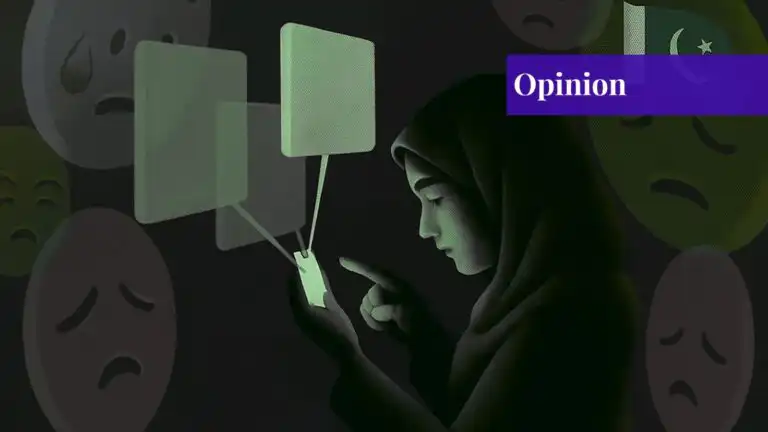

In an age driven by competition and consumption, finding peace in “enough” might be our deepest psychological need. The consumption patterns in Pakistan represent something much more than just need; they represent a deeper psychological problem.
Introduction
I ask myself a question: How much is enough? The question looks easy, but the battle between desire and peace is a lifetime struggle. Every day we do more at work, we spend more, and we scroll more and more; however, this sense of fulfillment is not reached. This contemporary restlessness is contributed to by human nature, changing culture, and psychology, too. Modernization, introductions to digital presence, and newfound ambitions have been accrued in Pakistan in the past few decades. They have also changed our sense of success. To most, happiness has become a comparison race based on possessions and lifestyle, as well as social acceptance. Below all this advancement, a less dramatic question keeps on persisting: Why do we never feel as though there is no more?
The Psychology Behind Wanting More
Psychology describes this tendency of human beings by the use of what researchers refer to as the hedonic treadmill. That is to say that our satisfaction levels will be restored to a new level the moment we attain something, be it an increment in the amount of money we earn, a new phone, or a new car. We soon get acclimatized, and the posts are shifted. What used to be happy turns into something usual. The social comparison effect strengthens this cycle. Success is very visible in such societies as ours, where the community is closely knit. This is intensified with social media, where all success, holidays, and luxuries are publicized and turn into an unspoken rivalry for fame.
Subsequently, we start judging self-worth by other people: what other people think of us as opposed to their personal feelings. Neuroscience is an added complication. Dopamine, which is the chemical of reward, is released in our brain whenever we want to acquire something and achieve it. Yet it is not after accomplishment but during the chase that it peaks. And that is why we get excited when we pursue goals, but not when we attain them. We are accustomed to this pursuit over time and become addicted not to the meaning but to the motion.
Daily Life and Cultural Examples
This cycle is visible in our day-to-day life. Probably one of the most lucrative episodes in the civilization of the wedding, wedding culture has turned into a status show of competition—extravagant ceremonies, costly outfits, and overexposure via social media. There are even the middle classes, who, no matter how much they are strained, make unnecessary expenses merely to keep pace. The same occurs in real estate plots, housing societies, and continuous suggestions of investing more, yet one already has a house that is more than one can utilize.
The discussion about career success is also based more on job titles and pay and less on satisfaction and balance. We are continually making our lifestyles better, but we seldom improve our peace of mind. This is not only a characteristic in Pakistan, but it is also reflected by our collectivistic culture. We all live in tight social groups; hence, we are always being observed to achieve our success. The question of what the people will think turns into an emotional stress that will be clad under motivation.
Islamic Teachings and the Wisdom of Balance
This is an inner struggle that Islam deals with in a beautiful way. The Quran warns against israf (wantonness and profligacy) and glorifies qana (contentment) as righteousness. The richness is not achieved through the multiplicity of worldly belongings but through the richness of the soul.
This is strikingly in line with contemporary psychology, which discovers that gratitude, relationships, and purpose vastly contribute to happiness after a minimum level of security is attained beyond income or possessions. Islam does not forbid ambition and success; it just requires moderation. The means through which people make money are true, self-sustaining, and offer blessings under the name of zakat and charity, and are all worship. What Islam does not encourage is wastefulness and rivalry that fosters envy. “Eat and drink, but do not waste. In fact, He does not favor wasteful people” (Surah Al-A’raf, 7:31).
Therefore, enough in the Islamic sense is not just righteous but also is an emotional state: to possess things that keep dignity, responsibility, and give appreciation. Surprisingly, these doctrines resonate in Western philosophies as well; both Stoicism and minimalism focus on sufficiency, moderation, and self-control. According to them, the real freedom is not having all but the need to have less.
The Pakistani Reality: A Culture of New Norms
In modern Pakistan, rising consumerism and visibility have reshaped social norms. According to various consumer studies, spending on non-essential goods, weddings, and luxury housing has sharply increased in the last decade, even in middle-income groups. Sociologists call this the “demonstration effect”—people spend to signal success rather than to satisfy needs. Economic stress, especially among youth, is often tied not to survival but to comparison: “Everyone else seems ahead.”
A 2022 Gallup Pakistan survey found that over 60% of respondents felt they were not financially secure—yet many reported high spending on weddings, home décor, and gadgets. The dissatisfaction, psychologists suggest, comes not from real scarcity but from perceived inadequacy—a gap between what we have and what we think we “should” have. These cultural pressures, mixed with constant exposure to curated online lives, create a subtle mental fatigue. We end up working harder, resting less, and still feeling behind.
A Psychological and Practical Way Out
What can we do to stop this cycle and find enough? The solution is in minimal yet carefully planned changes in the state of mind and actions:
- Define your personal “enough.” Question yourself: What do I actually need to live with dignity, health, and peace?
- Be grateful on purpose—gratitude journals retrain the brain to be optimistic.
- Instead of comparison, use purpose. Evaluate the improvement based on your development, but not the achievement of others.
- Strike a good balance between the greed of ambition and barakat, that is, work hard and be thankful.
- Give more—zakat, charity, or simple generosity; the riches are increased by the generosity.
- Become simple—to be satisfied with less and not to be full of show is emotional wisdom.
Conclusion: Redefining Success
How much is enough is not only an economic question; it is really a moral and psychological question. It poses a question on whether our chase is bringing peace to our hearts or merely putting up noise in our lives.
Enough is enough when you get what you need, when you are easy in your heart, and when you are blessed and you spread the blessing. When you stop keeping a tally of what you have lost and begin to appreciate what is worth keeping. “Be thankful, and I will definitely multiply you” (Surah Ibrahim, 14:7).
Maybe we need not increase our possessions but increase our perspective, that of bearing in mind that we sometimes need less and that this can be a whole.
If you want to submit your articles and/or research papers, please visit the Submissions page.
To stay updated with the latest jobs, CSS news, internships, scholarships, and current affairs articles, join our Community Forum!
The views and opinions expressed in this article/paper are the author’s own and do not necessarily reflect the editorial position of Paradigm Shift.

Abdullah Khan is a psychology enthusiast who studies in detail the behavior of the human being and social transformations and is pursuing an MPhil in Psychology at MY University Islamabad and can be contacted at [email protected].