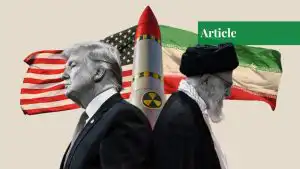
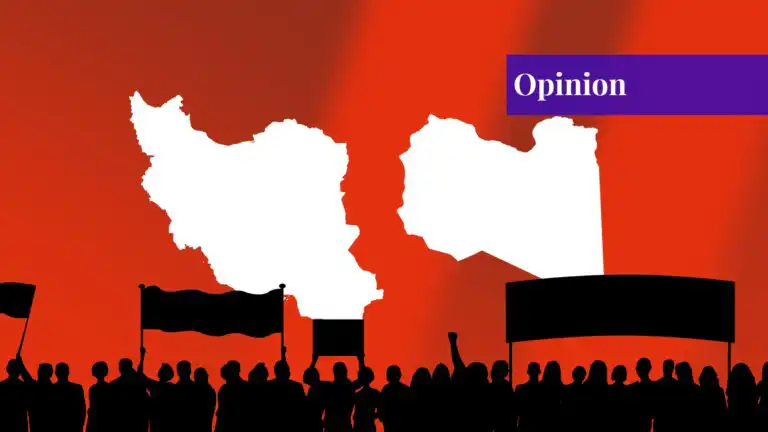

As the first round of nuclear talks between Iran and the United States of America comes to an end, the elephant in the room is whether Washington plots to turn Tehran into Libya 2.0. The analogy refers to an event that happened in 2003 when Muammar Gaddafi succumbed to the pressure exerted by the Western powers to abandon the nuclear program Libya had been working on. The endeavor rendered Libya weak, and it failed to defend itself against the double-faced Western agenda. Today, the US demands Tehran pull the plug on its uranium enrichment agenda; however, with the chaotic collapse of Libya fresh in memory, it remains to be seen whether Iran will fall for the trick or not.
In 2003, Libya was making progress in enriching uranium and maturing its nuclear program, which was in its nascent phase. Gaddafi shocked the world when he agreed to dismantle the nuclear program owing to the incessant pressure from the Western powers. With terrorism and economic constraints clutching Tripoli, the US and the European Union leveraged this, promising the lifting of sanctions and normalization of previously severed ties.
However, this feeble détente ended with the eruption of 2011’s Arab Spring when NATO intervened militarily. Gaddafi opposed the Arab Spring, and this led to him being overthrown from his presidency and subsequently being killed by the rebels. The critics held the view that Gaddafi fell prey to his own mistake in a truce with the West, leading to the abandonment of the nuclear program that might have saved him had he not halted it. For Iran, it is crystal clear that cooperation with the West is actually a harbinger of regime change.
During Barack Obama’s presidency, Washington and Tehran made a pact after 20 months of rigorous negotiations; the agreement was named the Joint Comprehensive Plan of Action, or JCPOA. Under the agreement, Tehran refrained from enriching uranium in exchange for relaxation in sanctions, with UN monitors ensuring compliance on both ends. Nonetheless, in 2018, the Trump administration withdrew from the deal, reinstating sanctions on Tehran and vanguarding a “maximum pressure” strategy.
In response to the abrupt withdrawal by the new US showrunner, Donald Trump, Tehran enhanced its uranium enrichment to 60% purity—which is almost close to weapon-grade levels—but denied any willingness to cook a bomb. Iran was bent on, and still is, framing its nuclear program as a sovereign right it is exercising to acquire insights into medical research and energy-based projects that have nothing to do with the H-bomb. Iran’s Supreme Leader Ali Khamenei cited the examples of Libya and Iraq (where Saddam Hussein was ousted after serving the West) several times in order to remind the world of the double-faced game America played and still plays.
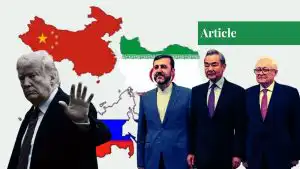
The analogy of Libya and Iran seems captivating at the surface, yet certain factors make it improbable. Firstly, the regional status of Libya and Iran differs. Libya was comparatively an isolated country with limited influence in the region as compared to Iran, which controls different proxies (Hezbollah in Lebanon, Houthis in Yemen) in the Middle East, and it has sweeter ties with China and Russia than any other Muslim country in the world except Pakistan.
Secondly, domestic politics play a crucial role in this comparison. Libyan leader Gaddafi ruled with an iron fist, having no organized opposition. Conversely, Iran is a blend of theocratic and republican institutions that help Tehran maintain its status quo within its borders. Moreover, Iran is far better at framing its nuclear program as a symbol of resistance against Western hegemony. Lastly, any military action against Iran will result in the disruption of oil trade and an impending threat to the allies of the US that border Iran. Meanwhile, China counters Western pressure on Iran by purchasing 90 percent of Iran’s oil exports, thereby saving the Iranian economy from immediate collapse.
The peril of the Libyan model is genuine for Tehran. Some pundits foresee a regime change in the revolution-affected country if it capitulates to the demand for surrender. However, the US is adamant about stopping Iran from acquiring a nuclear weapon, which will threaten Washington’s influence in the region and pose a substantial threat to its close ally, Israel.
A revised and modified version of the JCPOA seems to be the only viable path; however, both countries face certain hurdles: the Trump administration needs to placate Israel, which is insisting on making Iran abandon its nuclear program altogether; on the other hand, Iran is battling against its internal fissures, and a threat to its power status in the region is in the form of Israel.
Conclusively, it must be remembered that Iran is not an isolated monk but a resilient fighter. It will not let any external power destabilize its influence in the region. It is also evident that Iran has strong regional allies. Conversely, the US lacks the leverage it had against Libya in 2003. A feasible and secure solution to this belligerence lies in addressing broader grievances: Iranian demands for security guarantees and an immediate end to the war in Gaza, and American stipulation to mitigate or expunge entirely the Iranian proxies. Ultimately, diplomacy is the key to resolving all the issues. The world has witnessed the devastating effects that war can inflict. Bloodshed is not a viable option.
If you want to submit your articles and/or research papers, please visit the Submissions page.
To stay updated with the latest jobs, CSS news, internships, scholarships, and current affairs articles, join our Community Forum!
The views and opinions expressed in this article/paper are the author’s own and do not necessarily reflect the editorial position of Paradigm Shift.

The author is an M. Phil scholar at the National University of Modern Languages (NUML), Islamabad. He has been writing his thesis for his M. Phil English Linguistics degree. With a keen interest in research writing, he addresses national and international contemporary issues, writing for different news outlets. He has published 10 articles in different HEC-recognized Y-category journals.