

Laiba Khalid is a university student and emerging content writer with a keen focus on socio-political issues, governance, and policy. With a background in English and an interest in current affairs, she brings a critical and youth-driven perspective to contemporary debates. Laiba is particularly interested in bridging academic insight with real-world challenges. She writes with a commitment to clarity and research-based analysis.
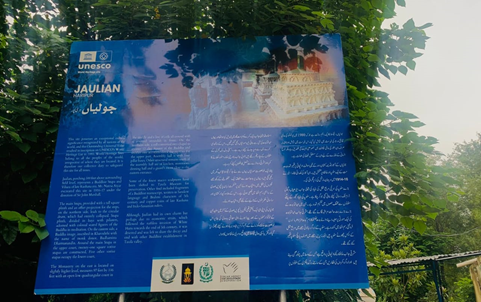
It was a quiet yet pleasant night in Haripur when I first heard the name Jaulian. I was visiting my friend’s village, nestled in the lush green fields and shadowed by mountains. Upon my growing interest in learning about the historical mysteries of that area, a knowledgeable relative of hers recounted a place that felt like a secret whispered through time: a Buddhist monastery and university perched on the hills and known as “Jaulian.” His words painted a vivid picture of ancient stupas, monks, and a center of education that once drew attention from the whole world. On my way back home, as I passed through the Khanpur Taxila Road, the standing hills and a UNESCO board detailing the background of Jaulian struck a chord in me. Something stirred within me: a pull to explore, write, and share this aspect of history.
The Historical Context of Jaulian
Jaulian (also known as Julian), located in Haripur District, Khyber Pakhtunkhwa, Pakistan, near the border with Punjab and the ancient city of Taxila, is not just a historical ruin but evidence of the intellectual acumen of the Gandhara civilization. Dating back to the 2nd century CE, it was a prosperous Buddhist monastery and university, serving as a beacon of learning during the Kushan Empire. Jaulian forms part of the Ruins of Taxila, a UNESCO World Heritage Site inscribed in 1980, recognized for its historical significance and its role in preserving the Buddhist culture.
Gandhara, an ancient Indo-Aryan civilization encompassing the modern-day northwest Pakistan and northeast Afghanistan, was a fusion of many cultures, including Greek, Persian, Central Asian, and Iranian, creating a unique synthesis in its arts and traditions. Jaulian, alongside other sites such as Takht-i-Bahi, was a historical hub where Buddhist philosophy, art, and education flourished, attracting monks and pilgrims. The strategic location—approximately 35 km from Rawalpindi and 45 km from Islamabad, near Khanpur Dam, and perched 100 meters above the village of Jaulian—makes this historical site accessible yet serene.
Archaeological Significance
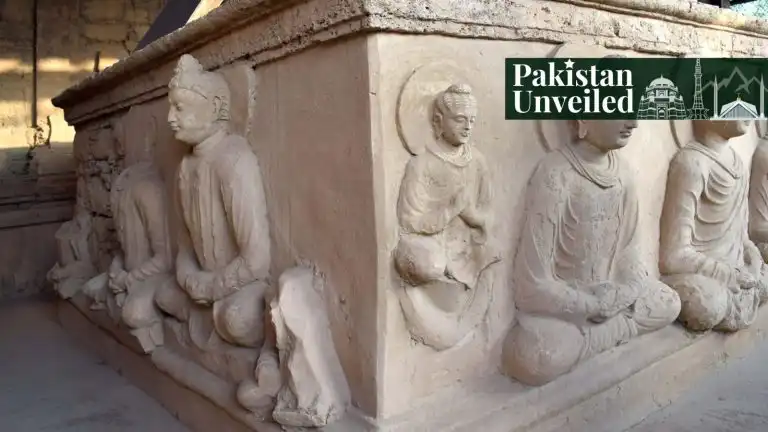
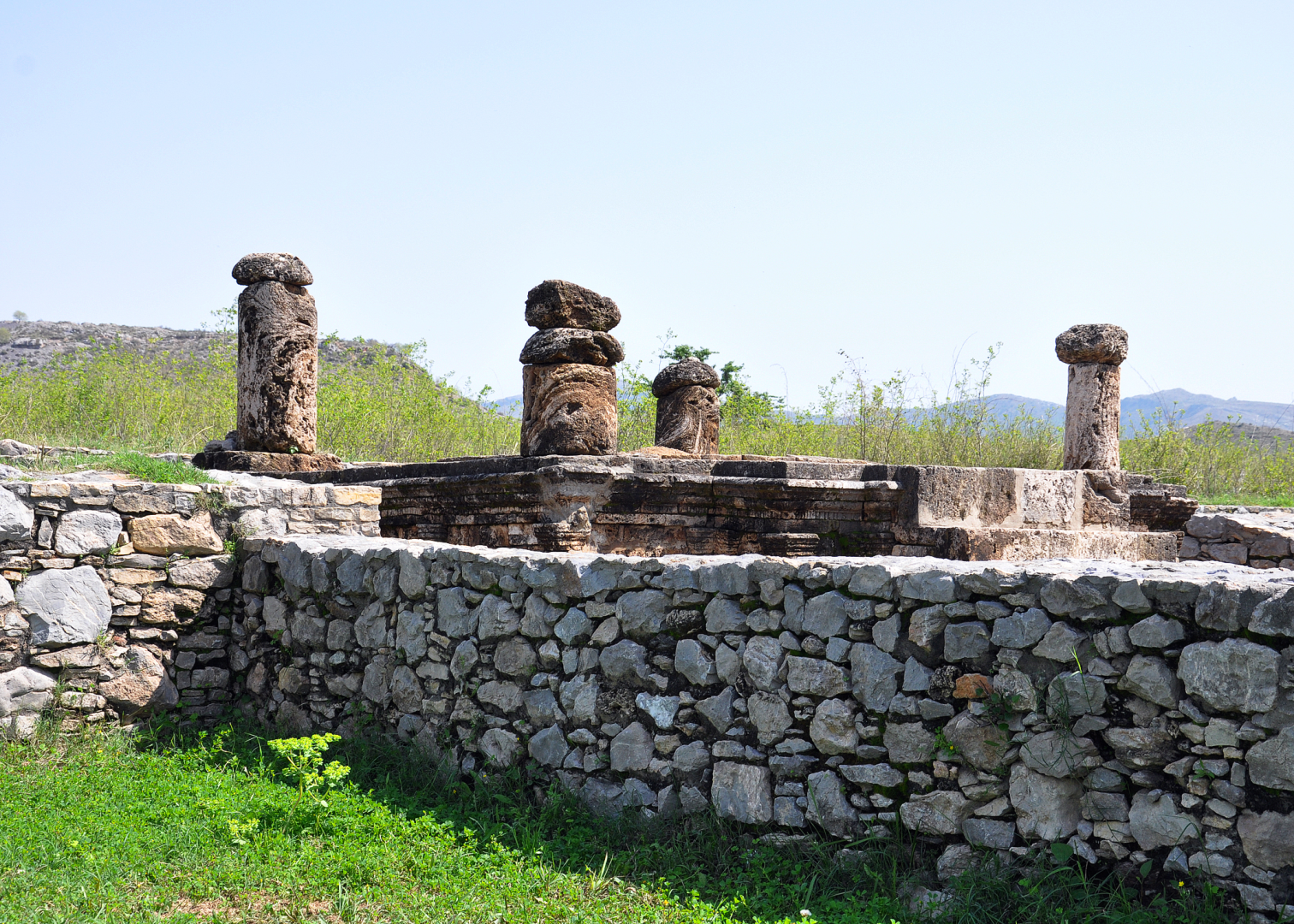
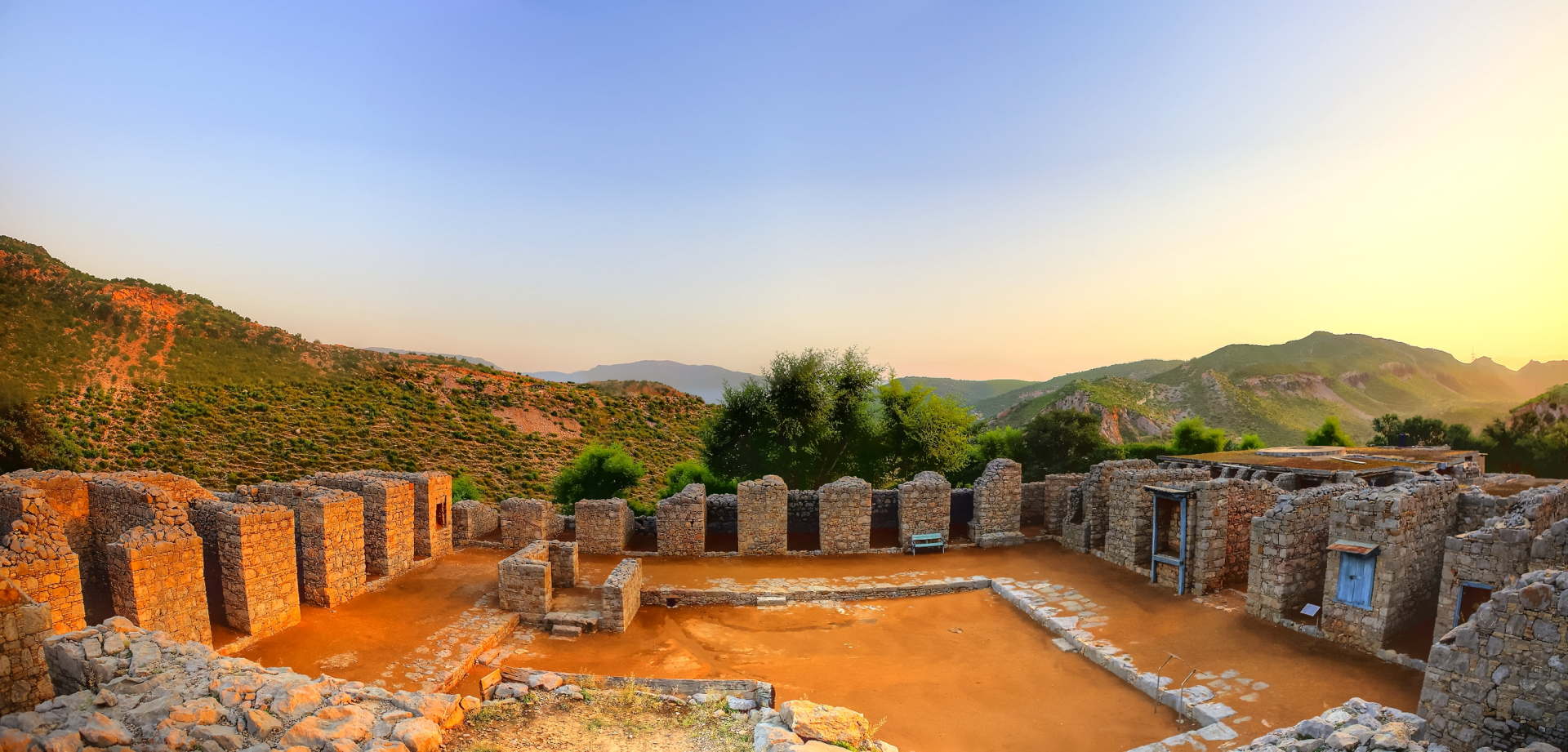
The ruins of Jaulian are a window to the past. It comprises two main components: the stupa and the monastic complex, which includes what is now commonly known as the university. The main stupa, though damaged, stands at the center, surrounded by 27 smaller votive stupas, some of which are believed to be the tombs of the revered monks, adding to the sacredness of the place. The 59 small chapels located around the courts depict the scenes from the life of Buddha.
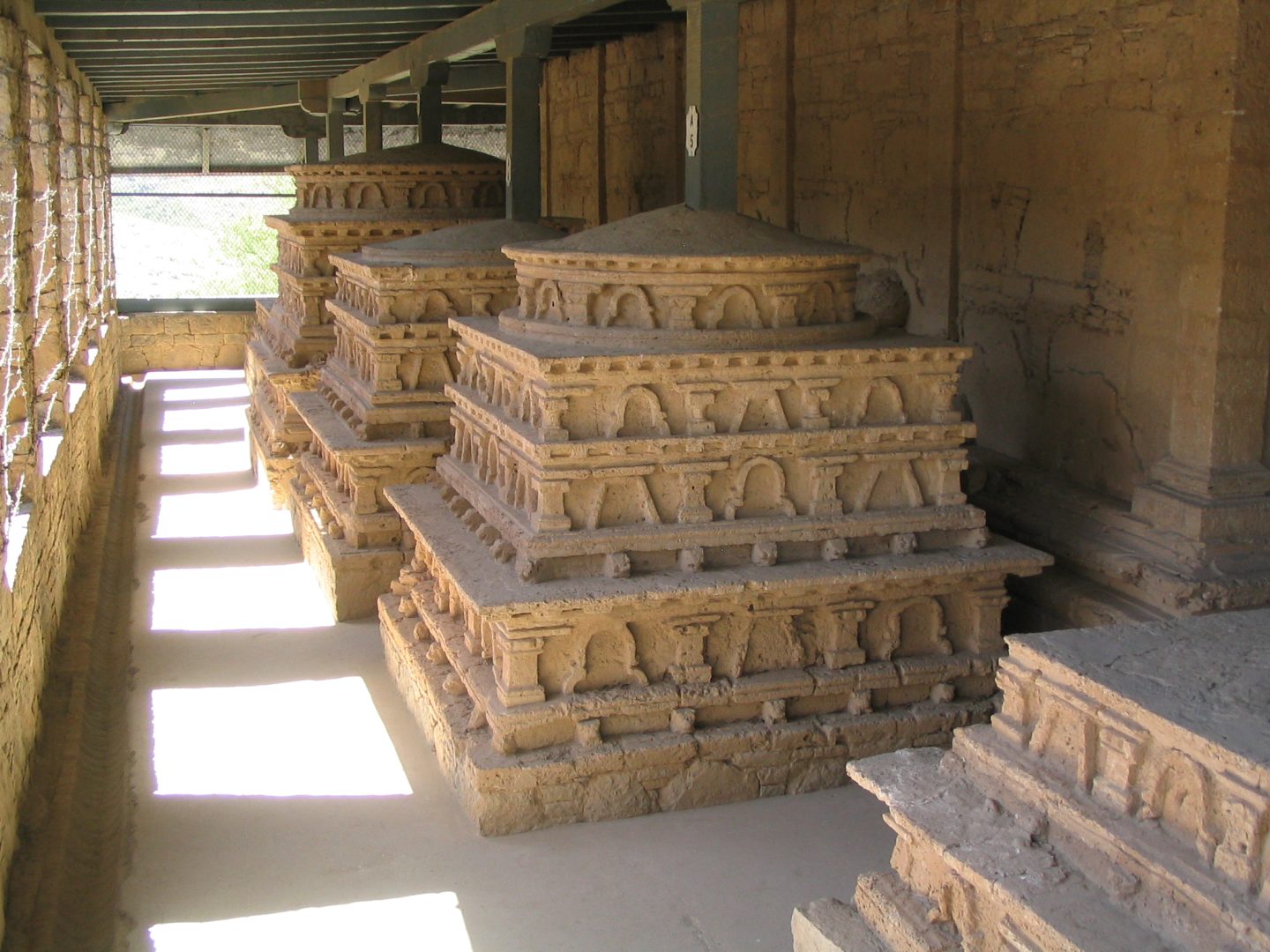
The monastic complex includes two quadrangles, around which 28 living quarters for monks are arranged on each of the two floors. This structure suggests the past existence of a residential university, where education and spiritual practices were intertwined for a holistic experience. The University of Jaulian, also known as the “Seat of Saints” and often described as one of the oldest centers of learning, offered instructions in Buddhist philosophy, scriptures, culture, art, and possibly secular subjects like mathematics and astronomy, as was common in ancient institutions like Nalanda.
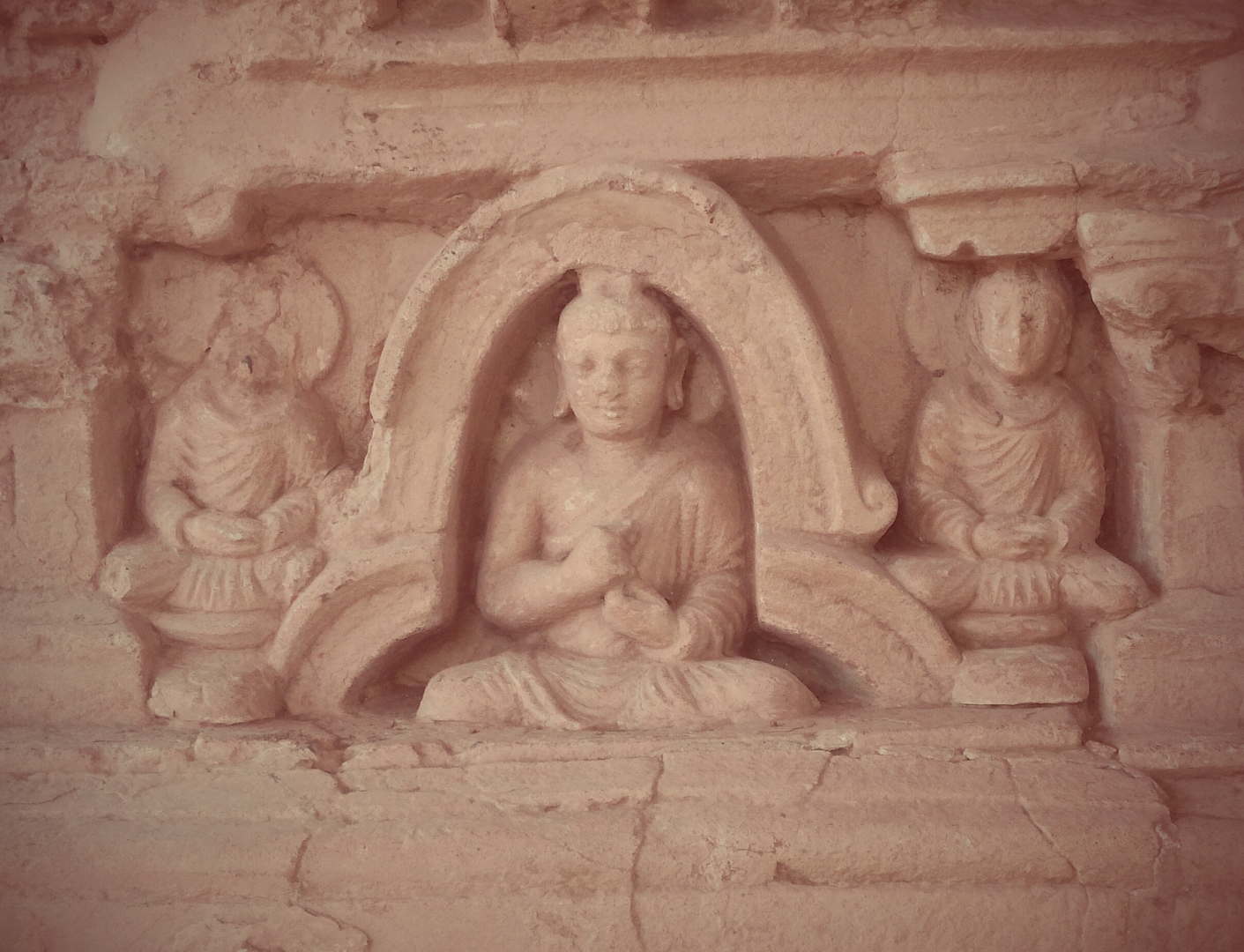
A standout feature is the Healing Buddha, a statue embedded in one of the votive stupas. This stone figure, with a hole in its navel, was a focal point for pilgrims, who believed touching it could cure diseases. Other facilities, including a kitchen, pool, grinding stone, and grinding mills, are a testament to a self-sufficient bygone community of pupils. Jaulian also contains a dedicated scriptorium where Buddhist manuscripts were produced, likely on birchbark. The inscriptions found below some statues depict that they were gifted by pilgrims who used to visit the site for its spiritual significance.
The Rise and Fall of Jaulian
Jaulian, known to have been built in the 2nd Century CE, enjoyed its prime time under the Kushan Empire; a period when Buddhism thrived under the rulers who patronized monastic institutions. The university likely served as an education and training center for monks while functioning as a repository for Buddhist manuscripts simultaneously. Its strategic location along the trade routes, connecting India to Central Asia, China, and Afghanistan, facilitated cultural exchange and the spread of Buddhism.
The fall of Jaulian is attributed to the invasion of the White Huns, who devastated the ancient city of Taxila and its surrounding sites in the 5th Century CE. The monastery was abandoned; its stupas and statues left fading in the dust of time. It was only during the early 20th century that the British archaeologists rediscovered this historical location. The excavations, spearheaded by Sir John Marshall, rekindled the significance of Jaulian in the Taxila complex and broader Buddhist culture.
Preservation and Modern Significance
Today, the remains of Jaulian are under the custody of the archaeology department of Khyber Pakhtunkhwa, which has been working for the conservation and protection of Buddhist assets. The efforts made by Lahore University of Management Sciences (LUMS) and the Directorate of Archaeology and Museums, KPK (DoAM) include digital preservation; 3D models and virtual tours of the stupas and other remains for the accessibility of a global audience. These initiatives underscore the site’s importance as a living heritage that continues to inspire and connect people.
Recently, in November 2023, foreign delegates from Thailand and Malaysia paid a visit to the ancient university and monastery of Julian. It reflects the continued significance of this heritage for Buddhist communities all over the world. The visitors, welcomed by the field officer of the KPK’s archaeology department, were given a briefing regarding the preservation and importance of the historical asset of Jaulian.
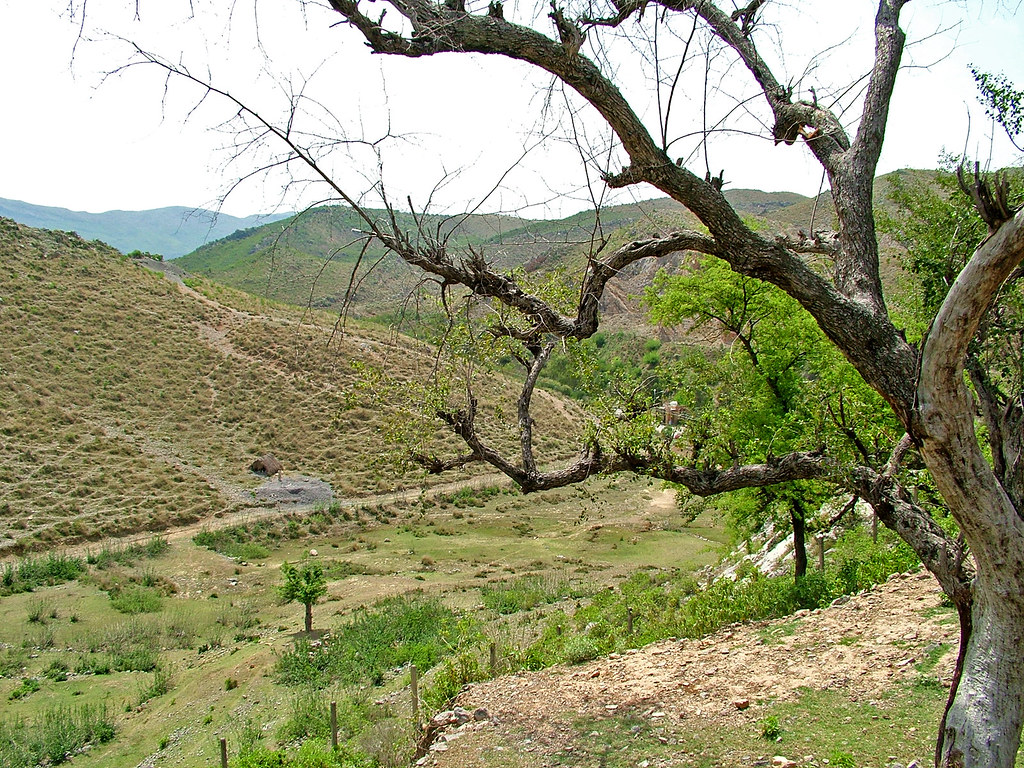
The site’s aesthetic and scenic location, near the picnic spot of Khanpur Dam, adds to its appeal for locals and tourists alike. The surrounding landscape, including the verdant valleys and magnificent mountains, enhances the spiritual ambience of Jaulian, making it a place where nature and history converge. Contrasting with the hustle and bustle of the nearby metropolitan cities, the scenic beauty provides an instant relief and freshness for exploration to the site’s visitors.
Challenges and Future Prospects
Despite its UNESCO recognition, the Jaulian remains face similar threats to many of the archaeological sites in Pakistan. Weathering, mismanagement, and insufficient funding risk the integrity and protection of the stupas and courts. The central stupa, already heavily damaged, requires continuous preservation and funding to prevent further deterioration. Additionally, the absence of a functional museum in Haripur creates hurdles in the housing and display of artefacts from Julian and other historical sites.
The potential for Jaulian to become one of the most famous archaeological sites remains untapped. The site has rich historical significance, making it a popular educational, religious, and cultural destination. Improved infrastructure, such as better signage, visitor centers, and guided tours, could make it more captivating for tourists. Promoting Jaulian as part of a broader Gandhara civilisation, along with the remains of Takht-i-Bahi and Mohra Muradu, could grab the attention of scholars, researchers, history students, and tourists, thus fostering economic growth and international acclaim.
Final Thoughts
Jaulian, with its ancient stupas and quiet courts, stands as a witness to the intellectual and cultural opulence of the Gandhara civilization. The wind there carries the echoes of ancient chants, and the stones whisper the stories of the monks who once walked those grounds. The site’s location and surroundings add to its mystic features, inviting contemplation and enlightenment. Jaulian is not just a historical site; it is a call for acceptance of diversity and human connection.
If you want to submit your articles and/or research papers, please visit the Submissions page.
To stay updated with the latest jobs, CSS news, internships, scholarships, and current affairs articles, join our Community Forum!
The views and opinions expressed in this article/paper are the author’s own and do not necessarily reflect the editorial position of Paradigm Shift.