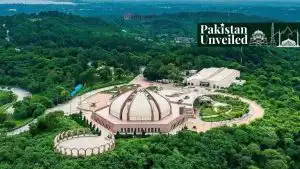
Pakistan has a rich and diverse history and culture in different parts of the country. One such historical place is the Taxila Museum, located in the middle of the ruins of Taxila in Punjab. This incredible building is a testament to the archaeological remains of the region and a glimpse into the historical civilizations, fascinating visitors with its cultural treasures that played a pivotal role in the region. It provides a comprehensive understanding, from the significance of Gandharan art to the details of the current life, to the invitees, and helps them to gain exposure and experience. Its establishment started in 1918 and continued till 1928. Under the viceroy Lord Chelmsford, Sir John Marshall laid its foundation. It operates under the Directorate General of Archaeology and Museums, Government of Punjab. Further, it is open for a visit throughout the weekdays, except the first Monday of every month and the Islamic holidays, with ticketing charges of Rs. 10, 20, and 500 for children, adults, and foreigners, respectively. Moreover, it has a souvenir shop where you can purchase gifts, such as books, related to the Gandharan and other cultures.
The Taxila Museum – A Gateway of Cultures
Various civilizations, mainly the Indians, Greeks, and Persians, used Taxila as their major crossroads in the 2, 4, and 6 B.C., which gave this region the name of the Oxford of civilizations. This connection of Taxila gave its basic tenets to the Museum as well. As a result, the Museum reflects all the major cultures through its collections of artistic works and the intellectual progress of those societies.

The Gandhara Civilization – Greek, Buddhist, and Indian Cultures
The Museum witnessed the artistic symbols of a specific blend of Greek, Buddhist, and Indian cultures during the Gandharan period, from the 1st to the 7th centuries. This period was a notable time for it due to its unique artistic monograms and pieces. Even in the current era, artists are fascinated by the artwork of that time. One of the major works of that age was sculptures, mainly of Buddha and Buddhist figures, which are formal examples of portraiture influenced by Greco-Roman artisans. Moreover, several other artworks are also present, which show the religious features, social traditions, and attributes of the Ghandharan people.
Besides the artworks of the Gandharan period, the Museum also possesses several objects that are remnants of earlier civilizations, such as the historical fragments from the archaeological sites of the Achaemenid Civilization and the Indo-Greek Empire from 522 to 486 B.C. and 4th century B.C. Many ancient coins, pottery, and jewellery are also displayed inside it. These entities allow people to learn about the social, economic, political, and religious structures of the mentioned societies. Likewise, it reveals the significance of Taxila as a historical region, reflecting dominant cultures in the region.
A Glance into Everyday Life
The Taxila Museum, beyond displaying ancient memories, also exhibits a mesmerizing view of the regular lives of the people who used to live in this historical city. There are many daily objects, for instance, utensils, toys, and diverging material tools, which give an insight into the lifestyle of those inhabitants of the region. In addition, artifacts give an exclusive outlook regarding the skills, expertise, and social constructs of the folks of that era.
Architectural Beauty
The Taxila Museum mixes the ancient features of art with modern tenants and provides a comprehensive guide to travellers. As a result, visitors can have a detailed insight into the art pieces and be mesmerized by the beauty of the Museum’s architecture. The building is designed in a way that goes well with creating a melodious and appealing environment and attracts travellers to visit the Museum repeatedly. Further, each part of it is created so that all the remnants of history are properly displayed in a single place, maintaining its beauty and providing an aesthetic architectural atmosphere.
A Source of Cultural Knowledge and Artifacts
History holds a valuable amount of knowledge that acts as a guide to learn and not repeat past mistakes. In this regard, the Taxila Museum provides a great source of learning opportunities for visitors, including research, education, and civilizational insights. Furthermore, it is a hub of education and information because even its staff is involved in investigation, exploration, and queries regarding archaeological miscellanies. Through these steps, familiarity with the ancient objects is expended, increasing productivity and engaging the local community with ancient times.
A Path to Innovation
The Museum acts as a bridge between the past and present for the guests, providing them with a memorable trip through time. As a result, they develop a complete understanding of the diverse civilizations of the South Asian region. It also pushes them to walk on the path of innovation through inquiry, from the Gandharan artifacts to their daily life pieces. Hence, visitors of all ages, backgrounds, and fields can be fascinated and learn from this visit, gaining insight into the legacy of these great civilizations.
Conclusion
To cap it off, the Taxila Museum is an inspiring memorial of history that enriches visitors’ knowledge of diverse ancient cultures and societies. It is a point of visit for not only local travellers but also foreign visitors. Therefore, it adds immense value to the country’s international image. It is a centre of research and knowledge production, so the research and development sector should be further expanded. In a nutshell, the Museum is the perfect place for both academic activities and an inspiring place of enjoyment, so whether it is a history fanatic or a student passionate about archaeological remains, the Taxila Museum is a remarkable place to visit and explore.
If you want to submit your articles and/or research papers, please visit the Submissions page.
To stay updated with the latest jobs, CSS news, internships, scholarships, and current affairs articles, join our Community Forum!
The views and opinions expressed in this article/paper are the author’s own and do not necessarily reflect the editorial position of Paradigm Shift.