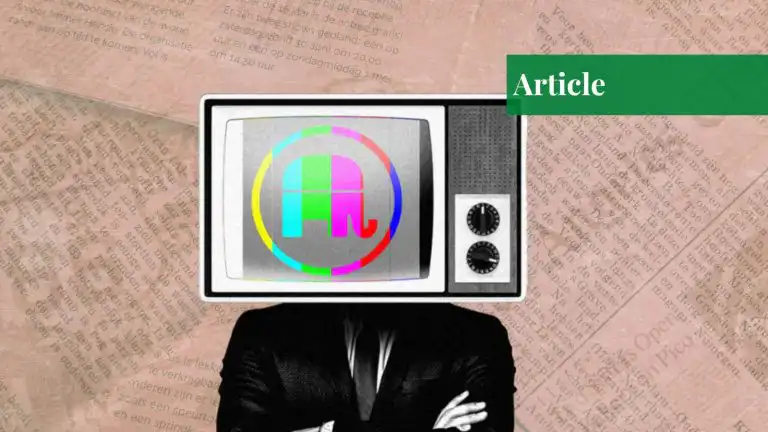

The legacy media had a decades-long run as the gatekeeper of information. Its rigorous editorial standards and meticulous fact-checking ensured impartiality and reliability. A bastion of objective facts and civic issues, the legacy media was considered a crucial bulwark of democracy.
In the US, this era was personified by figures like Walter Cronkite, who helped launch the CBS Evening News and served as its anchor for two decades. His succinct and authoritative nightly signoff was, “and that’s the way it is”. Far beyond a journalistic signature, this phrase was a promise of factual accuracy. A 1972 poll underscored his monumental influence by naming him America’s most trusted public figure.
Cronkite’s commentary on the Vietnam War became a seminal moment in American journalism. His aspersions about the War became a turning point in altering public opinion. It also helped legitimize dissent against US involvement in the protracted conflict. This period demonstrated the immense power a trusted media figure held in shaping national consensus and holding the government accountable.
Following in the footsteps of such figures, a generation of journalists published extremely consequential investigative stories. The most famous example remains the Watergate expose. The meticulous reporting by journalists Carl Bernstein and Bob Woodward revealed a web of political espionage and cover-ups. It ultimately forced President Nixon out of office. This impactful story, depicted in the Academy Award-winning movie “All the President’s Men”, earned The Washington Post a Pulitzer Prize.
However, with time, public trust started eroding. The decline began when elements of the media appeared to compromise their core strengths of independence, accuracy, and impartiality. A significant turning point for many Americans involved the reporting surrounding the US reasons for invading Iraq and claiming victory in the protracted war in Afghanistan.
For two decades, Americans were consistently fed narratives that ultimately proved to be misleading. These claims were clamorously reported despite knowledge of their potential falsity. The disconnect between the media’s jingoistic reporting and the grim on-the-ground realities fostered deep-seated public cynicism.
As traditional newsrooms shifted from objective to overt advocacy and partisanship, they fueled an exodus of audiences. A 2024 Gallup poll found that almost 80% of Americans no longer trusted the legacy media. Indicating the same sentiment, similar trends prevailed in Europe and Australia. The spillover effect, compounded by the legacy media’s credibility issues globally, resulted in its drastic decline.
This profound lack of trust created a yawning void. This vacuum was seized upon immediately and effectively by social media and digital platforms. The traditional landscape, where the legacy media had remained the sole arbiter of narrative and news dissemination, experienced a seismic shift. Social media and digital platforms democratized information sharing, enabling and encouraging independent voices.
This new paradigm virtually turned each of the 5.44 billion social media users globally, nearly 64% of the world’s population, into a potential reporter. The barriers to publishing information vanished overnight. The demographic shift further solidified the dominance of digital platforms.
The worldwide Generation Z population is estimated at 1.9 billion people, making up almost 30% of the global population. Prominent educationist Marc Prensky coined the term “digital natives” to describe those born and brought up entirely in the digital age. Thinking and processing information differently, all Gen Z members are inherently digital natives.
This generation has a near-total reliance on digital platforms that function as their primary source of news, commerce, and entertainment. They spend nearly 4 hours daily on their smartphones, checking their device an average of 76 times a day. Furthermore, nearly 80% of Gen Z makes their purchases influenced by social media, highlighting the immense commercial power of these platforms. This shift in behavior has led to social media advertising projections for 2025 topping an astonishing $219.8 billion.
The political implications of this shift were starkly epitomized in Donald Trump’s re-election campaign. He faced an overtly hostile and belligerent legacy media that berated Trumpism as a doomed aberration. This media bias forced Trump to completely bypass traditional news outlets and to rely solely on social media to communicate directly with his voters. This allowed him to access his base by framing his narrative on his own terms and landing in the Oval Office yet again.
Equally illustrative was Zohran Mamdani’s run for New York’s mayorship. The legacy media portrayed him as foreign, extreme, and an antisemite. Like Trump, Mamdani leveraged social media to communicate directly with voters. This became a major factor in his eventual victory.
Despite their ideological differences, both his and Donald Trump’s victories highlighted the stark limitations of legacy media in understanding and communicating the ground realities of a rapidly changing political and media landscape. It also demonstrated that traditional media no longer held a monopoly on public perception or political outcomes.
Pakistan’s legacy media mirrors these global trends, but the situation has been profoundly exacerbated by state intervention and restrictive laws. So dire is the situation that various reports describe the industry as facing an existential threat. The mass migration of audiences to social media and digital platforms has seen advertising revenues following them, gutting the financial models of traditional outlets.
The repression of journalists and doling out or withdrawing of government advertisements adds to the imbroglio, leading to layoffs and increasingly restricted editorial freedom. This environment of financial distress and state censorship has crippled the media from performing its core function.
This drastic reduction in the legacy media’s influence has resulted in unfiltered voices and decentralized networks taking over as the primary drivers of engagement, conversation, and information. News in the views heralds the digital dawn of a connected age.
The legacy media was once touted as the fourth estate, an essential check on executive power and the cornerstone of a functional democracy. Not anymore; the pen, or perhaps more accurately, the smartphone, now rests firmly with the people.
If you want to submit your articles and/or research papers, please visit the Submissions page.
To stay updated with the latest jobs, CSS news, internships, scholarships, and current affairs articles, join our Community Forum!
The views and opinions expressed in this article/paper are the author’s own and do not necessarily reflect the editorial position of Paradigm Shift.

Mir Adnan Aziz is a freelance contributor.