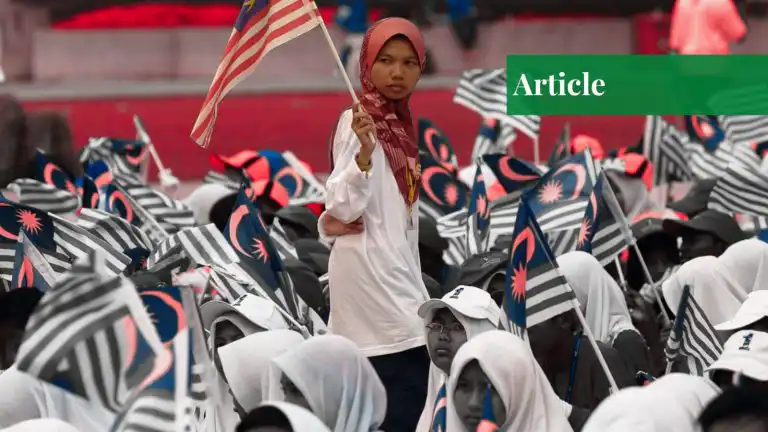

Malaysia is a contrast study: a multi-ethnic and multi-religious federation which, after gaining independence, has attempted to use diversity as a foundation to find stability. Sometimes, it has been successful, but on other occasions, it has had problems. Nowadays, as Malays and in the larger and more inclusive definition of the term, Bumiputera live in close quarters with Chinese, and with a recent influx of foreign Chinese expatriates, the country faces a critical challenge: can a common national identity be developed without destroying the plural identities that make modern Malaysia both strong and creative? It is consequential as the answer to politics, as the answer to providing economic equity, as the answer to providing social peace.
A Nation Built on Diversity
Malaysia is among the most ethnically diverse Asian societies, which include Malays (Bumiputera), Chinese, Indians, and other indigenous people. In 2020, the census estimates that the population will be approximately 34 millenniums with 69% Bumiputera, 23% Chinese, and 7% Indian. Regarding religion, 63.5 percent of Malaysians follow the Muslim faith, 18.7 percent Buddhism, 9.1 percent Christianity, and 6.1 percent Hinduism. With this plural composition, national identity serves as both a source of strength and a potential challenge.
Through the Lens of History: 1969 Riots
The modern argument of the national identity of Malaysia cannot be discussed without the racial riots of 13 May 1969 that set a new course for the policy of the country. The riots and related policy amendments have been documented in the National Archives and also in academic publications by the ISEAS-Yusof Ishak Institute. The riots revealed the presence of clear socio-economic inequalities and led to the advancement of the idea of national unity that became the primary state goal.
New Economic Policy: Social Engineering of Equity and Equality
The New Economic Policy (NEP) was launched in 1971 and aimed to eliminate poverty and bring about a reorganization of society. With the NEP, the Bumiputera quotas were increased in the areas of education, employment, and corporate equity. These steps drastically decreased Malay poverty and brought up Bumiputera corporate equity to around 20 to 22 per cent by the late 2000s, increasing the figure by 18 per cent since 1970. As a result, the Malay middle class was promoted, and economic involvement was altered.
Though the NEP was a source of improvements, it also created tensions. Several non-Bumiputera Malaysians argue that the ethnic quotas are a hindrance to meritocracy, especially in areas like education and employment in the government sector. The research on the distributional impact of NEP can be found on the Khazanah Research Institute and IDEAS Malaysia. Malays, on the other hand, consider these policies as the policies necessary to protect historical rights. The dichotomy creates the clashing national identity visions: multicultural and Malay-first.
Religion as a Defining Pillar of Identity
Article 3 of the Constitution of Malaysia establishes Islam as the religion of the Federation, and a Malay is constitutionally declared to be Muslim (Article 160). Such an intersection results in legal challenges, especially in conversion issues, apostasy, and jurisdiction between the Sharia court and the civil courts. Reported yearly on religious freedom, including the Malaysia Religious Freedom Report published by the U.S. State Department. The country is still experiencing tensions. Therefore, ethnicity is only one of the only factors that influence the national identity, but also the religious governing.
Institutional Diversity Management: Migration and New Demographics
The institutions in Malaysia, including the Cabinet, the system of education, and political coalitions, strive to meet ethnic demands. The Election Commission’s historical election data ( 2019) and education data of the Ministry of Education show that the allocation of resources is often ethnic. These institutions maintain the stability, but at the same time, they strengthen separateness, thus limiting the development of a fully common civic identity.
Malaysia has witnessed more migration from China in recent years, especially among the students and investors. Articles in the South China Morning Post and The Straits Times indicate the rise of the communities of expatriate Chinese in Kuala Lumpur and Johor. Although this migration is characterized by the inflow of investment and talent, it also generates the anxieties of property prices and employment. Without effective working integration mechanisms, demographic changes can be a cause of identity tensions.
The Way Forward: Empowering Shared Civic Culture
Transnational organizations like World Bank Malaysia and the Institute of Democracy and Economic Affairs (IDEAS) advise that the shift towards a needs-based affirmative action should take the place of a race-based one. This will maintain the support of the disadvantaged Bumiputera, but the interests of the Chinese and Indian Malaysians will also be met. This recalibration would be able to ease resentment and make the country more inclusive.
An intense sense of national identity should be established through experiences. Civic education, cultural festivals, and national service were consistently stressed as the means of overcoming the divisions by the Ministry of National Unity. The public spaces, Multicultural arts programmes, and inclusive history curricula can be critical in the development of a Malaysian identity based on shared narratives as opposed to ethnic identification.
The issue of Malaysian identity needs a leader. According to research by the Merdeka Center, identity-based political mobilization is one of the most robust predictors of polarization. Diversity can be turned into strength by having leaders who encourage meritocracy, transparency, and equality of opportunity. Unity requires boldness, justice, and organizations that are more interested in the common citizenship rather than ethnic favors.
Conclusion: Pluralism in Malaysia
The cultural richness and economic vitality of Malaysia are the result of ethnic and religious diversity. Nevertheless, to maintain this diversity, policies must be in place that promote fairness, safeguard rights, and enhance trust. The building of a Malaysian identity will be based on law and education reforms as well as social policy, not by eliminating distinctions of various cultures but by tolerating plurality in unity. It is a goal of having a Malaysia where all citizens have some room in the national discourse.
If you want to submit your articles and/or research papers, please visit the Submissions page.
To stay updated with the latest jobs, CSS news, internships, scholarships, and current affairs articles, join our Community Forum!
The views and opinions expressed in this article/paper are the author’s own and do not necessarily reflect the editorial position of Paradigm Shift.

Imran Sattar is a journalist with his Master's in Journalism from IBA Karachi.