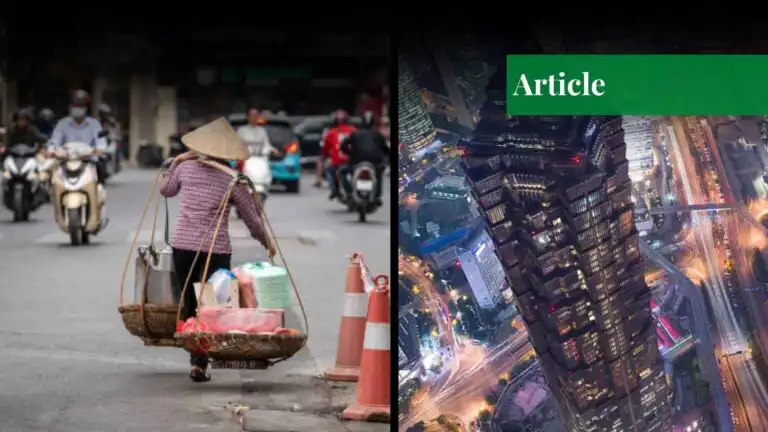
China’s rise from the sick man of Asia to a global superpower is not a series of erratic or spontaneous moves; it is a steady story of how opium addicts were able to make their country an economic and technological hub over several years. The country, once struggling with poverty and instability, rebuilt itself into a financial giant in just a few decades. For Pakistan, which is currently dealing with economic issues, political instability, and social inequity, China’s story can be a guide for change. Of course, we have our histories, cultures, and systems; however, Pakistan can learn from China’s reforms by tailoring the approach to our national situation. This article examines how China rose from the ashes to the skies through economic reforms, good governance, infrastructure, and human capital investment. Furthermore, Pakistan can apply these strategies to achieve similar progress and address the challenges it faces.
China’s Rise from Ashes to Skies
In the 1970s, China was in a rough spot. It was referred to as the “sick man of Asia.” Agrarian economy, landlordism, famine and food insecurity, and lack of infrastructure had dashed the hopes of China’s revival. Moreover, the political fragmentation and foreign humiliation from 1839 to 1949, particularly by their colonial masters, Britain, paralyzed China. Not only this, but China was also subject to widespread illiteracy, social inequality, and opium addiction.
Besides that, China had been plunged into several wars and internal conflicts, such as the Chinese Civil War from 1927 to 1949 and the Sino-Indian War in 1962. Resultantly, these years of conflict, including the Cultural Revolution, left its economy weak with a GDP of just $149.5 billion in 1978 and widespread poverty. Most people lived on less than $1, which was equivalent to 143.17 Chinese yuan a day, and industries were outdated. They were living a life of sheer misery.
Then came the year when China, under Deng Xiaoping, finally decided to change its fate. Xiaoping set roots for China’s transformation in 1978, when he launched the “Reform and Opening-Up” policy, which was a bold shift toward a market-driven economy. This remarkable move changed everything. Within just forty years, China became a threat to global powers due to its unprecedented advancements. Today, China is considered a world power in many respects. The following is a detailed analysis of China’s developmental trajectory.
Key Pillars of China’s Transformation under Xiaoping
Economic Reforms
Xiaoping was well aware that economic uplifting is not only vital but also necessary for China’s radiant future. Under his dynamic leadership, China opened its doors to foreign investment and trade. One of his revolutionary economic policies, special economic zones (SEZs) like Shenzhen, were set up. These zones were geographically designated areas within China where market-oriented economic policies, foreign investments, and special tax incentives were permitted, which largely attracted global companies.
China also diversified its economy and made exceptional strides from agriculture to manufacturing electronics, textiles, and more. By 2024, its exports reached $3.58 trillion, and its GDP hit $18.74 trillion, making it the world’s second-largest economy. These reforms lifted over 800 million people out of poverty by 2024. China’s long-term plans were not merely restricted to economic uplift, but the strong and centralized leadership was key.
Role Of Effective Governance
Governance played a vital role in determining the successful outcome of the Communist Party of China. This party, headed by Xiaoping, created five-year plans to set clear goals for growth and infrastructure. In addition to that, they tackled corruption through high-profile crackdowns and the revival of disciplinary bodies like the Central Commission for Discipline Inspection (CCDI), which boosted public trust in the government. For long-term implementation of these policies, it was ensured that these policies were followed through and did not get disrupted by political change.
Infrastructural Changes
Infrastructure serves as the backbone of a state. Complying with that, China invested heavily in infrastructure. These included hefty investments in roads and highways, airports, railways, hydroelectric projects, and massive urbanization. By 2023, it had over 184,000 km of highways and the world’s largest high-speed rail network that connected cities and made trade easier. Massive ports and power plants also played a great role in fueling industries. The Belt and Road Initiative, launched in 2013, extended this vision globally and linked China to world markets. This infrastructure and strategic governance made China a trade powerhouse.
Human Capital Development
In addition to these visible transformations, Xiaoping had seen a greater stored potential in his nation. He famously said, “We must rely on the masses. The wisdom and strength of the people are unlimited.” To achieve this purpose, China prioritized education and skills. By 2020, its literacy rate was 97%, and its universities produced millions of graduates in science, technology, engineering, and math (STEM). Besides formal educational training, vocational training was seen as an indispensable tool for the rapid growth of the economy and prepared workers for modern industries that eventually turned the populace into an economic asset. This focus drove innovation and growth and gave China a hegemony in the tech and manufacturing landscapes.
How Pakistan Should Emulate China for a Drastic Transformation
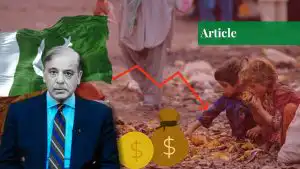
Now the question arises of how Pakistan, China’s best strategic partner, can achieve such tremendous growth and innovative heights by following in China’s footsteps. Pakistan’s situation mirrors China’s past in some ways, such as the economic struggles, political challenges, and unused potential. According to the World Bank’s 2024 report, in 2024, Pakistan’s GDP was $370.07 billion, with a per capita income of $1,484 compared to China’s $13,303. With 64% of our population under 30, Pakistan has the raw potential to transform if we adopt China’s strategies. The following is a comprehensive analysis of how Pakistan should follow China’s path and adapt it to its demands and challenges.
Economic Planning
Much like China, a careful approach is evident in the economic sectors of Pakistan. For this purpose, Pakistan should start working on SEZs in the first place, like China did with Shenzhen. Interestingly, the China-Pakistan Economic Corridor (CPEC), a $62 billion project, includes SEZs like Gwadar, but unfortunately, delays due to bureaucratic bottlenecks such as delayed tender passing, poor project management skills, and lack of skilled manpower create a halt in the process. Moreover, security concerns in the vicinity include separatist insurgent groups activating their terror campaigns to threaten and intimidate Chinese workers. These woeful realities have slowed down this process.
If the government of Pakistan follows Xiaoping’s exemplary policies and implements them by simplifying regulations, improving security, and promoting these zones globally, Pakistan could turn Gwadar into a trade powerhouse that would offer a great deal in creating jobs and boosting exports and ultimately flourish Pakistan’s economic canvas. Another way to boost economic growth is by increasing exports, and they should be, in fact, a key consideration.
As of 2024, Pakistan’s exports, $2.56 billion, rely heavily on textiles. By encouraging its local textile businesses and giving them interest-free loans, Pakistan can witness a remarkable increase in production, and ultimately, exports will prosper. Moreover, following China’s example, Pakistan could grow its IT sector. Where information technology and AI are prevailing worldwide, Pakistan should focus on encouraging entrepreneurs and freelancers by setting up IT parks and investing in technological goods to compete with the world.
Good Governance
In 2025, the definition of good governance has been diversified magnificently. Gone are the days when good governance was considered just efficient bureaucratic work in a stereotypical fashion. The whole world today works with the aid of computer technology. For governance and long-term planning in Pakistan, “Tech Corps” should be introduced in the civil services. The great minds of the state are unaware of technological advancements throughout the world, and they must be encouraged to pursue computer and technological education.
By doing so, the state can make civil servants use AI for governance, cyber defense, and the digitization of government sectors. This can potentially increase transparency and accountability, thus reducing corruption and nepotism. In addition to the introduction of the IT sector, Pakistan needs a far-sighted vision like China’s Five-Year Plans. Since its inception, political instability has been a sticking fate of the country, with frequent government changes that disrupt mega projects like CPEC.
A 10-year economic roadmap, agreed upon by all major parties, could keep Pakistan on track. Corruption is another hurdle, and according to Transparency International 2024, Pakistan ranked 135 out of 180 on the Corruption Perceptions Index. A serious anti-corruption campaign, inspired by China’s, could clean up institutions like the Planning Commission and build trust. Pakistan doesn’t need China’s political system, but it can adopt its focus on stability and results.
Infrastructural Investment
Irrefutably, infrastructure development is an indispensable element for Pakistan’s bright future. Currently, Pakistan’s infrastructure, which includes poor roads, unreliable power, water crises, and neglected educational infrastructure, holds us back. CPEC’s projects, like the Karachi-Lahore Motorway and Gwadar Port, could transform trade, but funding and delays are creating halts. Following China’s model, Pakistan should prioritize these projects, perhaps by involving private investors by assuring them huge profits.
Moreover, the energy sector cannot be overlooked. China’s power plants fueled its growth to an enormous extent. Xiaoping’s policies were designed in such a way that they ensured energy efficiency by establishing power plants across the country. Pakistan could utilize its solar and wind potential in Balochistan and Sindh to end load-shedding and support industries. This would reflect China’s ambition to build a strong foundation for trade and growth.
Human Capital Development
Next comes the human capital investment. Pakistan’s education system needs an urgent boost. With a literacy rate of 62.3% and only 8% of workers formally trained, we’re falling far behind our competitors. China’s focus on education suggests we should expand free, quality schools and vocational centers, especially in rural areas. Programs like tech bootcamps or scholarships for STEM fields could prepare our youth for modern jobs. With 64% of Pakistan’s population under 30, investing in skills could turn them into an economic powerhouse, exactly as China did.
These were the advised policy changes that could change Pakistan’s fate by elevating it to new heights. But here comes a critical and subtle reality check. Pakistan’s path won’t be easy, and it will surely face hurdles that China did not. Pakistan’s democratic system, while a strength, often leads to gridlock, as evident from the seventy-five-year history of Pakistan, unlike China’s single-party system, which makes quick decisions.
Security issues, from terrorism to border tensions, scare off investors. According to a report, militant attacks in Pakistan in March 2025 rose to the highest level since 2014. A record 105 attacks occurred—the highest monthly figure since November 2014, with 228 fatalities and 258 injuries. This terrible factor has led to a decrease in the number of foreign investments, as no country is willing to take such a risk. As a result of this, in 2024, Pakistan’s foreign direct investment was $1.9 billion, far below China’s during its boom.
Next comes something that is extremely horrendous for Pakistan’s economic well-being: our foreign debt. Our external debt, at $131.1 billion in 2024, limits our options in prospering as an independent economic state. Another, superficially trivial yet quite significant downside of Pakistan is its diverse ethnic and regional identities. That means reforms must be inclusive to avoid unrest, unlike China’s more unified society.
Conclusion
These challenges require tailored solutions. They would not be achieved overnight, but formulating long-term strategic and diplomatic plans could potentially strengthen democracy while ensuring policy continuity, improving security to attract investment, and managing debt. To embrace such a strategic win like China’s, Pakistan needs to take inspiration from Chinese ambitions to overcome obstacles to tackle its own with determination.
Despite these challenges, a collective national effort toward long-term development goals may help mitigate obstacles and support reform implementation. China’s rise shows what’s possible when a nation sets big goals and works relentlessly to achieve them. From ashes, they built a skyscraper economy through reforms, stable governance, infrastructure, and education. Pakistan can follow this path by streamlining SEZs, diversifying exports, stabilizing governance, completing CPEC projects, and investing in our youth.
It won’t be quick, undoubtedly. China took decades, but small steps like launching one SEZ, finishing a key motorway, or training a million young people can build momentum. With its young population and strategic location, Pakistan has the potential to shine. China’s story is about a nation that chose to change its future. Pakistan can do the same if we embrace that ambition and start today.
If you want to submit your articles and/or research papers, please visit the Submissions page.
To stay updated with the latest jobs, CSS news, internships, scholarships, and current affairs articles, join our Community Forum!
The views and opinions expressed in this article/paper are the author’s own and do not necessarily reflect the editorial position of Paradigm Shift.

Mueed Shakeel is a student of law at GC University, Lahore, with a keen interest in global politics, international law, history, and philosophy.