
The Resurfacing Debate on New Provinces in Pakistan
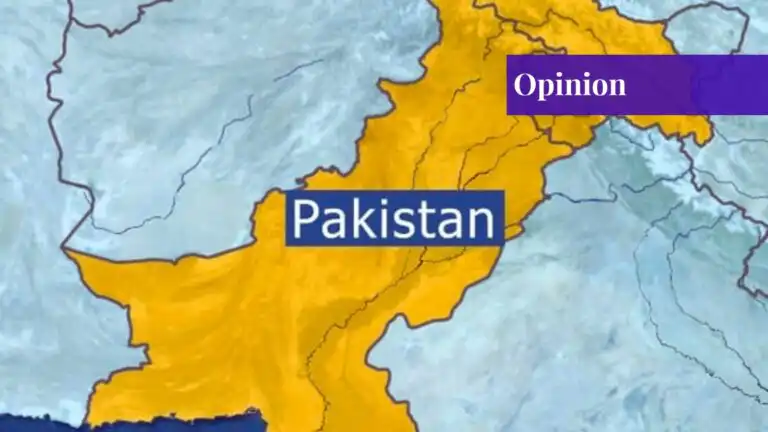
Since the inception of Pakistan, the linguistic minorities have been demanding the creation of new provinces on linguistic and ethnic bases from time to time. In the past, some of these movements even turned violent. The Tehreek-e-Soba Hazara (TSH) movement is one such example that led to the death of seven protesters and injuries to around 200 people in Abbottabad in 2010. However, with the passage of time, the momentum of such movements has waned.
Recently, this debate has resurfaced. In July 2025, Federal Planning Minister Ahsan Iqbal proposed the creation of new provinces in the country to enhance local governance. While briefing the Senate Standing Committee on Planning, Development, and Special Initiatives, he stated, “Turkey has over 80 provinces; why can’t Pakistan have 12 to 15?” Another recommendation about converting the 32 administrative divisions into provinces has also been proposed by some entities.
Apparently, these proposals suggest that the only viable solution to all governance-related problems of the country is the creation of new provinces. In the past, different mainstream political parties have been supporting the idea of the creation of new provinces on linguistic and ethnic bases. Indeed, there is resentment among the ethnic and linguistic minorities in different provinces. People of South Punjab have repeatedly shown resentment over the Punjab government’s total focus on Central and Northern Punjab. It is true that the South Punjab region is suffering from underdevelopment and lacks fundamental infrastructure. People from this region hold that the reason behind this conundrum is that the chief minister belongs to Central Punjab.
However, the region’s plight during the tenure of former Chief Minister of Punjab Usman Buzdar, who belonged to the Southern Punjab region, shuns this argument. This suggests that the actual solution to the country’s governance issues is the devolution of power to local governments. The recent proposals also seek the creation of new provinces in the country to achieve administrative efficiency through devolution of power and decentralisation. However, this does not necessitate the creation of new provinces. The only thing that is needed is to create an empowered local government system in Pakistan.
Governance vs. Sentiment: Cost, Constitution, and Complexity
Apparently, the recent proposals aim to start a fresh national debate over the issue to observe if a consensus can be achieved over the issue. However, the debate should be based on facts and figures, not merely sentiment. The creation of new provinces on linguistic and ethnic basis can help the country avoid the increasing tensions among different ethnicities in the country. However, the creation of new provinces will require huge expenses. Each new province will result in an extra burden on taxpayers as they will have to pay for new provincial assemblies, chief ministers, cabinets, civil secretariats, governors, high courts, and public service commissions, along with other fundamental physical infrastructure. Such a huge expense is unacceptable in the current economic conditions of the country.
The proponents and supporters of the creation of new provinces present India’s example, as it created 14 new provinces in 1956. Drawing parallels between India and Pakistan is wrong for various reasons. Unlike Pakistan, India is a “union.” Therefore, alteration of provincial boundaries in India was much easier and simpler than in Pakistan, which is a federal state. The constitution of Pakistan does not allow for the creation of new provinces or even altering the boundaries of the existing provinces of the country. It requires constitutional amendments in Articles 1, 51, 59, 106(1), 175(A). and Article 218 of the Constitution of Pakistan.
Moreover, it also requires a two-thirds majority in the assemblies of the concerned provinces. After that, the constitutional amendments could be moved to both houses of Parliament. The creation of these new provinces will also require a two-thirds majority in each house separately to pass these constitutional amendments, which is almost impossible. The creation of new provinces in the country will also impact the National Financial Commission (NFC), the composition of the Senate, the Water Accord of 1991, and the National Economic Commission, further complicating the issue.
The Real Solution: Strengthening Local Government
In addition, the creation of new provinces will not guarantee better conditions for the people of marginal areas. The only viable option for the devolution of power is strengthening the local government system. Furthermore, the creation of new provinces must be on the basis of necessity instead of a linguistic or ethnic basis.
The Indian government also created the State Reorganization Commission (SRC) in 1953. This commission presented its report on the proposal of new provinces in 1955, leading to the creation of 14 new states in the country on the basis of SRC’s recommendations. Pakistan also needs to provide a framework for the creation of new provinces in the country. However, instead of working on such a cumbersome and costly proposal, the country should work on alternative ways to improve the conditions of people living in marginal areas.
In the past, different political parties had used the issue to gain political leverage. Therefore, the recent proposal for the creation of new provinces seems to be a political move. Apparently, the government seems to divert public attention from prevailing issues, including bad governance and inflation. The people of Pakistan need to review their voting practices. Instead of sticking to dynastic politics or following populist leaders, people should evaluate the government based on its performance.
Moreover, they need to exert pressure on the government to strengthen the local body system. Otherwise, the marginal regions of the country will continue to suffer even after the creation of new provinces. Indeed, the governance in India, China, and many other countries has improved due to the creation of new and smaller provinces. However, curbing corruption and conducting fair and impartial elections are mandatory for improving governance in Pakistan.
If you want to submit your articles and/or research papers, please visit the Submissions page.
To stay updated with the latest jobs, CSS news, internships, scholarships, and current affairs articles, join our Community Forum!
The views and opinions expressed in this article/paper are the author’s own and do not necessarily reflect the editorial position of Paradigm Shift.

Mr Abdullah Nisar holds a degree in Journalism and Mass Communication from International Islamic University Islamabad. He is currently working as a freelance journalist.