


Islamabad, March 26: Politics and trade should be treated separately to ensure that political tensions do not disrupt bilateral economic activities between Pakistan and Afghanistan. Given the significant complexities involved, achieving this would require exceptional diplomacy from both sides. Despite ongoing political challenges, trade and economic cooperation must continue uninterrupted through a structured approach to enhance competitiveness, address transit trade issues, and improve trade facilitation mechanisms.

This was conveyed during a session on “Pakistan-Afghanistan Economic and Trade Ties” held at the Institute of Policy Studies (IPS), Islamabad. The session was addressed by Khalid Rahman, chairman, IPS; Ambassador (r) Syed Abrar Hussain, vice chairman of IPS and Pakistan’s former ambassador to Afghanistan; Ambassador (r) Ayaz Wazir, Pak-Afghan affairs expert; Brigadier (r) Said Nazir, senior analyst; Junaid Ismail Makda, president of Pakistan Afghanistan Joint Chamber of Commerce and Industry; Syed Jawad Hussain Kazmi, patron-in-chief of Khyber Chamber of Commerce & Industry; Fazal Moqeeem Khan, president of Sarhad Chamber of Commerce & Industry; Sheharyar Khan, executive director of National Dialogue Forum; and Tahir Khan, senior journalist and Afghan affairs analyst.
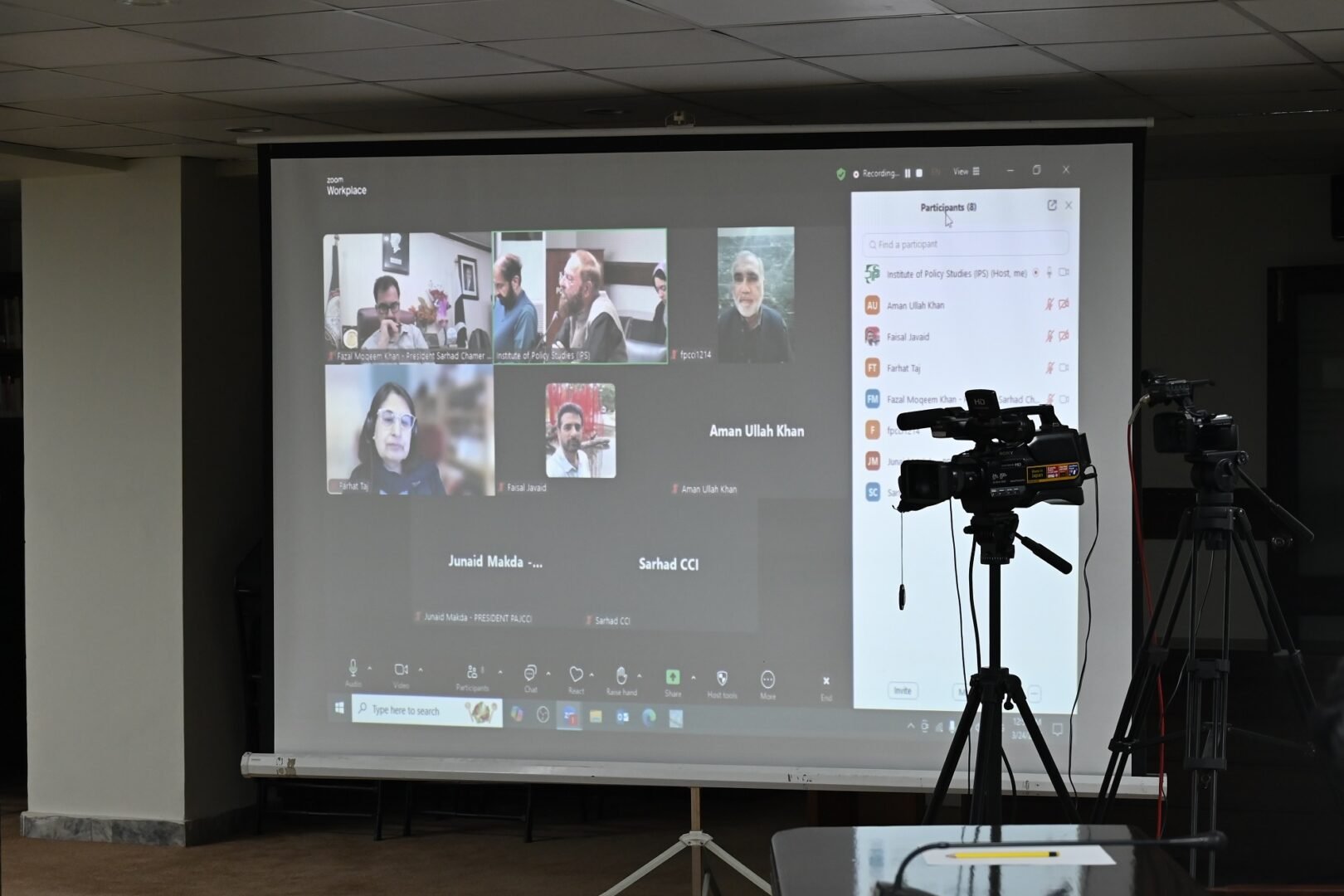
The speakers noted that challenges in Pakistan-Afghanistan trade relations are longstanding, largely due to political instability and frequent regime changes, which continue to disrupt economic productivity. The key obstacle remains the repeated closure of trade routes, particularly at the Torkham border, which hampers transit trade and affects access to key international markets, including Europe.
In addition, structural issues such as smuggling, limited infrastructure, banking and payment challenges, weak border management, poor implementation of trade agreements, limited digital trade processing, absence of a transparent digital supervision system, and outdated trade regulations also hinder ease of doing business.

These challenges, coupled with an unstable security environment, have led regional players like Central Asian states to explore alternative trade routes. The speakers highlighted that, on the one hand, it might seem to reduce Afghanistan’s reliance on Pakistan, but, on the other hand, geographical limitations of alternative options like Iran’s Chabahar Port would be less feasible, keeping Afghanistan’s interest in trading with Pakistan intact.
To address these challenges, experts emphasized the need to strengthen the Afghanistan-Pakistan Transit Trade Agreement (APTTA) by ensuring the rule of law, improving banking facilities, and revising trade regulations to facilitate smoother business operations. It was also suggested that a dedicated trade development policy should be introduced, along with a stakeholder-led management committee, to resolve minor trade issues promptly and prevent unnecessary disruptions.

Moreover, it was observed that the Torkham border, a key trade gateway, must be managed more effectively, with a focus on maintaining uninterrupted trade flows rather than using border closures as a tool. Engaging external partners and implementing cross-border tariff strategies can also enhance economic cooperation.
To ensure the stability of long-term trade relations, the discussants suggested that a comprehensive economic treaty between both countries is necessary, ensuring mutual benefits that remain unaffected by security concerns. Additionally, integrating local communities into trade discussions, strengthening digital supervision, and fostering collaboration with regional and international organizations can help sustain economic ties.

In his concluding remarks, Khalid Rahman pointed out that while Pakistan declared a shift toward a geo-economic strategy in 2018, its implementation has been inconsistent. He underscored the necessity of an integrated regional approach rather than crisis-driven decision-making, advocating for a comprehensive, well-coordinated, and long-term strategy.
The session concluded with the consensus that Pakistan and Afghanistan must work together to strengthen trade agreements and streamline transit trade regulations, establish structured mechanisms to address trade issues proactively, promote digitalization in trade processing and improve banking channels, engage international stakeholders for broader economic collaboration, and avoid trade disruptions due to political tensions, ensuring economic stability.
If you want to submit your articles and/or research papers, please visit the Submissions page.
To stay updated with the latest jobs, CSS news, internships, scholarships, and current affairs articles, join our Community Forum!
The views and opinions expressed in this article/paper are the author’s own and do not necessarily reflect the editorial position of Paradigm Shift.

The Institute of Policy Studies (IPS) is an autonomous, not-for-profit civil society organization dedicated to promoting policy-oriented research, dialogue, and human & technological development for better governance. IPS provides a forum for informed discussion and dialogue on national and international issues. The contributions spanning over forty-three years and the overall impact signifies the importance of pragmatic research on policy issues. The institute highlights the role of think tanks in modern democratic polities.