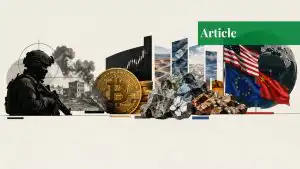
The world is increasingly becoming chaotic day by day, leading to a decline in respect for humanity, sovereignty, and territorial integrity. Since its creation, the anarchic world has adhered to natural laws to maintain the cosmos of the universe. Similarly, the worldly laws are also of the same nature, but here, the regulated entities are states and individuals. While individuals are governed by domestic laws with, arguably, enforcement mechanisms, they are bound by a social contract proposed by John Locke. According to this theory, individuals have agreed with the state, which guarantees them the right to life, property, and security. In return, citizens must adhere to designed domestic laws written in a legal document called a “constitution.”
The Nature of International Law
States are regulated under international law, which examines the dynamic nature of the state before, during, and after war. Interestingly, this raises a critical question: why do states kill people despite the existence of a legal framework? The answer lies in the fact that international law does not have a strong enforcement mechanism. Although the nature of international law differs from that of domestic law, an enforcement body in an anarchic global system is required. This forms the central argument of naturalists, who advocate that international law should have enforcement mechanisms similar to how domestic laws are implemented through security forces to maintain law and order.
Ultimately, those who hold economic and political power in the international system usually dictate the course of legitimacy. However, the hypocrisy of the goddess US is evident at multiple events in the framework of so-called liberal internationalism, especially in its veto addressing the Gaza genocide. After the October 7 attacks, Israel, often regarded as the backyard of the US, has enjoyed impunity supported by the US in the form of rejection of the ethnic cleansing of Palestinians. In November 2024, the US vetoed the UN Security Council resolution calling for a ceasefire, which served as a textbook example of the double standards of its strategic ally. Unfortunately, the international system enables the Oval Office to explicitly reject any acknowledgment of genocidal actions taking place in Gaza.
However, international law has judicial bodies, including the International Criminal Court (ICC) and International Court of Justice (ICJ), with their hearings and orders unheard due to a lack of enforcement mechanisms. Notably, for liberals, the creation of international organizations could have achieved peace while ignoring the anarchy of the global justice system. International law depends upon state consent, making weaker states more vulnerable to stronger states, which has caused a blow to its jurisdiction. Treaties ratified back in the 19th and 20th centuries, such as the Paris Agreement, Geneva Convention, Universal Declaration on Human Rights (UDHR), and many more, were not binding but states voluntarily accepted those based on their national interests.
In addition to that, the “Leviathan Theory,” proposed by philosopher Thomas Hobbes, explains that law must have a legal and superior authority to maintain law and order. However, the non-binding nature and absence of sovereign authority in international law provide impunity to global powers to maximize their national interests while undermining the sovereignty of others.
Hegemony in International Law
Additionally, international law, which is supposed to protect both states and individuals, as guaranteed by the Geneva Convention, has dramatically collapsed in the face of global powers. One notable example to reinforce this argument further is Guantanamo Bay, which stands out as the prominent symbol of US hypocrisy. Despite championing international human rights, the US has bypassed it, performing violent activities against prisoners, as suggested by multiple studies. Such glaring double standards of the US have completely undermined global justice and respect for humanity, exposing its selective use of power.
Moreover, Russia’s consistent use of vetoes in support of the Assad regime in Syria has exposed the unequal application of international law condemning Western interventions while simultaneously enabling Assad’s brutal regime. There have been several instances where Russia, alongside China, has vetoed UN Security Council resolutions supporting anti-regime protestors and proposed threatening sanctions.
Besides that, economic and political rivalries among the great powers Russia and the US, as well as China and the US, have ideally played with international law, demonstrating limited respect for its principles. Russia seeks to eliminate US influence, and vice versa, resulting in the use of international law as a strategic weapon, ultimately undermining its legitimacy. With China vetoing the US and the US vetoing China, this endless game of manipulation can only be restricted by the establishment of a sovereign authority above all.
It is indeed tragic that, on the one hand, the International Criminal Court (ICC) issues arrest warrants for global leaders and, on the other, these leaders continue visiting other states with confidence. This is hardly surprising at all, as it is evident that those against whom arrest warrants are issued often hold maximum power in the international system. A compelling case of this is the ICC’s warrant procurement for Russian President Vladimir Putin following Ukraine’s annexation. The irony lies in the fact that despite an arrest warrant, he made his first known visit to Kyrgyzstan in October 2023 for the summit of the Commonwealth of Independent States (CIS).
In the same vein, another example is Netanyahu’s conviction for committing genocide in Gaza, yet he freely traveled to other countries without fear of arrest. A system that claims universality is always shackled by realpolitik; if international law cannot touch the world’s most powerful, it’s not a true law but a selective global justice system favoring the hegemony of global powers.
If you want to submit your articles and/or research papers, please visit the Submissions page.
To stay updated with the latest jobs, CSS news, internships, scholarships, and current affairs articles, join our Community Forum!
The views and opinions expressed in this article/paper are the author’s own and do not necessarily reflect the editorial position of Paradigm Shift.

Sajjad Ali Memon is currently pursuing his bachelor's degree in peace and conflict studies at the National Defence University, Islamabad. He is also a daily contributor to several prestigious newspapers in Pakistan, including Dawn, The News International, The Express Tribune, and The Nation. His area of interest involves Middle Eastern geopolitics, security, and the foreign policy of the US and Russia.