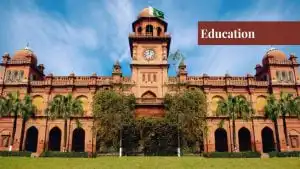

On the evening of December 19, 2025, a 3rd-year pharmacy student at the University of Lahore died by suicide after jumping from the fourth floor of a campus building, an incident confirmed by university officials and widely reported by major national outlets. The student, identified in reports as a high‑performing scholar with no overt history of disciplinary issues, had recently been informed he would be declared ineligible for examinations due to short attendance.
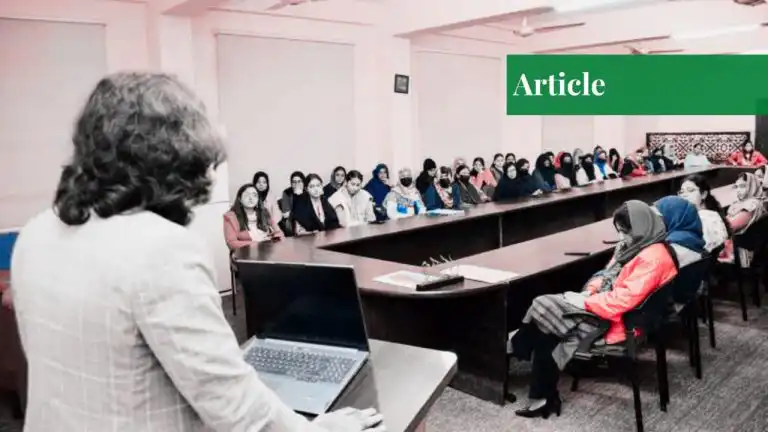
In the days that followed, hundreds of students gathered in peaceful protest outside the campus gates, demanding transparency, a full inquiry, and accountable leadership. Student organizations pointed to an alarming lack of accessible counseling services, minimal academic support structures, and a culture that equates emotional distress with personal failure.
According to a PMC article, 42.66% of university students nationwide experience chronic stress or anxiety. Although some universities have counselling centers, they are often staffed by student psychologists from within the academic department, without fully resourced mental‑health teams, underscoring that existing support structures are minimal compared with student needs. What at first appeared as an isolated, heartbreaking tragedy instead exposed systemic fault lines in Pakistan’s higher education: a landscape where administrative rigidity, performance pressures, and the erosion of communal care converge with fatal consequence.
A Historical Perspective
Universities in Pakistan were not always the bureaucratic and administratively constrained spaces they are today. The University of the Punjab, established in 1882, was envisioned as a center for civic engagement as much as academic instruction. One of its earliest vice-chancellors, Dr. A.C. Woolner, emphasized not only scholarly rigor but also the cultivation of public conscience among students. Similarly, institutions influenced by Aligarh Muslim University championed debate societies, literary circles, and political engagement.
Early curricula blended liberal education with local cultural literacy, producing students who could navigate civic, political, and social responsibilities. By the mid-20th century, Pakistani universities became critical arenas for political discourse. Student unions, protest movements, and literary societies flourished. For instance, in the 1960s, the National Students Federation and other political groups organized campus-wide discussions on land reforms, gender rights, and labor laws, shaping both public opinion and policy discourse.
Yet this vibrancy began to erode with the imposition of centralized control and the curtailing of student unions. In 1984, Pakistan banned student unions under General Zia-ul-Haq’s regime, claiming they were hotbeds of political unrest. This effectively removed formal mechanisms for student advocacy and collective action, transforming universities from platforms of dialogue into managed spaces of compliance. Although the ban was briefly reversed in 1989 under the democratic government, the lifting was legally challenged, and by July 1, 1992, the Supreme Court issued an interim order restricting student political activity, which was affirmed in a 1993 judgment that effectively reinstated limitations on union activity nationwide.
The evolution of universities in Pakistan also reflects broader global trends in higher education. Enrollment grew significantly as well. HEC data indicate total enrollment in higher education institutions (which include universities and degree‑awarding institutes) reached approximately 2.6 million in 2022-23, underscoring the massive scale of expansion over two decades. Yet this rapid quantitative growth has not been matched by proportional investment in the qualitative dimensions of education.
In this context, incidents such as the recent suicide at the UOL must be situated within a structural history rather than treated as isolated tragedies. Understanding this trajectory requires attention to both governance and social context. The punitive oversight of students, the absence of counseling, and the emphasis on measurable outputs over civic and personal development produce conditions in which crises become inevitable. The tragedy is not solely individual; it is embedded in the historical evolution of higher education in Pakistan.
How Universities Learn to Speak in Policy
Modern universities in Pakistan operate less as forums for dialogue and intellectual experimentation and more as bureaucratic entities, responding to policy imperatives rather than student needs. This transformation is not accidental; it reflects global trends in higher education management combined with local regulatory pressures. The Higher Education Commission (HEC), established in 2002, exemplifies this shift. Originally designed to raise academic standards and increase research output, it quickly became a managerial framework dictating curricula, faculty hiring, and even campus expansion. HEC has regulated over 247 degree-awarding institutions, a shift from 57 institutes before 2002, yet its focus remained largely on quantitative metrics: publication counts, enrollment numbers, and accreditation benchmarks rather than qualitative indicators like student well-being or civic engagement.
The shift towards a policy-centric model is particularly visible in administrative language. Universities issue circulars, SOPs, and guidelines for everything from attendance to disciplinary procedures. These communications are written in the syntax of compliance, risk management, and accountability, privileging institutional protection over student experience. For example, the University of Lahore implemented a “Student Conduct and Risk Management Framework,” which outlined steps for handling behavioral issues, academic dishonesty, and mental health crises.
While ostensibly comprehensive, the framework allocated no resources for proactive counseling, mentorship, or social support. The university’s response to student distress thus became a procedural matter rather than a human-centered intervention. Policy also mediates university engagement with broader social issues. Take Beaconhouse National University (BNU), founded in 2003: it promotes liberal arts education and critical thinking, but must navigate regulatory expectations imposed by both HEC and provincial education authorities. Programs and internal committees are structured more to satisfy accreditation requirements than to cultivate meaningful student support networks. In effect, the language of policy replaces the language of care.
The “policyization” of higher education also extends to curricular and research practices. Faculty are increasingly assessed based on publication output, research grants, and HEC-recognized journal contributions. Students are evaluated primarily through standardized assessments and credit accumulation, leaving little room for exploratory learning or creative inquiry. Institutions prioritize measurable outputs because these metrics are what HEC, accreditation bodies, and international rankings recognize. The unintended consequence is a reduction of the university to a policy machine, where students and staff navigate administrative structures rather than intellectual exploration.
Policy-driven governance also shapes university responses to crises. Consider the example of student mental health. The tragic suicide at the University of Lahore prompted institutional statements and the creation of an ad hoc committee to investigate the incident. While these steps were reported in mainstream media as proactive measures, the interventions were largely reactive, designed to satisfy both regulatory expectations and public scrutiny. There was no comprehensive revision of counseling infrastructure, academic pressure management, or faculty training. Policies served as performative instruments, signaling action without structural transformation.
Ultimately, the policy-centric evolution of Pakistani universities is intertwined with the neoliberal logic of higher education expansion. Increased enrollment, international rankings, and compliance-driven accreditation incentivize universities to prioritize metrics over human experience. Policies are written to demonstrate institutional competence to HEC, donors, and the public, but the depth of student engagement, mental health support, and intellectual risk-taking often remains shallow.
Resilience as an Institutional Demand
In contemporary Pakistan, universities are increasingly sites where the burden of adaptation is placed on the individual, rather than embedded within the institution. Students are expected to navigate bureaucratic inefficiencies, rigid hierarchies, gendered pressures, and the constant surveillance of metrics and rankings. Yet resilience cannot be genuinely cultivated as a quality of students alone; it must be a principle of institutional design. To treat resilience as an institutional demand means that universities themselves are accountable for anticipating stress, fostering intellectual growth, and maintaining structures that allow students, faculty, and staff to thrive, even under systemic pressures.
One of the central challenges is governance. Elite institutions have expanded rapidly over the past two decades, with student populations increasing by more than 50%, yet administrative structures have not always kept pace. Rigid top-down hierarchies, centralized decision-making, and opaque grievance mechanisms create environments where students are forced to comply with rules rather than engage critically. Reform requires adaptive governance: decentralized decision-making that allows faculties to experiment with curricula, research programs, and teaching methods without fear of punitive oversight.
Transparency in administrative processes is equally crucial. Independent ombudspersons, participatory faculty senates, and student advisory councils can create checks and balances while preserving academic freedom. In these models, decision-making authority is paired with accountability, reducing the reliance on performative metrics such as GPAs, attendance quotas, or published outputs as the sole measure of institutional quality.
Equally urgent is addressing mental health as a structural, rather than individual, concern. The suicide case illustrates the lethal consequences of reactive, fragmented support systems. Despite increasing awareness, most Pakistani universities, including BNU, have only token counseling centers with limited staff and sporadic services. Evidence-based models demonstrate that effective campus mental health requires preventive frameworks: regular screening for stress, anxiety, and depression; mechanisms for workload monitoring; mandatory training for faculty and staff to recognize early warning signs; and accessible peer-support networks.
Internationally, programs like the stepped-care model combine clinical intervention with community-based peer support to create resilience at scale. For Pakistan, scaling these models would necessitate public-private partnerships, targeted budget allocations, and integration into academic programming. Beyond financial and mental security, curricular and pedagogical reform is essential to cultivate intellectual resilience. Current trends emphasize compliance with accreditation standards, employability metrics, and performativism; seminars, workshops, and social campaigns that signal modernity more than they cultivate critical capacity.
True resilience requires critical pedagogy, interdisciplinary learning, and civic engagement that connect theory to societal challenges. For instance, project-based modules on urban governance, public health interventions, or energy sustainability could provide students with practical problem-solving experience while fostering agency, rather than merely preparing them for exams or corporate roles. Civic literacy initiatives, such as student-led research publications or collaborative local projects, cultivate skills to navigate complex social, political, and economic systems. When resilience is treated as an institutional goal rather than an individual burden, students are trained to respond thoughtfully to uncertainty rather than merely endure it.
In this vision, resilience transforms from a performative expectation into an embedded institutional ethic. Rather than relying on students to weather administrative inefficiencies, mental health crises, and social inequities, universities actively create the conditions in which thriving is possible. Compliance and metric-driven assessment are replaced by participatory governance, preventive mental health frameworks, structural support for marginalized students, and curricula designed to cultivate critical and civic capacities. Institutions, given their resources and influence, could pioneer a Pakistani model of higher education where resilience is not the burden of the individual but the product of thoughtful, accountable, and equitable institutional design.
Ultimately, resilience as an institutional demand reconceives the purpose of a university. It is not merely a site of credentialing or spectacle, nor a training ground for adapting to societal inequities. Instead, it becomes a laboratory for ethical, intellectual, and social development, an environment where students are not judged solely on their ability to endure but on their ability to learn, think, and transform their societies. By embedding resilience in policy, pedagogy, governance, and culture, Pakistani universities can move from performativity to practice, ensuring that the lessons of endurance are replaced with the structures that make endurance unnecessary.
If you want to submit your articles and/or research papers, please visit the Submissions page.
To stay updated with the latest jobs, CSS news, internships, scholarships, and current affairs articles, join our Community Forum!
The views and opinions expressed in this article/paper are the author’s own and do not necessarily reflect the editorial position of Paradigm Shift.

Momina Areej is currently pursuing an MPhil in Clinical Pharmacy Practice. With a passion for writing, she covers diverse topics including world issues, literature reviews, and poetry, bringing insightful perspectives to each subject. Her writing blends critical analysis with creative expression, reflecting her broad interests and academic background.