
In rural areas, far removed from medical facilities found in large cities, the community relies on a fractured healthcare system, such as basic health units (BHUs), village-based rural health centers, and local private clinics, which may be conveniently placed but are rarely safe. While conversations taking place in major cities in Pakistan about healthcare focus on matters such as technology and funding, another crisis is quietly opening: an unregulated practice of surgery, consent violations, and medical negligence. These lapses are not simply an occurrence of an irresponsible practitioner; they are indicative of systemic dysfunction, where ungoverned healthcare practices are afforded the opportunity to expose millions of people to preventable harm.
The Geography of Neglect
Almost 61.63% of Pakistan’s population resides in rural zones; however, only a small number of licensed physicians and surgeons are located there. The World Health Organization prescribes a ratio of 3-4 physicians per 1,000 citizens, but the rural ratio in Pakistan is much closer to 1 physician per 1,000. This deficiency has created a new supply chain of informal practitioners, unlicensed “compounders,” and poorly qualified technicians who perform surgical procedures without proper space or supervision.
In fact, in many villages, the informal practitioner is the only one who is readily accessible. A report by the Punjab Healthcare Commission in 2022 of South Punjab reported widespread unlicensed clinics and staffing shortfalls. Similar trends emerge in rural interior Sindh, such as the reuse of sterilization tools, the use of unqualified assistants for anesthesia, and the lack of pre-procedural written and/or informed consent.
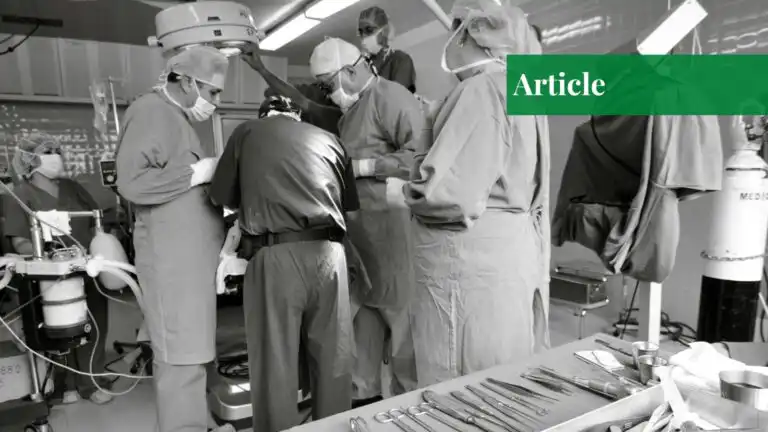
Surgery Without Oversight
The most prevalent procedures performed in small unlicensed clinics are cataract surgeries, cesarean sections, and appendectomies, which are often performed by paramedics or technicians who have been trained informally but are not formally certified.
On the 8th of August 2025, it was reported that a woman died in Bahawalnagar from complications associated with the wrong surgery performed in a private hospital that was later found to be unlicensed. The clinic did not have the most basic resuscitation equipment, and the “doctor” performing the surgery was a dispenser. Similar stories are periodic news items in Khyber Pakhtunkhwa, where “mobile surgical camps” sometimes provide low- or no-cost procedures but do not conduct postoperative follow-up or control for infection.
The Punjab and Sindh Healthcare Commissions have both attempted to regulate unregistered medical facilities throughout the years. However, in rural areas, there are simply too few inspectors, distances are too vast, and corruption is too common to effectively enforce regulation, and closed clinics will quietly reopen a month or two later under a new name.
Legal Ambiguity and the Weakness of Enforcement
In Pakistan, while the regulatory structure for practice and accreditation of institutions is multi-scale, it remains ineffective and poorly coordinated. At the federal level, the Pakistan Medical and Dental Council is the legally responsible entity tasked with licensing and registering medical practitioners, accrediting medical and dental educational institutions, and establishing any national professional standards.
Regardless of the already established structure of formal regulatory oversight, enforcement has been deficient. For example, the PMDC has been working without a full-time, formally appointed registrar for two years, which is a striking concern since it is the registrar’s responsibility to manage the daily regulatory functions of the PMDC. Without these governing actors, the PMDC is unable to complete inspections of medical colleges, effectively impose standards on registered practitioners, and deal with disciplinary complaints.
Aside from leadership gaps, two structural factors contribute to the failure of regulatory oversight:
1. Informal Nature of the Healthcare Sector
Many clinics in rural areas have never worked through formal regulatory channels; they may be unregistered, work without appropriate licensing, or never be subject to any type of official inspection. Because of weaker enforcement in these settings, malpractice or negligence often does not come to light. In more remote districts, patients may either have no formal means or an inaccessible means to lodge a complaint.
2. Accessibility and Resource Constraints for Victims
Even when someone is harmed, there may be no practical way to seek redress. The families of victims lack the legal knowledge, opportunity, and/or resources to file a complaint. Furthermore, the regulatory process is slow: while functional disciplinary bodies exist within the PMDC, they often lack transparency and have vague deadlines, and provincial health offices are often constrained for resources. An international review of the PMDC asserted that while the PMDC has “regulations aplenty for investigating medical malpractice,” it plays a “rather small role” in practice.
Laws currently exist to impose sanctions on unlicensed practitioners and identify standards for medical practice or facilities, including the PMDC Act and the Healthcare Commissions Act. However, without effective mechanisms for enforcement, these laws are mostly proclamations. For example, the Senate Standing Committee on National Health Services recently reminded the PMDC that it must revoke private medical colleges’ licenses within two weeks for non-conforming fees or facility standards.
Despite regulatory bodies around the above-mentioned health care institutions, coordination is poor. There is limited institutional linkage between PMDC, provincial health departments, hospital inspection units, and law enforcement. Where negligence imposes death, investigations normally proceed through local police authorities and not through the professional regulatory processes; the outcome of the investigation depends on local ties rather than systematic oversight over ethics.
The families often do not receive redress, and the negligent practitioner simply relocates or opens a clinic in another district. An expert identified and characterized Pakistan as an environment of code enforcement that lacks transparency; as a result, regulatory measures and oversight for “fitness to practice” are rare and mostly symbolic.
To summarize, even though the regulatory architecture is in place, enforcement deficits from leadership instability, informality of practice, limited resources, and weak coordination obstruct patient protections and professional accountability. If enforcement and structural gaps are not rectified, regulatory standards will remain as “aspirational” as they are nominal.
Conclusion
The situation of rural healthcare in Pakistan is not one of intentional violence but of a long history of neglect, a tapestry of weak systems and limited resources. Unregulated operations and violations of consent are just manifestations of a larger failing: the absence of a coherent moral rationale for rural medicine.
To provide safe surgery and care ethically in the rural margins of the country is not a question of privilege; it is a question of justice. A healthcare system that fails to provide dignity and safety to its most vulnerable citizens is, simply, not a healthcare system.
If you want to submit your articles and/or research papers, please visit the Submissions page.
To stay updated with the latest jobs, CSS news, internships, scholarships, and current affairs articles, join our Community Forum!
The views and opinions expressed in this article/paper are the author’s own and do not necessarily reflect the editorial position of Paradigm Shift.

Momina Areej is currently pursuing an MPhil in Clinical Pharmacy Practice. With a passion for writing, she covers diverse topics including world issues, literature reviews, and poetry, bringing insightful perspectives to each subject. Her writing blends critical analysis with creative expression, reflecting her broad interests and academic background.