
Introduction
Tehreek-e-Taliban Pakistan was founded by Baitullah Mehsud in 2007. At first, it was operating based on local strategies such as suicide bombing, kidnappings, and assassinations. But its operational capacity and militants were degraded following the operations conducted by the Pakistan Army. In 2021, following the Doha agreement, NATO forces withdrew from Afghanistan. Under the leadership of Hibatullah Akhundzada, the Taliban occupied the presidential palace. They controlled the whole nation and restored the Islamic Emirate of Afghanistan as per their Shariah laws.
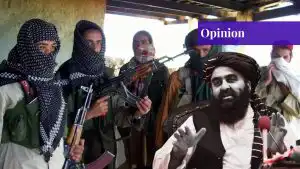
The Tehreek-e-Taliban Pakistan (TTP), with its close connection to the Afghan Taliban based on the similarity of ideology, has gained in terms of military advantages since the Taliban returned to Afghan soil in August 2021. TTP has been supported by the Islamic Emirate of Afghanistan (IEA) to secure its leadership, as well as to carry out transnational terrorism. Thus, Afghanistan has become a haven for TTP. These havens are the shelters for TTP; they provide recruitment and training to TTP militants. These safe havens have transformed TTP’s modus operandi from a domestically constrained insurgency to a transnational threat. Afghanistan is no longer serving as strategic depth for Pakistan; rather, it has effectively become a strategic depth or haven for Tehreek-e-Taliban Pakistan.
Afghan Safe Havens and Their Benefits for TTP
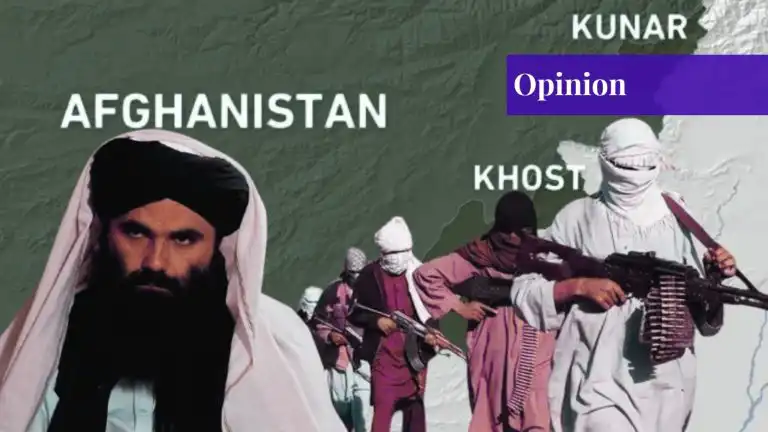
Kunar, Paktia, Khost, and Paktika are some of the Afghan provinces where TTP operates. Since the anti-Soviet jihad, these areas have been used as militant bases. These locations were in the eastern belt of the Afghanistan mountains, which can be viewed as hilly terrain with a narrow valley. In such a way, the Pakistan Army is not able to reach these areas.
This protected environment facilitates the establishment of TTP camps in Afghanistan. These camps are used for brainwashing, which they call ideological grooming, training, and recruitment. These camps are also used for online radicalization campaigns. TTP has Umar Media, through which it spreads propaganda against its rivals. This non-interventionist approach provides a smoother flow of weapons, funding, and cross-border communications. This further helps TTP to gain its influence and to instill fear in the hearts of civilians.
Collectively, these benefits enable TTP to operate without any constraints. The question arises that if the Afghan Taliban can effectively counter the Islamic State-Khorasan (IS-K), why don’t they also do the same to the TTP, which also threatens to disrupt the stability in the region? The Taliban is supporting the TTP not because they are unable to counter them; rather, it is a strategic move, as their ideologies are similar. TTP is not against the Afghan Taliban, but IS-K targets Afghan cities. Due to this, the Afghan Taliban sees IS-K as an existential threat and TTP as their historical partner.
Change in Modus Operandi of TTP
Afghanistan has provided safe havens to TTP. These safe havens are beyond the reach of the Pakistan army. This helps TTP to conduct long-term operations from there. From these zones, TTP also conducts transnational terrorism. Before, TTP conducted suicide attacks and assassinations at the domestic level, but after 2021, when TTP became close to the Afghan Taliban, it has been conducting transnational crimes. Now, TTP is not only known to conduct attacks in Pakistan, but it is also known as a transnational terrorist organization.
Initially, they used to brainwash people in their camps. Due to this low number, militants were recruited yearly, which was a constraint on their operational capacity. But now in this digital era, a TTP launches its digital campaigns through its own media named Umar Media. Also, Al Qaeda in Afghanistan, through its Inspire Magazine, spread propaganda and brainwashed the innocent public to join them.
Under the leadership of Hakimullah Mehsud, TTP’s administrative structure was centralized. Due to this, it experienced a decline in its influence. After he died in 2013 in a United States drone strike, Mullah Fazlullah took the leadership of TTP. In his tenure, TTP decentralized, and the power was distributed in small militant groups’ “daglay,” which benefited their growth.
From domestic operations to transnational terrorism, physical brainwashing to online radicalization, and centralized structure, TTP’s modus operandi has transformed TTP into an orientable and flexible insurgent network.
Conclusion
Afghan safe havens have significantly transformed the modus operandi of Tehreek-e-Taliban Pakistan. These sanctuaries undermine Pakistan’s counterterrorism strategy. To limit the influence of TTP, Pakistan should adopt a hybrid counterterrorism strategy. Pakistan, China, the US, Afghanistan, and other neighboring states should coordinate and enhance their intelligence mechanism. Track TTP militants and their sleeper cells, enhance border security, and counter online campaigns of TTP to counter terrorism more efficiently.
If you want to submit your articles and/or research papers, please visit the Submissions page.
To stay updated with the latest jobs, CSS news, internships, scholarships, and current affairs articles, join our Community Forum!
The views and opinions expressed in this article/paper are the author’s own and do not necessarily reflect the editorial position of Paradigm Shift.

Syeda Farani Fatima is an undergraduate student of International Relations at the International Islamic University of Islamabad, with a strong interest in anti-corruption, counter-terrorism and geopolitics. Strongly committed to fighting corruption, terrorism, and supporting national reform through research and public service.