
Introduction
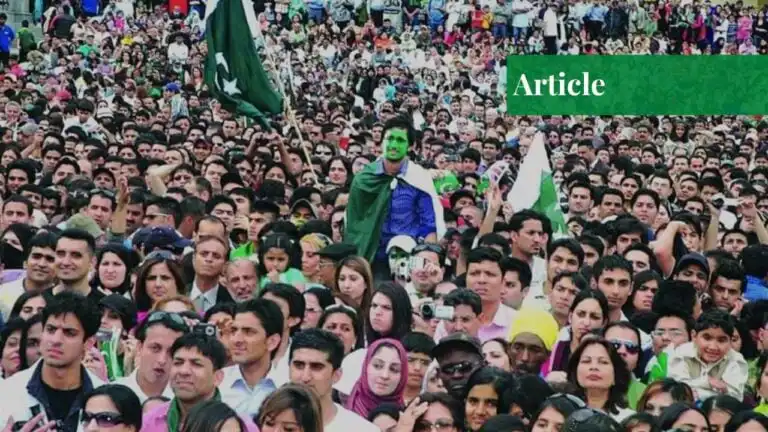
Youth bulge can either act as a time bomb or a demographic dividend, contingent on the engagement of youth in productive activities. Pakistan is home to an overwhelmingly young population with 64% of the population below 30 years. As per the estimates, the burgeoning youth population will grow even more by 2035. Presently, the youth of Pakistan is beset by multifaceted challenges; however, pragmatic and sustainable youth policies can transform them into a driving force that in turn could beget prosperity in Pakistan.
Conversely, the capitalization of Pakistan’s demographic remains unaccomplished, necessitating the development and execution of a holistic youth policy that could effectively address all the issues of the country’s young population.
Against this backdrop, this essay discusses various challenges facing Pakistan’s youth such as unemployment; outdated education, illiteracy, inadequate political and policy representation, and issues in the health sector. Most importantly, this research offers policy recommendations for overcoming the aforementioned challenges to turn the ever-enhancing youth bulge into a demographic dividend.
Challenges Facing the Youth of Pakistan
- Youth Unemployment
Pakistan’s youth population is categorized into three groups:
- 15-19 years
- 20-24 years
- 25-29 years
In 2021, the Pakistan Board of Statistics carried out the most recent Labour Force Survey according to which female youth make up 13.2% and male youth comprise 13.1% of Pakistan’s population. As far as the labor force participation rate is concerned, the share of female youth is abysmally low which stands at 23.18 % while the share of male youth in this regard is 81.01 %. Contrarily, the unemployment rate is almost 16% as per the report released by PIDE (Pakistan Institute of Development Economics) in 2021. This is due to the predicament of Pakistan’s economy characterized by fiscal imbalance, current account deficit, lack of institutional mechanism for creating employment opportunities, horrendous industrial output and agricultural productivity, as well as inherent structural flaws in the country’s political economy.
According to the report published by PIDE regarding Pakistan’s employment situation in February 2022, 31% of youth in the country are unemployed. Males constitute 16% of the total unemployed youngsters while females share in this 51%. Appallingly, most of these young people are educated having professional degrees which signifies the colossal graduate unemployment rate. The same report documents that a huge segment of working-age people doesn’t have any share in the labor force as some of them have different livelihood sources while others have become discouraged workers.
Most importantly, there is no entrepreneurship culture in Pakistan. Start-ups have the potential to generate 15% of job opportunities for youth. 90% of such business ventures fail in Pakistan due to a lack of holistic vision of entrepreneurs, inadequate venture capital funding, a dearth of product market fit, intricate rules and regulations, and a lack of market-based research.
- Outdated Education System and Illiteracy
The education system of Pakistan is afflicted with problems of overage enrolment, lack of technical training, and disparity between curriculum and industry requirements. Most importantly, illiteracy and outdated education systems are standalone problems that also aggravate unemployment.
As per the PSLM-Pakistan Social and Living Standards Measurement Survey (2019-2020), the youth literacy rate (age 15-24) of Pakistan is 72%. Rural areas have a comparatively less literacy rate of 65%, whereas, urban areas stand at 84%.
Provincially, Punjab has the highest literacy rate among youth with 78% while Balochistan has the lowest at 57 %.
There is a major gender gap in the youth literacy rate with 65% female literacy and 80% male literacy rate, as per World Bank data. The fundamental drawback in the quality and quantity of the education system implies the plight of human capital in the country. The poor education system of Pakistan doesn’t beget skilled and quality human resources and therefore the young population remains unable to meet the requirements of a competitive job market. The country’s education system relies on a traditional means of imparting education with an emphasis on cramming and neglects the learning outcomes.
The issue with Pakistan’s education system is two-pronged:
- Low literacy rate and the gender gap in education
- Inefficiency of the education sector as most graduates participating in the labor force have a general education inconsistent with national and international job market trends.
The Vocational Education System
The lack of vocational education is the most pressing issue concerning the education system which in turn leads to unemployment. The striking contrast between the vocational education system in developed countries and Pakistan highlights the underlying cause of education-cum-employment crisis facing Pakistan. An example can be cited in Germany where students after secondary school graduation join vocational training programs. Its vocational education system trains almost 51% of the workforce, enabling them to be at par with job market demands. In contrast, the 3800 TEVTA (Technical Education and Vocational Training Authority Institutes) in Pakistan with a total of 200,000 enrolled Pakistani students constitute a minuscule part of the total of 48 million enrolments in the country. It means that from 1000 enrolled students, only 4 are formally part of vocational institutions.
Almost 31% of the youth of Pakistan are NEET (Not in Education, Employment, and Training). Furthermore, the country’s education system has remained unable to equip youth with technical or soft skills which are a dire need of time. Additionally, the TEVTA institutions substantially lag in providing quality linkages as well as content for the labor market. Courses offered by TEVTA institutions also don’t equip youth with essential soft skills such as interpersonal, communication, adaptation, cognitive and analytical problem-solving, and project management. As a result, most of the time, TEVTA graduates do not undergo a smooth transition to entrepreneurship and employment.
- Lack of Political and Policy Engagement
Decision-making is a prerequisite for bringing development through opening avenues for the masses in general and youth in particular. In Pakistan, the lack of institutional mechanism has led to the marginalization of the voices of youth which has led to a diminished nay non-existent role in decision-making. As a result, it has created distrust, intolerance, and doubt among the youth.
No interface between government and youth could play a decisive role in charting rules and regulations that can maintain an equilibrium between the responsibilities and rights of the young population in Pakistan. The lack of meaningful engagement avenues in the country has led to political and social marginalization of the young population, making their engagement and role in policymaking extremely low.
- Physical and Mental Health Issues
The mental health of youth in Pakistan has never been a priority in policy, research, and health delivery. Economic and social inequalities, academic stress, and family issues have been the key causes of psychological problems in Pakistani teenagers. Most importantly, poverty has inculcated a sense of material deprivation which is further exacerbated by social media access which has led the youngsters to draw comparisons with others. Consequently, it has heightened despair, resentment, sense of deprivation, therefore causing mental health issues.
To curb unpleasant emotions and thoughts, these kids often resort to the intake of drugs. Daily, drug addiction takes 700 lives in Pakistan; moreover, another consequence of this addiction is suicide which is mostly committed by the disenfranchised youth. Stress and mental health issues often cause dysfunctional interpersonal relations due to enhanced aggression and anger on the part of the affected. All these issues have a compounding effect causing youth to carry out criminal activities.
The youth of Pakistan also faces health-related challenges. The absence of basic health care facilities as well as the increasing rate of contagious diseases disproportionately impact youngsters. The dearth of hospitals, paramedical staff, nurses, and doctors signifies multiple issues in Pakistan’s healthcare system. Furthermore, life-saving medications are costly which patients are unable to afford. Most importantly, the trust deficit in the healthcare system has led to ever-enhancing quackery in Pakistan. The country’s healthcare system comprises two parallel systems: private hospitals that are too expensive for the masses to afford, and public hospitals with extremely limited healthcare facilities.
The healthcare system of Pakistan is myriad with multiple flaws such as unequal resource distribution, poor governance, and corruption. Moreover, an inadequate health information management system, a paucity of educated professionals, and a lack of monitoring mechanisms for health planning and policy underlie the lamentable plight of the health sector. Most importantly, insufficient healthcare infrastructure such as a shortage of diagnostic centers, clinics, and hospitals is illustrative of the abysmal situation of Pakistan’s medical system. Presently, the expenditures related to healthcare constitute 0.4% of the national GDP, which is far less than the 6% (for LIC-Low Income Countries such as Pakistan) that is recommended. Furthermore, this minimal expenditure is not justly distributed among rural and urban areas.
WHO’s recommended doctor-to-patient ratio is 1:1000, however, it is 1:1300 in Pakistan. Workforce shortage in the healthcare system due to a lack of incentives for doctors has also led to the brain drain in Pakistan. Tuberculosis and malaria are the most prevalent diseases in adolescence (11-20) and adulthood (21-30 years) followed by diarrheal and respiratory tract diseases. Furthermore, the increased incidences of Hepatitis B as well as Hepatitis C in adults have also been observed.
Way Forward
- Creating Employment Opportunities
One of the most effective ways of creating employment opportunities for youth in Pakistan is by encouraging startup culture and industrialization in the country. As far as the industrial sector is concerned, Pakistan should focus on global trends such as technological innovation and artificial intelligence to maximize production. Key challenges in this regard can be addressed through aligning curricula with entrepreneurial knowledge and skills and forging public-private partnerships to boost apprenticeship and practical-based knowledge of entrepreneurship and catalyzing a business ecosystem.
An inspirational model in this regard is the “Youth Entrepreneurship Development Program” of Bangladesh which emphasizes imparting guidance, and training, as well as providing financial resources to youngsters. Additionally, training of customers, logistics, and digital marketing can be given through establishing E-Commerce Training Hubs. Moreover, local startups in villages can be uplifted by creating a “Start-up Incubation Village.”
Moreover, the government should start job placement as well as training programs at a national level to create ease for youth to find employment. It should also create technology parks, incentivize organizations providing job opportunities, buttress venture capital funds targeted at uplifting youth-led startups, and simplify the application process of venture capital funding.
To guarantee employment, the government should start a three-month scheme under which unemployed youth could get work placement for a short duration endowing them with indispensable work experience that in turn can create long-term employment opportunities for them. The digital economy also has the potential to provide employment opportunities, therefore, it shall be channelized by the government through registering digital labor platforms with the country’s social security system.
- Ameliorating the Education System
To improve the higher education system, Pakistan should learn from China’s education programs. To improve the quality of education, Pakistan can replicate Project 211 to enhance education quality and improve research culture in Pakistani universities. For improving the standard of educational institutes and bringing them to par with international systems, China’s Project 985 can be taken as a model under which Pakistan’s Government can attract top talent and build research centers.
Additionally, another Chinese model “2012 National College Students Innovation and Entrepreneurship Program” offers lessons for Pakistan. This program targets college students and emphasizes innovation training, entrepreneurship training, as well as entrepreneurship practice. Following this program will boost entrepreneurship and innovation among young students. Additionally, it will enable support as well as funding for student innovation projects and start-ups.
- Prioritizing Vocation Education Training
It is indispensable to bridge the theoretical knowledge and practical experience through improving vocational education in Pakistan that will address challenges of technical gaps in education and meet the requirements of the job market. Germany and Japan offer good learning experiences for Pakistan in this regard. In post-WWII, both states focused on vocational and technical education which enormously transformed their economies. Japan has developed a trained and skilled workforce which has made it a technology giant. Similarly. Germany has laid a substantial focus on the vocational education system making it one of the largest economies in the world.
Pakistan needs to prioritize vocational education and emphasize equipping its youth with state-of-the-art skills in various sectors such as IT, marketplace, agriculture, factories, construction, emerging technologies, and others. In this regard, public-private partnerships can be created to impart technical education to youth in universities and vocational institutions to cater to market trends. Additionally, the relevance of vocational education can be increased through the private sector which can offer internships and short-term fellowships to youth in order to train them in their respective sectors.
- Inclusion in Policy-making
Youth policy engagement is crucial for shaping their future as their perspective and inclusion in policymaking can lead to the robustness and longevity of policy. Moreover, youth can inculcate newfound evidence and innovation into the process of policymaking. Youth inclusion in policymaking is a gradual and long process that requires imparting policy-related education to young people, pushing them to policy research, and then actualization of research into advocacy.
- Reforming the Health Sector
Various policy interventions are required to improve physical and mental health in Pakistan. With respect to physical health, it is essential on the part of the government to allocate more budget to the healthcare system for reducing workforce shortage and ameliorating health infrastructure. The priority should be the development and upgradation of the healthcare system, notably in villages.
Healthcare funds can be increased through innovative financing models such as PPPs (Public-Private Partnerships). Under WHO’s Universal Health Coverage, the government of Pakistan initiated the SSP (Sehat Sahulat Program) which is a collaboration between private insurance companies and Pakistan’s government to dispense free healthcare facilities to the poor. Fundamentally, this initiative is hailed as a success, however, deferment in funds reimbursement and limited coverage are a few challenges that need to be addressed. SSP can serve as a model for other public-private partnerships. Moreover, to curb mental health issues, public awareness programs, integration of mental health into primary health, and provision of basic mental health services by community-based and general hospitals are the need of time.
Conclusion
The demographic landscape of Pakistan offers enormous opportunities for progress and development as the ballooning population of the country enters adulthood. Creating employment opportunities, targeted investment in the education sector, notably the vocational education system, youth engagement in policy and politics, and improving the health sector can bring about the demographic dividend.
If you want to submit your articles and/or research papers, please check the Submissions page.
The views and opinions expressed in this article/paper are the author’s own and do not necessarily reflect the editorial position of Paradigm Shift!
Safia Mansoor is a PhD International Relations scholar at the School of Integrated Social Sciences, University of Lahore. She has done an MPhil in International Relations from Kinnaird College with a gold medal in the faculty of Social Sciences.