How Have Singapore, Finland & South Korea Adapted Their Education Models?
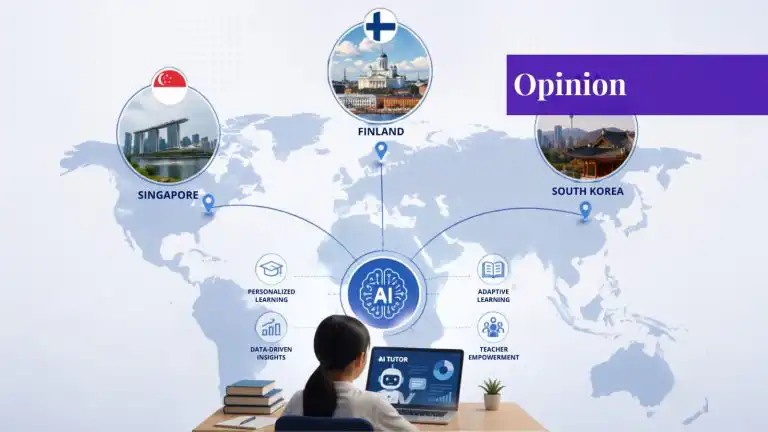
Artificial intelligence (AI) is transforming the world of business at an unprecedented pace. The question on every government’s mind here is how to respond to AI. But Singapore, Finland, and South Korea have already taken the step from discussion to action. The reforms in their education are relevant to countries wanting to equip their youth for an AI era.
AI is transforming sectors and changing the nature of the jobs that employers are looking for, ranging from healthcare to finance, from aviation to public administration. Global estimates show that millions of current jobs will transform over the next few years, and new careers will be created. This is the new reality, and for any country, the most competitive edge will not be based on its natural resources but on the quality of its educational system.
Singapore has taken one of the world’s boldest steps toward AI literacy education. The government is moving toward using artificial intelligence across various sectors in society with its National AI Strategy 2.0 and equipping citizens with the skills of the future. Coding, computational thinking, and digital literacy are introduced from early school years. The Student Learning Space (SLS) is an AI-powered learning platform designed to tailor learning to individual needs, and SkillsFuture is a financial assistance scheme for professional training that encourages lifelong learning. Recognizing that education does not stop after one leaves school, Singapore acknowledges the need to keep on learning as technology advances.
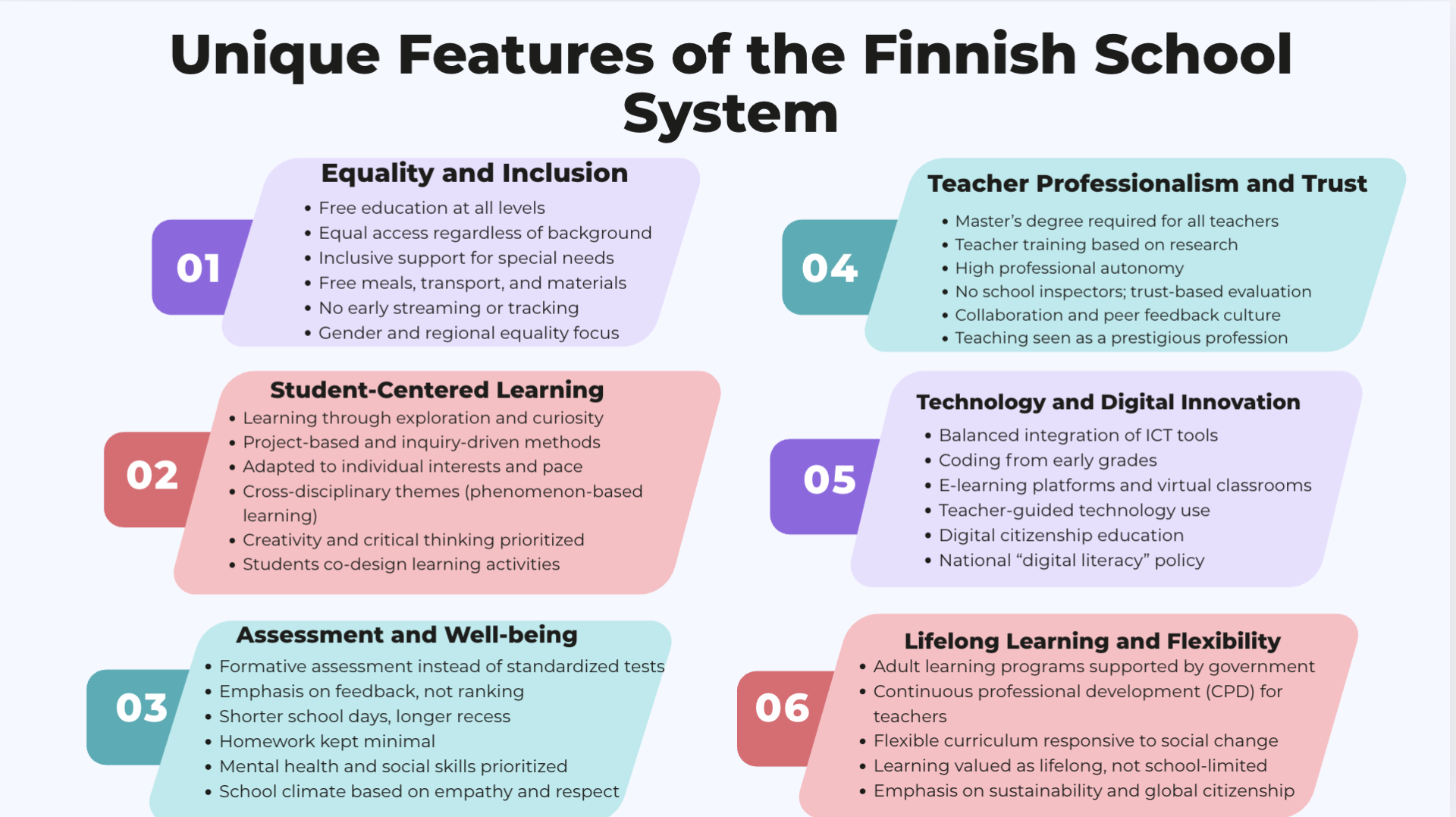
Finland has taken a human-centered approach. Finnish education goes beyond technology and promotes critical thinking, creativity, collaboration, and ethical decision-making. One of its most successful efforts is the free online course “Elements of AI,” developed by the University of Helsinki and MinnaLearn, that has brought the concepts of AI to students around the world. Furthermore, AI literacy and AI ethics have been embedded in the education system in Finland, where students are made aware of the opportunities and challenges of artificial intelligence. This expertise is more critical than ever in a world full of misinformation and AI-generated content.
South Korea has been able to merge technology and big public investments. AI education is gaining momentum not only at primary schools but also in universities, with the country’s national AI education strategy. The national AI education strategy is facilitating the extension of AI education to universities. The nation is launching AI digital textbooks, with students learning at their own speed in personalized digital learning. In the meantime, the Digital New Deal is spending billions of dollars on digital infrastructure, AI research, and smart classrooms. The universities are in close cooperation with industry, which ensures that the skills of the graduates are in line with the needs of the modern economy.
What Do These Countries Have in Common?
While the three countries embarked on different paths, there are four common priorities.
- Education is seen as an investment in the country, not a political catchcry.
- Teachers are provided with ongoing professional development before new technologies become a reality in classrooms.
- Students are urged to solve problems rather than to memorize information.
- Last but not least, governments realize that AI in the end should augment human intelligence, not supplant it.
Lessons For Developing Countries
The lessons that can be learned from these experiences for developing countries are important. Traditional rote learning, antiquated curricula, and tests of memory are still prevalent in many education systems. These systems have no way to provide graduates with the skills necessary to succeed in workplaces that are becoming more AI-driven. These systems are not equipped to produce graduates who can survive in an AI-driven work landscape. Giving computers or Internet access won’t solve this problem. In order to make meaningful reforms, it is necessary to have up-to-date curricula, well-trained teachers, digital infrastructure, and good collaboration between the government, universities, and the private sector.
Skills that are not so easy to be replaced by AI should be a core part of education. Creativity, leadership, emotional intelligence, communication, teamwork, ethical reasoning, and critical thinking will continue to be important in all careers. These human skills will be increasingly essential in addition to the technological ones needed by graduates in sectors such as healthcare, aviation, diplomacy, finance, journalism, and public administration.
Policymakers can make no mistakes at this point. Education needs to include AI literacy as a fundamental course. The universities should broaden their interdisciplinary AI courses, integrating technology, business, public policy, social sciences, and ethics. Lifelong learning should be supported by public investment, and companies should collaborate with educational institutions to make sure graduates have skills that are relevant for the job market. International cooperation is also a way to promote the exchange of good practices in education and to narrow the digital divide globally.
The AI revolution is already underway, and winners and losers will be decided by education. However, Singapore, Finland, and South Korea are examples that teaching for the future is not merely a matter of getting the newest technology. It’s about investing in teachers, innovation, lifelong learning, and developing education systems that are capable of change.
Today, countries that change their education systems will provide skilled workers and they will provide responsible innovators, competitive economies, and resilient societies. In the age of artificial intelligence, education is not just a social service but one of the most crucial pillars of national security, economic growth, and global competitiveness.
If you want to submit your articles and/or research papers, please visit the Submissions page.
To stay updated with the latest jobs, CSS news, internships, scholarships, and current affairs articles, join our Community Forum!
The views and opinions expressed in this article/paper are the author’s own and do not necessarily reflect the editorial position of Paradigm Shift.

Hasnat Iqbal is a Pakistan-based international relations graduate, researcher, and independent columnist. Her areas of interest include foreign policy, geopolitics, international political economy, energy security, emerging technologies, and global governance. Her articles examine major international developments and their implications for regional and global politics.