Introduction
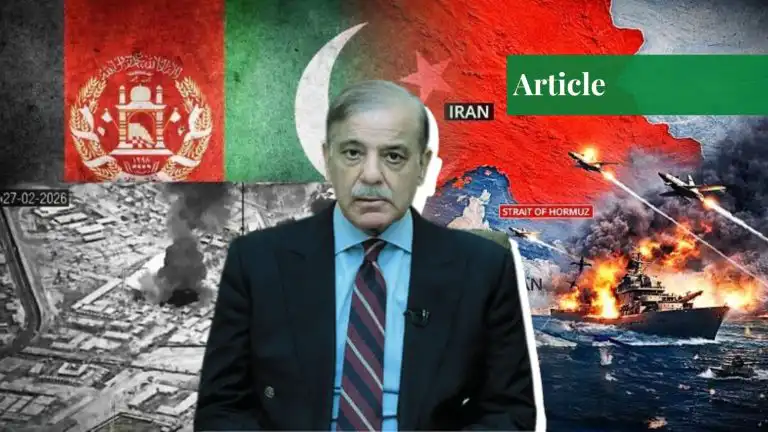
In February 2026, two wars simultaneously broke out on the western borders of Pakistan. These included the Afghanistan-Pakistan War and the US-Iran War. The Pakistan-Afghanistan War was triggered by Operation Ghazab Lil Haq, launched by the Pakistan Army on 26 February 2026, targeting the Taliban government, which Islamabad alleges provides havens to Tehreek-e-Taliban Pakistan (TTP) in Afghanistan. The US-Iran War, driven by Iran’s advancing nuclear program and the collapse of diplomatic negotiations, erupted on February 28, 2026, when the United States launched Operation Epic Fury against Iran.
Within a span of four months, the two wars began shifting the trend of militant violence in Pakistan differently across regions. In KP, the wars led to a temporary spike in militant attacks, but the frequency soon declined below the pre-war level, while in Balochistan, the insurgent activity escalated. Simultaneously, the Afghanistan frontier transformed from a zone of sporadic border skirmishes into a zone of open conventional warfare; the Iran-Pakistan border transformed from a relatively neglected area into a vital and highly monitored security zone; and Pakistan’s broader economy faced severe upheaval driven by disruption to the Strait of Hormuz.
Pre-war Militant Landscape of Pakistan
Before the onset of both wars, Pakistan’s internal and external risk profile was marked by persistent yet declining militant attacks, intermittent firefights on the northwestern border, low-level militant volatility on the southwestern frontier, and a gradually recovering economy. In January 2026, 87 militant attacks were reported in the country, due to which 119 civilians and security personnel lost their lives. The following month, 83 attacks took place and killed a total of 139 people. This evidence indicates that before the start of the two wars, the trend of militant violence in the country was characterized by low-frequency, high-intensity attacks.
Simultaneously, the border with Afghanistan was marked by persistent brief clashes, while the Iran-Pakistan border remained relatively peaceful with reports of occasional Baloch militant activity. However, economically, the country was gradually moving towards stability. The forex reserves of Pakistan were registered at $20.97 billion at the end of January 2026, and the current account documented a surplus of $121 million. All of this signalled a gradual macroeconomic stabilization.
Militant Threat Landscape of KP: Before & After the Start of the Two Wars
The militant threat landscape of Khyber Pakhtunkhwa altered briefly amid the ongoing Pakistan-Afghanistan War but gradually returned to near pre-war dynamics. KP region witnessed 58 total attacks in January 2026 and remained the main battleground of militant activities in the country in February, with TTP being the main threat and using Afghanistan as a base. However, in March, the number of terrorist attacks rose by 76% in Pakistan, and 86 total attacks were reported in the KP as TTP launched Operation Khyber a few weeks after Ghazab Lil Haq.
In the following months, the region witnessed 66 attacks in April and 54 attacks each in May and June. However, fatalities rose by 53% in the second quarter of 2026 in the KP region even as the frequency of attacks declined in May and June. This suggests that the trend of violence eventually shifted towards lower-frequency but higher-intensity attacks. This resurgence of militant violence in the KP region suggests that Operation Ghazab Lil-Haq has so far largely proved to be ineffective in resolving the security issues of the region.
Militant Threat Landscape of Balochistan Amid the Two Wars
Unlike KP, Balochistan witnessed a sharp increase in militant activity following the US-Iran War, driven by the spillover impacts of the War. Prior to the start of the war, in January, the province was the primary front of militant activity, witnessing 27 attacks. Notably, the province became the centre of attention on 31st January 2026 when BLA launched Operation Herof 2.0, killing 48 people, including civilians and security force personnel. This was followed by intermittent attacks in February.
However, the militant attack frequency escalated sharply following the start of the war in March, when the province witnessed 59 attacks, followed by 71 in May and 49 in June. A shuttle train bombing in the province in May alone killed 47 people, indicating an increased lethality of individual attacks. Additionally, the East Asia Forum notes that Islamic State Khorasan Province (ISKP) is exploiting the turmoil in Iran to expand in Balochistan via recruitment. Altogether, the total fatalities in the province amounted to 265 in the second quarter of 2026. Thus, while insurgency in the province was already prevalent, the Iran war compounded the instability as it destabilized the Pakistan-Iran border, which was exploited by the militants for greater operational freedom.
The Afghanistan Border: From Skirmishes to Open War
While both wars altered the internal security landscape of the country, the Pakistan-Afghanistan War concurrently transformed the northwestern frontier from a zone of intermittent skirmishes into one of active conventional warfare. Before the start of the war, the Pakistan-Afghanistan Border was characterized by low-level skirmishes and attacks by the TTP into Pakistan. This pattern transformed on February 26, 2026, when Pakistan launched Operation Ghazab Lil Haq. These were the first direct military strikes by Pakistan on Afghan Taliban military installations in Kabul, Kandahar and Paktika. Pakistan’s own Defence Minister, Khawaja Asif, also classified the fighting as an “open war.”
According to the UN, 372 Afghan civilians were killed and 397 injured in the first three months of 2026 as a result of cross-border violence between Pakistani military and Taliban forces. Multiple attempts to broker a ceasefire were made by Saudi Arabia, China, Turkey, Qatar, and the United Arab Emirates, all of which repeatedly broke down. The war is currently active and ongoing. Between June 29 and July 1, 2026, Al Jazeera reported that the Taliban fired drones into Balochistan, while Pakistan conducted strikes in Paktia, Paktika and Kunar provinces. These developments signify that the conflict has ultimately devolved into an “entrenched cycle” of mutual blackmail between the two sides.
Iran Border: Neglected Boundary to Destabilized Border
In contrast to the northwestern frontier, which transformed into a zone of active conventional warfare, the Pakistan-Iran border altered from a neglected boundary into a destabilized border, and ultimately a heavily monitored borderline amid the two wars. Preceding the start of the US-Iran War, the border witnessed sporadic Baloch militant activity on both sides. Cross-border fuel and trade flows also functioned normally. The dynamics began to shift following the start of the war in late February, with more than 13,000 individuals crossing through the Taftan-Mirjaveh and Gabd-Kumb-Rimdan corridors from Iran into Pakistan over the following six weeks. This initially created border security gaps, which gave militant groups greater freedom to operate. Pakistan’s Balochistan government placed the border on high alert, reinforcing crossings such as Taftan to manage the security situation.
Pakistan’s Role as a Mediator: From Security Threat to Peacemaker
One of the most unprecedented developments that took place during the two wars was the mediatory role played by Pakistan in the US-Iran War. The war had substantially altered the security environment of the country, rendering mediation a strategic necessity. The country began its mediatory efforts via backchannel diplomacy in March. One month following the efforts, on April 7, 2026, a ceasefire between the two sides was announced by Prime Minister of Pakistan Shehbaz Sharif. Subsequently, Pakistan hosted the Islamabad Talks on April 11 and 12, 2026. Though the talks failed, they substantially elevated the diplomatic credentials of the country. Later, on June 18, 2026, the Islamabad Memorandum of Understanding (MoU) was signed as Pakistan continued its diplomatic efforts. Through these efforts, the global image of Pakistan was elevated, and international media began framing Pakistan as a peacemaker rather than a security concern for the world.
Disruptions to the Economy
Apart from the hard security environment, the economic security landscape of the country also underwent a major upheaval amid the US-Iran conflict. Pre-war, the inflation in the country stood at 6.98%, while the petrol prices stood around Rs. 253.17/litre in February. Soon after the war started in late February, conflict in the region disrupted navigation through the Strait of Hormuz—a vital waterway accounting for approximately 20% of global energy trade—sending economic shockwaves around the world, including to Pakistan.
This led to a gradual petrol price hike in Pakistan, where the prices eventually reached Rs. 458.41/litre on April 3, 2026. Between February and May 2026, inflation also increased from 6.98% to 11.66%. However, the petrol prices eventually began to reduce as the fighting between the US and Iran de-escalated. As of July 4, 2026, the prices stand at Rs. 297.53/litre. Nonetheless, these macroeconomic disruptions have tempered the trajectory of Pakistan’s long-term macroeconomic stabilization.
Conclusion
The simultaneous eruption of two conflicts on Pakistan’s western frontier kept its security environment fluctuating. The northwestern frontier transformed into a conflict zone, while the southwestern frontier transformed into a heavily monitored zone; security challenges in Balochistan compounded, while those in KP persisted. As of July 2026, Pakistan continues to face TTP attacks, in response to which it has conducted strikes in Afghanistan—indicating that cross-border violence will persist, though full conventional warfare will not, as both sides lack the resources to sustain it. As the US-Iran war continues to destabilize Iran and give Baloch militants greater room to operate, Pakistan will likely have to keep playing the mediator role it has already assumed.
If you want to submit your articles and/or research papers, please visit the Submissions page.
To stay updated with the latest jobs, CSS news, internships, scholarships, and current affairs articles, join our Community Forum!
The views and opinions expressed in this article/paper are the author’s own and do not necessarily reflect the editorial position of Paradigm Shift.