Abstract
The use of artificial intelligence (AI) in disaster management is becoming a game-changer, offering unparalleled capabilities for hazard prediction and emergency response coordination. By integrating satellite imagery, sensor networks, and machine learning algorithms, AI can support and improve early warning systems, optimize evacuation planning, and facilitate relief coordination.
AI’s applications are varied throughout the disaster cycle, from case studies of AI use in the 2022 floods in Pakistan, wildfire detection in California, earthquake mapping in Nepal, and post-earthquake recovery in Turkey. These technologies have resulted in saving lives, lower prediction errors, faster response times, and optimized resource allocation, reducing economic losses at the same time. But there are issues to be resolved about the equity in access, data bias, and privacy protection. This paper proposes that AI, with proper ethical controls and inclusive policies, can play the role of a multiplier in disaster-prone areas, including South Asia, in strengthening the resilience of these areas.
Keywords
Artificial Intelligence (AI), Disaster Management, Prediction, Emergency Response, Case Studies, Pakistan, Early Warning Systems, Humanitarian Logistics, Climate Resilience
Introduction
Disasters are still one of the foremost problems of human security and sustainable development. From 2000 to 2023, over four billion people experienced disasters and economic losses to the tune of over $2.97 trillion, according to the United Nations Office for Disaster Risk Reduction (UNDRR, 2025). The lives and economies of people and communities continue to be affected by floods, earthquakes, cyclones, and pandemics, especially in vulnerable areas like South Asia. They highlight the necessity for creating new methods and solutions in disaster management that are not only forecasting but also manual in nature.
Artificial intelligence (AI) is a change in basic assumptions in this area. AI’s power lies in its ability to predict disasters with accuracy, coordinate swift responses, and find early warning signals by using machine learning, satellite imagery, sensor networks, and natural language processing. AI systems can rely on millions of variables to provide real-time insights to decision-makers, which is not the case with models that require few parameters.
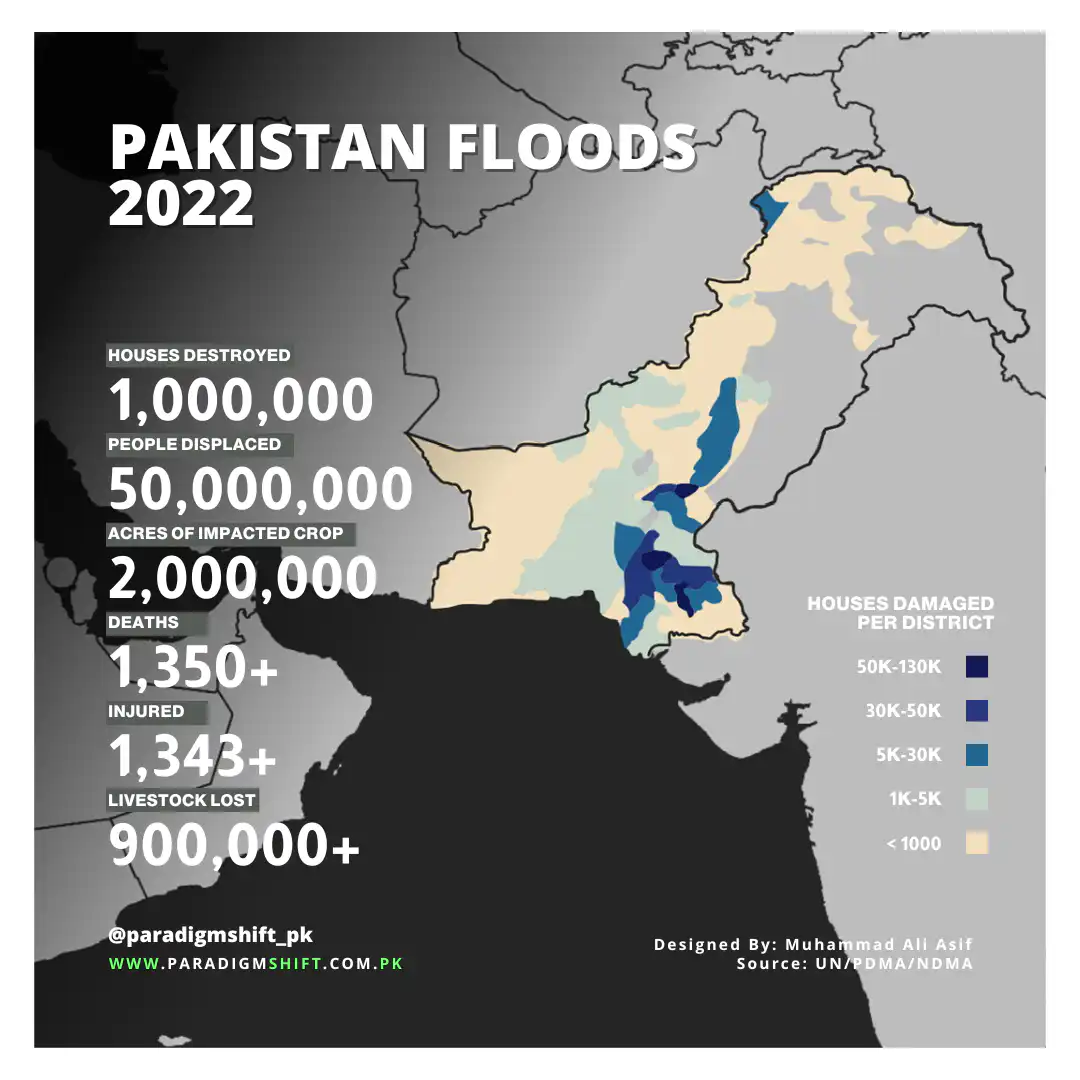
The lessons learned from the Pakistan experience highlight the need for and the possible adoption of AI. The catastrophic flood hit in 2022 had an impact on thirty-three million people, destroyed millions of houses, and resulted in $30 billion worth of damage (UNDP, 2022). Machine learning models for the monitoring of rivers and forecasting of rainfall were promising, but data integration and institutional preparedness were barriers. In this case, the overall theme of this paper also comes into focus: AI can contribute to making better predictions and responses to disasters, provided it is backed up by ethical precautions, fair access, and appropriate governance mechanisms.
Predicting Disasters with Artificial Intelligence
Satellite data, seismic information, hydrological flows, and climate parameters are all being integrated into early warning systems to transform the disaster prediction process with the help of AI. While traditional models rely on a limited number of variables, AI can handle millions of variables in real time and identify patterns that are not linear and are not captured by traditional models. For example, AI has been applied to enhance cyclone trajectory predictions, which currently have an error margin of three hundred kilometers, but with AI, it has been reduced to fifty kilometers, which is a significant improvement in evacuation planning and preparedness (Lehmer & Anguelov, 2025).
Case studies demonstrate the effectiveness of AI. In California, an AI-based system combined satellite and atmospheric data, reducing the amount of time required to detect wildfires by 60 percent, thereby aiding the efforts of firefighters in managing the flames. There was a clear improvement in detection efficiency with the use of machine learning tools, such as the ALERT California model, but the severity of fires has increased with climate change (Lehmer & Anguelov, 2025).
Machine learning models such as Artificial Neural Networks (ANN) and Support Vector Machines (SVM) were used in the field of river monitoring and rainfall prediction in Pakistan. The models managed to forecast the flood to a reasonable extent for the month (with a reasonable accuracy of around 70 percent) ahead of time, giving the district authorities a lead to prepare for the emergencies (Kim & Kim, 2025).
In the realm of social media, AI has an exceptional ability to predict trends and behaviors. Natural Language Processing (NLP) models can process millions of posts in real time, figuring out emerging disasters sooner than official reporting channels. In the case of Hurricane Harvey, the increase in keywords like “flood” and “shortage” on Twitter helped officials find neighborhoods that were affected before traditional methods.
The advantages of artificial intelligence compared to traditional methods can be summarized as follows (UNDP, 2025):
| Disaster Type | Traditional Error Margin | AI-Based Error Margin | Improvement |
|---|---|---|---|
| Cyclones | ~300 km | ~50 km | 83% |
| Flood Levels | ±30% | ±10% | 67% |
| Wildfire Detection | 24–48 hrs. | <10 hrs. | Seventy-five percent faster |
The above examples show that AI is not only an incremental improvement on disaster prediction but also a change in basic assumptions. AI can help reduce mistakes, speed up the detection of disasters, and combine information from various sources to help the authorities make prompt decisions and prevent disasters from turning into a humanitarian crisis.
AI in Preparedness
The crucial link between prediction and response is the fact that communities are prepared when a disaster happens. AI improves preparedness by creating evacuation simulations, risk mapping, and a socio-economic analysis to find vulnerable populations.
AI is appearing as a potent force in bolstering the capacity of communities to better prepare for disasters, revolutionizing the way they plan and respond prior to disaster events. In Japan, the impressive results of the evacuation simulations based on AI have been proven, reducing evacuation times by 30%. During earthquakes and tsunamis, traffic control systems like Spectee Pro can check traffic, weather, and even social media to give real-time guidance, allowing authorities and citizens to navigate more efficiently (Kizuna, 2025).
Community risk mapping is another key advantage of preparedness that AI can provide. Enabling the demographic, geographic, and socio-economic data to be combined, AI systems can find populations at highest risk, including those vulnerable due to old age, disability, or living in low-lying areas. This enables disaster management authorities to distribute resources to those communities and design strategies to suit the needs of vulnerable groups, instead of implementing generic plans that might miss key communities.
A good illustration of AI for preparedness is the DX4Resilience project in South Asia, which is being piloted by the United Nations Development Program (UNDP) with the support of the Government of Japan. This program leverages AI and digital solutions to enhance disaster preparedness for countries such as Nepal, Indonesia, Sri Lanka, and the Philippines. The integration of satellite data into socioeconomic data enables governments to find the high-risk zones, preposition relief supplies, and enhance recovery planning with DX4Resilience. AI-powered mapping is proven to cut down on delays in response to field operations and streamline agency collaboration, according to early assessments (UNDP, 2025).
In Pakistan, it is starting to materialize in some areas, especially in the flood-prone areas. AI mapping of vulnerable districts has been applied to map the expected flood zones and cross-referenced with the observed flood impact, illustrating the accuracy of the models and their use to plan for preparedness.
AI in Response
In the response stage of disaster management, when time is of the essence and accuracy can mean life or death, AI has been an indispensable tool. AI-powered real-time decision support systems analyze data from satellites, drones, and sensors in real-time to deliver actionable insights to emergency managers. In 2017, during Hurricane Harvey, AI processed millions of social media posts every hour and pinpointed flooded neighborhoods before official channels could, allowing rescue personnel to be deployed sooner (Amorín & Uruguay, 2022).
Drone and robotics applications have taken search and rescue operations to new levels of revolution. After the Nepal earthquake in 2015, AI-powered drones using computer vision were used to do the mapping of collapsed buildings within hours, enabling rescuers to prioritize the areas where potentially trapped survivors were found. Likewise, in 2023, after the Turkey earthquake, AI took a picture of satellite photos to estimate damage and direct rescue personnel to the worst-hit areas, helping to direct rescue efforts (Milton, 2023).
AI has been seen to improve logistical systems as well, with measurable results. In the COVID-19 pandemic, AI systems perfected the global supply chain for personal protective equipment (PPE) and cut delivery times by almost 40 percent. Predicting surges in demand and directing supplies, AI ensured that frontline workers had the necessary equipment in place at the right time (OECD, 2026). Another example of how WFP is using AI is to forecast food insecurity hotspots during droughts, allowing for anticipatory action in resource distribution and preventing humanitarian crises before they even start (“HungerMap LIVE — WFP,” 2026).
Comparing AI-powered response systems to traditional systems, efficiency can be captured in the following manner:
| Response Activity | Traditional Approach | AI‑Enabled Approach | Improvement |
|---|---|---|---|
| Search & Rescue | Manual mapping (days) | Drone mapping (hours) | Eighty percent faster |
| Coordination | Manual allocation | AI‑optimized supply chains | Forty percent faster |
| Medical Triage | Paper‑based sorting | AI‑assisted triage applications | Sixty percent faster |
As these examples prove, AI is not just a helpful tool but a game-changer in the world of disaster response. AI can save more lives while minimizing economic losses by improving the speed and efficiency of search and rescue missions, perfecting coordination, and improving medical triage.
AI in Recovery
In the post-disaster management phase, AI also has a crucial role to play, moving past the immediate relief and recovery to focus on rebuilding infrastructure, restoring livelihoods, and enhancing resilience. Damage assessment is one of the most beneficial uses. AI models were used to quickly estimate the extent of damage to buildings and infrastructure after the Turkey earthquake in 2023 by analyzing the data from satellites and drones. This enabled resources to be focused properly on the rescue and provided a more efficient allocation of reconstruction resources, saving almost 70 percent of the time previously spent on manual surveys (Milton, 2023).
In addition to first evaluations, AI helps in long-term recovery planning by creating climate-resilient reconstruction scenarios. These models can simulate various post-rebuild scenarios, perfect the design of housing layouts, and find weaknesses in urban infrastructure. AI can combine climate data and socio-economic indicators to inform recovery strategies that can help mitigate disaster risks while building back better.
One such example is the reconstruction of post-tsunami Indonesia. For instance, urban planning models using AI were applied to direct reconstruction efforts, aiming for structures to be more resilient to flooding and earthquakes. The recommendations based on these simulations were more evidence-based and led to more sustainable and resilient infrastructure (UNDP, 2018).
The use of AI in recovery is a testament to its capacity to speed up the reconstruction process and to build resilience into the long-term development process. AI enables recovery not only to be about ‘returning to the status quo’ but also about creating stronger, safer communities ready for future challenges through rapid damage assessment and climate-aware reconstruction planning.
Challenges and Ethical Considerations
While the potential of AI in disaster management is immense, there are challenges that need to be addressed. One of the major challenges is the presence of bias in AI models. If algorithms are fed incomplete data or data that is focused on urban areas, they may miss rural or marginalized communities. This can result in unequal outcomes of response to disaster, such that the poorest groups are left behind at the time of disaster (UNDRR, 2025).
Data Privacy
One of the other issues is data privacy. Predictive insights are often derived from sensitive data like geolocation, mobile usage, or social media activity, which is often entered into AI systems. AI systems often work with sensitive data, such as geolocation, mobile usage, or even social media activity, to produce predictive insights. This will aid in situational awareness, but it will also present significant surveillance issues. The instruments, which are supposed to save lives, can be used to undermine individual freedom if adequate safeguards are not in place (OECD, 2026).
Infrastructure Gaps
Lack of infrastructure is also an especially critical issue. The power of AI solutions is hampered by several factors, including the inability to set up computing power, high-quality datasets, and skilled staff in many developing countries. As shown during the floods in 2022, machine learning models were used to check the rivers, but the integration of machine learning with the district authorities was not strong, affecting the machine learning results (Camps-Valls et al., 2025).
Prospects
To summarize, the future of AI in disaster management holds great promise, with potential for further integration with modern technologies and international cooperation. A potential avenue is using AI in conjunction with IoT sensors for real-time monitoring. Rivers, bridges, and city infrastructures equipped with smart sensors can check flood levels, seismic activity, and structural health on an ongoing basis and relay information to AI systems for immediate alerts to communities and authorities.
The other new frontier is generative AI for scenario modeling. The models can simulate thousands and thousands of scenarios of a disaster and help decision makers visually make plans for what they might encounter in the event of a disaster. Generative AI can simulate realistic floods, earthquakes, or cyclone events, helping governments to simulate responses before a crisis ever happens.
The other aspect that is equally transformative is the integration of blockchain, ensuring transparency in the distribution of aid. In the realm of relief, blockchain can play a crucial role in making sure of accountability, as it allows for transactions to be recorded in a secure and visible manner, minimizing corruption and ensuring that assets are delivered to those who need them most.
Finally, cooperation between countries of the world will be essential for fair disaster management. AI adoption is widespread in North America and Europe, but there are challenges in other parts of the world, such as Asia and Africa. The use of international frameworks, shared datasets, and capacity building will help fill these gaps and make the potential benefits of AI available to all.
These innovations all play a role in the future of disaster management that could be faster, fairer, and more resilient, and where technology could save lives and build trust and equity across borders.
Conclusion
The use of AI in disaster management is transforming the way societies respond to disasters, and the tools and applications are transforming the landscape of disaster prediction, preparedness, response, and recovery. From reducing the risk of cyclone path errors to coordination during a pandemic, AI has proven to be a game-changer in saving lives and minimizing losses. It is important to note that there is a balance between power and responsibility, however. The lack of inclusivity in algorithms, concerns about the privacy of data, and disparities in regional applications of them serve as reminders of the dangers of innovation without ethics.
What is also required is more than technological advancements—interdisciplinary research is needed, and this will require the collaboration of computer scientists, policymakers, humanitarian agencies, and communities. For inclusion, it must be equitable: The application of AI must benefit everyone, including in disaster-prone South Asian states. AI can become a trusted ally to resilience if we add ethical boundaries and encourage partnerships across the world.
To sum up, the impact of AI on disaster management is undeniable. It can predict risks with greater accuracy than ever before and arrange a quick response and recovery more climate-resiliently. Its real power, however, will manifest only when innovation is coupled with ethics and technology put at the service of humankind in a participative, open, and collaborative way. This balance will define the contribution AI can make to resilience or new risks.
References
- Amorín, C. D., & Uruguay. (2022). Record #4014179. Retrieved June 4, 2026, from United Nations Digital Library System website: https://digitallibrary.un.org/record/4014179?utm_source=copilot.com
- Camps-Valls, G., Fernández-Torres, M.-Á., Cohrs, K.-H., Höhl, A., Castelletti, A., Pacal, A., … Ouala, S. (2025). Artificial Intelligence for Modeling and Understanding Extreme Weather and Climate Events. Nature Communications, 16(1). https://doi.org/10.1038/s41467-025-56573-8
- HungerMap LIVE — WFP. (2026). Retrieved June 4, 2026, from HungerMap LIVE website: https://hungermap.wfp.org/?utm_source=copilot.com
- Kim, B., & Kim, T. (2025). AI in extreme weather event prediction and response: a systematic topic-model review (2015–2024). Frontiers in Environmental Science, 13. https://doi.org/10.3389/fenvs.2025.1659344
- Kizuna. (2025). Next-Gen Disaster Tech | The Government of Japan – Japan Gov. Retrieved from The Government of Japan—JapanGov—website: https://www.japan.go.jp/kizuna/2025/03/next-gen_disaster_tech.html
- Lehmer, N., & Anguelov, N. (2025). AI for Climate Change Adaptation: Analyzing Machine Learning’s Role in Combating California’s Wildfires. AI & Society. https://doi.org/10.1007/s00146-025-02386-8
- Milton, D. D. (2023). The 2023 Turkish-Syrian Earthquake: a Mega Disaster in the Making? Retrieved June 4, 2026, from Geography website: https://www.rugbyfreesecondary.co.uk/wp-content/uploads/sites/4/2025/03/Geography-Case-Study.pdf.
- Mirza, A. (2025, July 25). Floods in Pakistan: A man-made disaster. Paradigm Shift. https://www.paradigmshift.com.pk/pakistan-floods/
- OECD. (2026). Strengthening Supply Chains through Efficiency, Resilience, AI, and Environmental Performance. OECD. https://doi.org/10.1787/2a495d96-en
- UNDP. (2018). Programme for Earthquake and Tsunami Infrastructure Reconstruction Assistance. Retrieved from UNDP website: https://www.undp.org/indonesia/projects/programme-earthquake-and-tsunami-infrastructure-reconstruction-assistance?utm_source=copilot.com
- UNDP. (2022). Pakistan Floods 2022: Post-Disaster Needs Assessment (PDNA). Retrieved June 4, 2026, from the UNDP website: https://www.undp.org/pakistan/publications/pakistan-floods-2022-post-disaster-needs-assessment-pdna?utm_source=copilot.com
- UNDP. (2025). DX4Resilience. Retrieved from UNDP website: https://www.undp.org/asia-pacific/dx4resilience
- UNDRR. (2023, July 11). GAR Special Report 2023: Mapping Resilience for the Sustainable Development Goals | UNDRR. Retrieved from www.undrr.org website: https://www.undrr.org/gar/gar2023-special-report
- UNDRR. (2025, May 27). Global Assessment Report (GAR) 2025. Retrieved from the Undrr.org website: https://www.undrr.org/gar/gar2025
- Warraich, F. A. (2026, March 6). A flooded Pakistan: Climate change or bad governance? Paradigm Shift. https://www.paradigmshift.com.pk/2022-floods-pakistan/
- Xu, J., Nair, D. J., & Waller, S. T. (2025). Artificial intelligence in disaster management: achievements, challenges, and prospects. Natural Hazards. https://doi.org/10.1007/s11069-025-07667-5
If you want to submit your articles and/or research papers, please visit the Submissions page.
To stay updated with the latest jobs, CSS news, internships, scholarships, and current affairs articles, join our Community Forum!
The views and opinions expressed in this article/paper are the author’s own and do not necessarily reflect the editorial position of Paradigm Shift.

Inshal Haider is pursuing her MPhil in Defense and Strategic Studies at Quaid-i-Azam University, Islamabad.