Introduction
Pakistan’s spending on defense is often criticized, particularly in comparison to the education budget. There’s a general perception that Pakistan allocates too little for education; some even call it a pittance. But are all these well-meaning critics well-informed? Comparing defense and education spending is like stirring a hornet’s nest in our polarized society. One can be accused of having an agenda or even being anti-state, anti-people, and anti-progress. This topic is shrouded in confusion, with discussions often driven by emotions, biases, and insecurities rather than facts and figures.
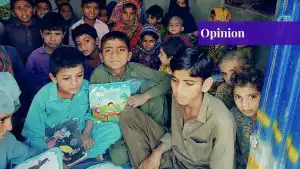
We need a clear picture of the real situation to guide public opinion in the right direction and garner public support for the needful policy decisions. There are growing demands for cuts in the defense budget and increased education funding for a better future. Currently, the state of education in Pakistan is far from being promising, with 26.2 million out-of-school children, a looming learning crisis, and a lack of trust in public schooling.
Yes, we need to invest more for these children, as Pakistan spent only 1.77 percent of its GDP on education in 2024, and yes, we need to give it as much importance as defense. However, we must first understand the real picture—how much are we already spending on education and how effective and transparent is this spending? This article aims to clear up confusion and ambiguity surrounding public spending for defense versus education.
Misconceptions Surrounding the Education Budget of Pakistan
Just when the federal budget for fiscal year 2024-25 was announced in June this year, alarm bells rang over how little the federal government spends on education compared to defense. Social media was awash with posts and memes bashing the government for ignoring something as important as education, highlighting the 79 billion rupees allocated to education versus the 2,122 billion rupees for defense, even though it was a significant increase from the previous year.
At first glance, this sounds disturbing and unsettling. But there’s a glaring mistake in this comparison: It ignores the fact that education is a provincial subject. The single biggest reason for this confusion is the comparison of federal spending on education with the defense budget (a federal subject). Education is a provincial subject after the 18th amendment of 2010.
Provinces spend a significant portion of their provincial budgets on education, whereas the federal government is responsible for educational expenditure in Islamabad Capital Territory and Gilgit-Baltistan only. Every province spends more than 12 percent of its budget on education, with KPK leading all the provinces. Here’s a chart showing the latest education spending figures of the center, all provinces, and territories.
| Entity Name | Total Budget Outlay 2024-25 | Expenditure on Education | Percentage of Total Budget Allocated for Education |
| Federal Government | Rs. 18,877 billion | Rs. 79 billion | 0.41% |
| Punjab | Rs. 5,446 billion | Rs. 669.7 billion | 12.3% |
| Sindh | Rs. 3,056 billion | Rs. 454 billion | 14.85% |
| KPK | Rs. 1,754 billion | Rs. 362 billion | 20.67% |
| Balochistan | Rs 955.6 billion | Rs. 146.9 billion | 15.37 % |
| AJK | Rs. 264 billion | Rs. 48.48 billion | 18.38% |
| Gilgit Baltistan | Rs. 140 billion | Rs. 9.13 billion | 6.51 |
According to the above table, the total amount allocated for education adds up to a whopping 1,770.2 billion rupees. The defense budget stands at 2,122 billion rupees, significantly surpassing the education budget. Despite this, it’s important to note that the education budget, totaling 351 billion rupees less than defense, is not insignificant. This allocation for education is not insignificant; it’s substantial for a country like Pakistan. As highlighted in the Wilson Centre’s 2016 report titled “Pakistan’s Education Crisis: The Real Story” by Nadia Naviwala, Pakistan needs not only to increase its spending on education but also to ensure more effective allocation and utilization of these funds.
More Spending or Better Spending?
Now that the numbers have revealed the true picture to us, it is evident that we allocate a substantial sum from the public exchequer for education, 361 billion less than for defense. Therefore, the comparison shouldn’t depict a David versus Goliath scenario. It’s time for us to reflect on why these funds are being spent without achieving significant outcomes for our children in schools—without improving poor learning conditions, enhancing public trust in state education, or innovating to keep pace with the times.
We are justified in demanding more public education funds but must also call for wise spending. The majority of these expenditures go towards operating the system, which employs nearly 9 million teachers from Karachi to Chitral. Besides teacher salaries, there are other ongoing expenses in these schools, leaving little for development and actual learning opportunities for children.
Now the question of whether Pakistan needs more spending or better spending can be succinctly answered with just one word, both! Currently, Pakistan lags in public spending for education in South Asia, ranking at the bottom. We should collectively urge to allocate more resources to improve educational standards rather than solely covering teacher salaries. It’s crucial to have clarity on the allocations for defense and education to fully understand the challenges our education system is facing.
If you want to submit your articles and/or research papers, please check the Submissions page.
The views and opinions expressed in this article/paper are the author’s own and do not necessarily reflect the editorial position of Paradigm Shift.

Shoaib Turk is an educational manager, teacher, and freelance writer with a deep passion for writing. As a cultural critic, his insatiable curiosity drives him to explore diverse topics, blending his love for education with a nuanced understanding of social and cultural issues.