
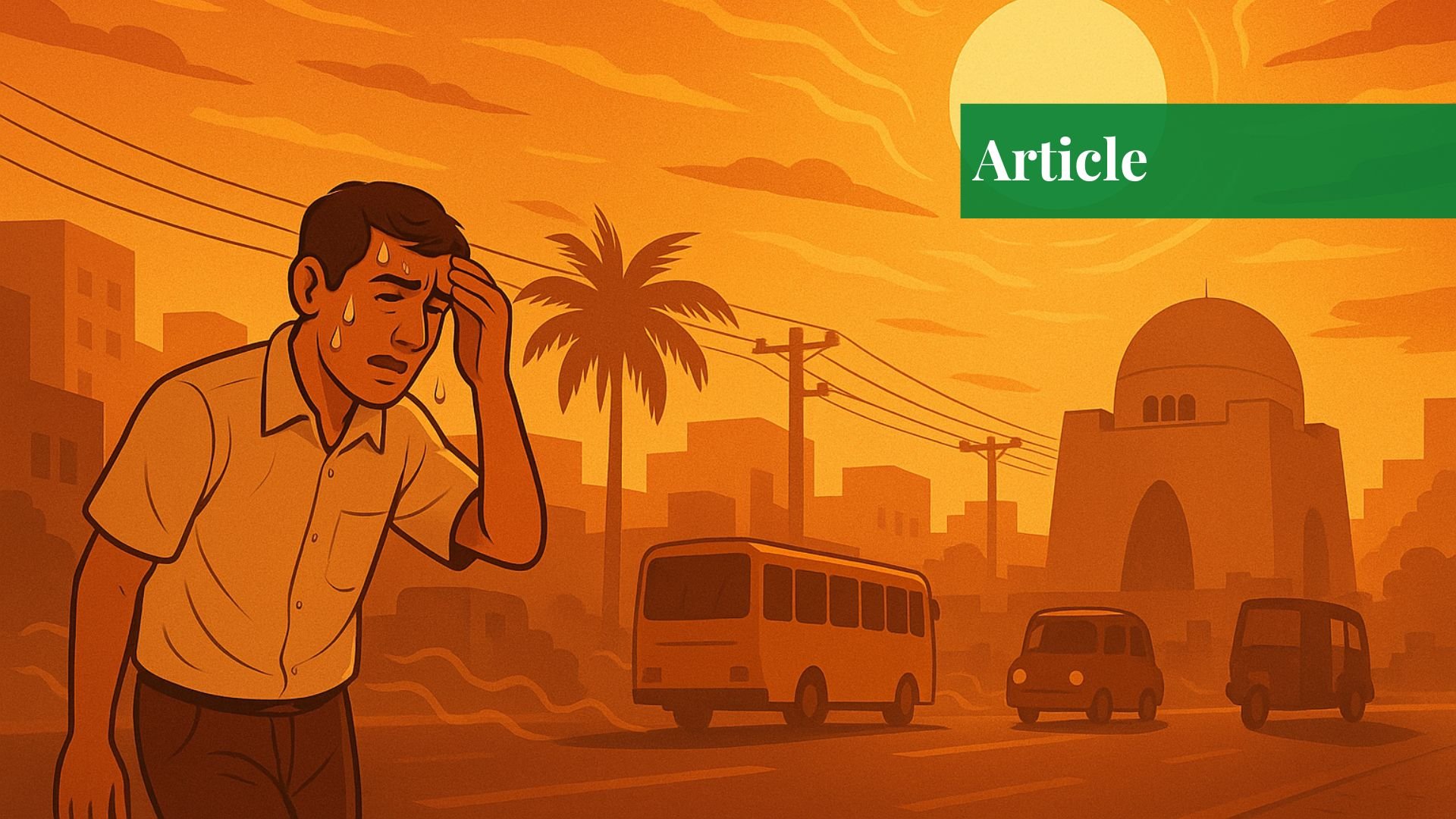

Heat waves have become a frequent occurrence in Pakistan’s economic hub, Karachi, with temperatures exceeding 40℃ regularly. Heat waves are six consecutive unusually hot days in a year, amplifying health and economic risks. According to the World Meteorological Organization (WMO), the risk of heat waves has increased 30 times due to climate change.
 You will find more infographics at Statista
Karachi’s high heat vulnerability can be associated with poor urban planning, transport, and industrial emissions, and changes in coastal winds.
During the deadly 2015 heatwave in Karachi, more than 1200 people lost their lives, and another 50,000 faced severe health effects. Another 65 people were killed in just three days in the 2018 heatwave, while Karachi experienced unprecedented heatwaves in March 2022, with record-high temperatures since 1901. With the intensity and frequency of heatwaves expected to increase in the coming years, urban poor residing in densely populated areas such as Korangi, Landhi, and Orangi Town are the most vulnerable due to inadequate green spaces, low-quality housing, poor ventilation, and lack of access to cooling.
Urban Heat Island (UHI) Effect
Rapid unplanned urbanization has transformed Karachi into a concrete jungle, creating the urban heat island (UHI) effect. The UHI effect associates the variation in temperature between cities and surrounding rural areas with “reduced natural landscapes in urban areas, urban material properties, urban geometry, and heat generated from human activities.” It explains that heat-absorbing materials used in urban infrastructure trap the heat from human activities such as industrial and transport emissions, making cities more sensitive to heat waves.
Temperature differences within a city are also linked to the number of open spaces and green cover in an area, with informal settlements and crowded neighborhoods usually bearing the brunt of the UHI effect. Almost 62% of Karachi’s estimated 20.3 million population resides in katchi abadis. These congested slum areas exist due to the high rate of rural-urban migration, lack of affordable housing, extreme poverty, and urban development failures. The lack of adequate resources and infrastructure exacerbates the existing vulnerabilities of these low-income neighborhoods during heat waves, leading to a wide range of adverse health, social, and economic impacts.
The Most Vulnerable
Karachi can be deemed an extremely inequitable city with large housing, land, and infrastructure disparities. Almost every highly urbanized and “posh” area in Karachi is attached to a subsequent katchi abadi, from which most of the informal labor is sourced. These katchi abadis lack basic amenities like clean water, sanitation, electricity, gas, and proper infrastructure, with mostly makeshift, poorly built homes.
Prolonged power outages lasting between 10 and 16 hours severely affect low-income areas like Shah Faisal Colony, Lyari, Bhit, and Baba Island. They make the heat unbearable for the urban poor and increase their vulnerability to heat stroke and other heat-related illnesses. The lack of electricity poses serious health risks, particularly for vulnerable groups like the elderly, children, and pregnant women.
The majority of heat stroke cases are reported from the homeless, security guards, and outdoor laborers. Rickshaw drivers, street vendors, and other laborers spend long hours outside, often without access to shade or water to cool down.
Gender and cultural factors play an important role in heat-related risks, with women confined to crowded homes despite extreme heat. While men may have access to open-air spaces at night, such as local dhabas or even rooftops, they are deemed unsafe and inappropriate for women and young girls.
Government Policies and Plans
Although the Karachi Heatwave Management Plan emphasized the need to build the capacity of the most vulnerable populations to take proactive action, the main strategy outlined was to raise public awareness ahead of heatwaves. However, this was deemed largely ineffective due to the top-down approach. Instructions issued by the government ahead of heatwave warnings often prove impossible for the poor to follow. Without access to proper shade, no water to cool down with, and staying indoors not a viable option for daily wage earners, the urban poor remain at the frontlines of heat impacts despite awareness.
The recently released Karachi Climate Action Plan (K-CAP) offers a more nuanced approach, highlighting measures and adaptation strategies to protect Karachi’s urban poor by building resilience in high-risk areas. The Plan, which adopted an inclusive and participatory approach to ensure fairness in climate action planning, focuses on four main goals to manage and reduce heat risks: increasing urban green spaces, enhancing access to cooling and public drinking water facilities, and improving building design, setting specific targets for each.
Simple steps like increasing public park areas, promoting rooftop gardens in tall buildings, providing shade in public spaces, prioritizing distribution and installation of energy-efficient cooling devices such as Direct Current (DC) fans, installing water stations in high-heat-risk areas, and painting all roofs and ground surfaces white or cool colors to reflect heat can go a long way in shielding the most vulnerable groups from the adverse impacts of heatwaves. Moreover, targeted interventions for outdoor workers, such as flexible hours, increasing heat stress awareness, and providing water access at workplaces such as construction sites, will significantly improve well-being and health outcomes.
Improvement of Informal Settlements
Beyond adaptation strategies to minimize heat impacts on the poor, a holistic solution to improving the living conditions of katchi abadis and low-income neighborhoods in Karachi is crucial. Slum areas require urban regeneration to regulate unplanned densification. The government must regulate and revise building codes to ensure adequate ventilation and safer living standards in densely populated areas. Furthermore, adopting green building designs and constructing net-zero buildings can reduce the urban heat island effect in high-risk areas.
Conclusion
The plight of the urban poor during heatwaves in Karachi is a testament to climate injustice. Those who are least responsible for climate change face disproportionate impacts of global warming and extreme weather events. Heatwaves are no longer stand-alone events but have become an annual and recurrent crisis in urban centers. The poor can no longer be ignored or pushed to the margins; they must be placed at the center of urban planning, disaster responses, and climate adaptation policies.
If you want to submit your articles and/or research papers, please visit the Submissions page.
To stay updated with the latest jobs, CSS news, internships, scholarships, and current affairs articles, join our Community Forum!
The views and opinions expressed in this article/paper are the author’s own and do not necessarily reflect the editorial position of Paradigm Shift.

Jawairiya is a final-year Development Studies student at Bahria University Karachi with a passion for social justice, inclusive development, and community empowerment.