
It is not only the armies clashing, but the struggle of strategic will, legitimacy, and normative order that eventually decides the direction of conflict, and this is exactly what is happening between Iran, the United States, Israel, and the Gulf states.
The first and most obvious consequence of this escalation is that it was the United States and Israel that illegally assaulted the sovereignty of Iran what can be termed a preemptive strike, more specifically a decapitation strike, at Iran, at its high values targets case in point is the target on the leadership, critical infrastructure, command and control, missile and drone sites, which Tehran sees as an illegitimate and unjustified use of force, which is outright violation of Article 2(4) of the United Nations Charter that prohibits the threat and use of force. In response, Iran retaliated with countermeasures by raising the cost of war by attacking the US military bases in the Gulf with heavy drones and missiles.
Of particular interest in this case is that these are not merely reactionary measures, but are the instruments of coercive diplomacy and deterrence signaling, which are strongly entrenched in realist conceptions of the security dilemma, the balance of power, and the survival of the regime. Also, it is essential to mention that the conflict is being fed by various strategic interests of the major actors, where the United States is driven by the necessity to restore deterrence and avoid aggravation, Israel by the long-term aim of regime change in Iran, and the Gulf States by the regional stability and the safety of economic and energy infrastructure. This difference of purpose and objective, rather than its capabilities has led to the long strategic stalemate, in which, though far ahead in military superiority, the United States and its allies are restricted by the politics of escalation, legal issues, and even political price, and Iran continues to question the validity of the aggression, Iranian nation is united on the Iranian nationalism. The war is thus not a traditional war of decisive battle, but a long-term war over control of the regional order, legal principles, and strategic stamina, where the boundaries of power are tested not by lack, but by restraint that has limitations of its deployment.
In addition, the Strait of Hormuz problem has led to a rise in the anxiety of US policy and its influence on international security, and the US policy appears to be reactive and unplanned, and Iran is becoming more effective in disrupting the trade at a low cost. As the US is being perceived as an untrustworthy partner, European and Gulf countries may be considering finding their own, multilateral way out. A looming risk in case of failure in diplomacy is economic turbulence, such as stagflation. Thus, the change in military policy, smaller states use low-cost technologies to break the traditional military hegemony, changing the balance of power in the world.
The many facets of this war are discussed in the subsequent paragraphs below. Nevertheless, since war is a highly dynamic and fluid process, it is exceptionally hard to predict where the strategic course will eventually stabilize or how the situation will change over time.
A Realist Lens: Power, Prestige, and Credibility
Viewed through the prism of realism, the conflict is not merely about Iran’s capabilities or nuclear aspirations; it is more about authority, reputation, and status. Specifically, great powers are not easy to withdraw in realist thought, not because they lack the ability, but because they lack the moral right.
Case in point is the United States; its stakes are not limited to the Persian Gulf. The trial itself is one of credibility. As an example, withdrawal without a successor would indicate a sign of weakness, which would not only ruin deterrence against Iran but also against the other major powers- China and Russia. Therefore, a great power, which is already involved, grows according to the logic of classical realists when its prestige is under threat. Thus, it is not strategy, but reputation, that makes American persistence.
The Strait as a Strategic Centre of Gravity
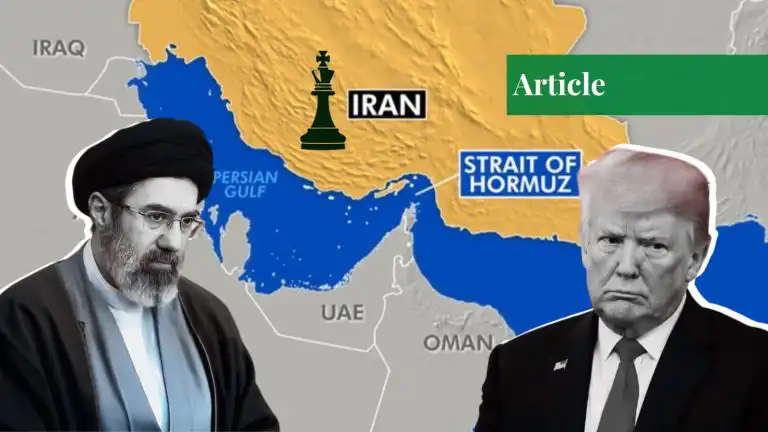
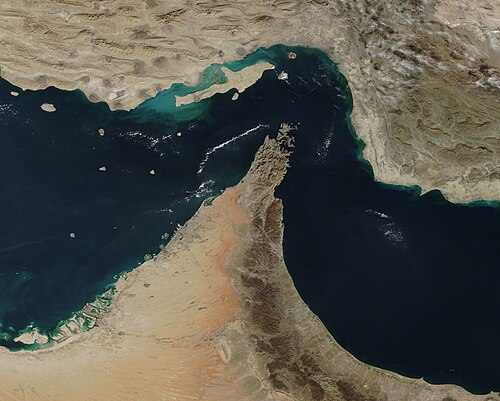
This emerging crisis centers on the Strait of Hormuz, which is a narrow but vital passage that transfers nearly half of the global oil. Moreover, it has shut down and brought a global shock to the economy, disrupting the supply chains and pushing oil prices to over 110 dollars per barrel. Approximately 1, 500 vessels are grounded, and the transportation is close to a standstill. However, favorable forecasts indicate that it may take months before the backlog is cleared. The Strait is not only a geographical point of narrowing, but it is the blood artery of the international system.
Kharg Island: The Trap of Tactical Thinking
The biggest point of the discourse of operations is Kharg Island, which is the principal oil export terminal of Iran. Its capture may be an easy task on its surface, but its defense is a much more difficult mission for the US. Moreover, it is not difficult to seize the Kharg Island itself; it is the occupation. It would mean that any occupying force would be exposed to long-term attack since it is in the firing range of Iranian artillery and missile systems. This is, therefore, what mission creep is all about. What seems to be a short-term objective is then turned into a long-term project, and the more the risk, the less the returns.
The Logic of Deterrence and Escalation Ladder
The increased realist paradigm is not accidental, irrational, and yet it is ordered. The war actually appears to be heading up the next notches on the escalation ladder, since limited strikes have already been replaced with larger ambitions: reopening the Strait, safeguarding the infrastructure, and even the employment of ground troops.
But, according to the theory of strategy, the escalation usually results in counter-escalation and not obedience. The same is true of Iran, which is also experiencing an existential threat and thus does not react by throwing in the towel but intensifies resistance. This is a dynamic that is thus associated with an ancient security dilemma where one side of the conflict is trying to enhance its security at the expense of the other.
Air Power and the Illusion of Control
The US and Israel have unleashed overwhelming airpower, hitting nuclear plants, missile bases, and command bases. This has led to a great tactical success of these operations.
However, destruction, as the experts warn, is not controllable. The enriched uranium continues to be scattered in secret places, which can only be found through tedious groundwork. In addition, these operations are time-consuming and expose forces to significant risk. Thus, the war shows a basic weakness; air dominance cannot replace strategic resolution.
Air Campaign and Regime Change
Moreover, as seen in the conflict, the air campaign of such magnitude is not enough to make the regime submit. Robert Pape, in his masterpiece bombing to Win: Air Power and Coercion in War points out that bombing can destroy infrastructure and command systems, but it has seldom caused political submission. An example is Afghanistan and Iraq. As a result, ground operations are still critical in meeting regime-level goals, which is an ideology that is well exemplified in the struggles of attaining Kharg Island and Iranian nuclear facilities.
Asymmetric Warfare: Iran’s Strategic Adaptation
Iran’s strategy reflects the logic of the weaker actor in realist theory. Indeed, unable to match US capabilities symmetrically, it has embraced asymmetry.
This includes:
- Swarm tactics using drones and missiles
- Thousands of small attack boats
- Naval mines disrupting maritime flow
- Decentralized command structures ensuring operational continuity, commonly conceptualized as “Decentralized Mosaic Defense. The adoption of decentralized command structures that ensure operational resilience and continuity, often described within strategic studies as “Decentralized Mosaic Defense,” enables dispersed units to operate autonomously under conditions of disruption.
To counter these enigmatic predicaments, the United States seems to consider deploying platforms such as the Fairchild Republic A-10 Thunderbolt II and the Boeing AH-64 Apache. Yet, the problem persists: asymmetry neutralizes superiority.
Mine Warfare and Operational Constraint
The least valuable and the most valued limitation is mine warfare, most probably. In particular, the United States does not have enough mine countermeasure ships, which makes the process of clearance slow and dangerous. Without clearing the mines, the Strait cannot be opened. As a result, economic pressure would go up without reopening the Strait. Therefore, a fairly cheap weapon carries inordinate strategic effects.
Economic Asymmetry: The Cost of Dominance
At the heart of the conflict lies a profound economic imbalance.
United States Spends
$12.8 million per THAAD interceptor
$5 million per Patriot missile
Iran Deploys
Drones costing $30,000–$50,000
Missiles costing $1–2 million
Hence, this disparity creates a structural disadvantage. The United States is engaged in a conflict where the defender loses economically even when tactically successful. Therefore, this is not merely inefficiency but also a strategic erosion.
Swarm Warfare and Strategic Exhaustion
The Iranian doctrine of saturation is aimed not at winning but at wearing out. The introduction of large quantities of inexpensive drones and missiles saturates air defense capabilities and empty interceptor arsenals, as observed during counterattacks by Iran on the Gulf States.
It has been reported that offensive strikes have the potential to drain defensive stocks quickly, with the Iranian manufacturing potential being strong. This consequently puts an unsustainable dynamic on the United States.
The war is therefore a struggle not of (power), but of stamina.
Okinawa, Diversion, and the Global Chessboard
The other eye opener is the redeployment of the 31st Marine Expeditionary Unit, which is based in Okinawa, to the Gulf that was initially to take part in the battle against China in the Indo-Pacific.
This shift brings out a fateful strategic distraction: the American focus in the Middle East is at the expense of the Indo-Pacific location, which presents opportunities to Beijing and Moscow. Revisionism is the call to the vacuums of power in realist terms. China will be in a position to make more plans with regard to Taiwan, and Russia will be able to advance NATO without the United States being caught up elsewhere. Hence, the Iranian conflict is not a unilateral affair; it is extended to the international strategic arena.
Alliance Deficit and Strategic Isolation
This war does not have a large coalition as compared to the past conflicts. The United States is overburdened in operations, with Israel being one of the key partners. Therefore, that lack of concerted action undermines legitimacy, overburdens resources, and constrains strategic choices.
Time as the Ultimate Weapon
It is, however, in the dimension of time that the most profound asymmetry emerges.
As the old strategic aphorism suggests:
“The United States has the watch; Iran has the time.”
For Iran:
- Prolongation is a success
- Resistance is victory
- Survival is a strategic triumph
For the United States:
- Time increases cost
- Time erodes domestic support
- Time amplifies global risk
- Thus, time itself becomes a weapon—and one that Iran wields effectively.
The Asymmetry of Victory
This leads to the central paradox of the conflict:
For Iran: Not losing is winning
For the United States: Not winning is losing
Therefore, this asymmetry shapes the entire strategic landscape. In realist terms, the perception of endurance and credibility can outweigh material power in determining strategic outcomes.
Escalation, Prestige, and the Realm of Global Politics
As it grows to a higher level of global politics and prestige, the escalation is directly connected to prestige. More specifically, the United States will not be able to disengage without a reputational hit, which subsequently will undermine deterrence in the global arena. Iran, with full knowledge of this, uses all the time, every failure, and every failure to strengthen its strategic position. Hence, this is a demonstration of the realist maxim because once the prestige is put into question, the subsequent development is bound to take place. The conflict ladder may rise, but the outcome is more of survival rather than dominance.
Endurance over Dominance
The Iran war can be cited as an example of realism logic, which remains in the ultimate analysis. States seek power, protect credibility, and escalate when prestige is put at risk. However, in this war, no force could win without the employment of force on the ground, as it turns out. Instead, results are dictated by cost, the interaction of time and strategy. The superiority of the United States is confronted by the limits of power. Asymmetry and persistence are used by Iran with its relative weakness. Further, since the escalation keeps rising higher on the ladder of conflict, the danger is not only that of defeat, but also of being trapped in the strategy. The most powerful is not necessarily the one that can win in the sphere of international politics; it is the one that can resist the longest before falling. And here, in this war, perseverance, not superiority, is yet decisive.
If you want to submit your articles and/or research papers, please visit the Submissions page.
To stay updated with the latest jobs, CSS news, internships, scholarships, and current affairs articles, join our Community Forum!
The views and opinions expressed in this article/paper are the author’s own and do not necessarily reflect the editorial position of Paradigm Shift.