
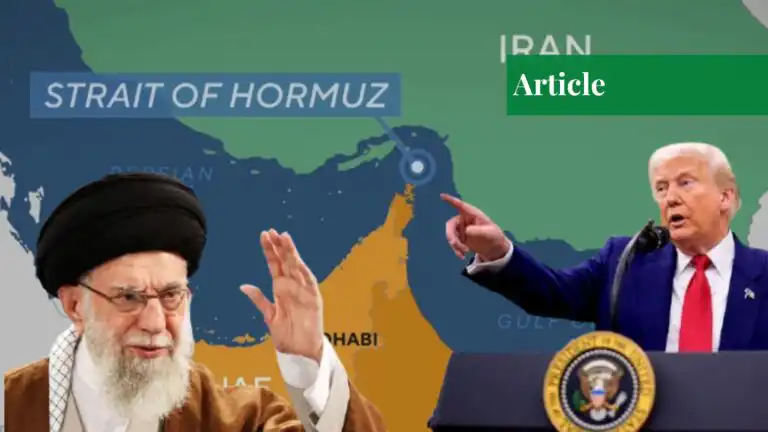
The Iranian parliament approved closing the Strait of Hormuz after US attacks on Iran’s nuclear enrichment facilities at Fordow, Natanz, and Isfahan. The decision has built up massive global pressure and resulted in the ceasefire between Israel and Iran. Although the state left the ultimate decision to the Supreme National Security Council of Iran, the vote represents an intention to turn one of the world’s most sensitive economic trade chokepoints into a strategic leverage. The Strait of Hormuz is the world’s most significant chokepoint, accounting for nearly 20% of global energy shipments, estimated at US$1 billion daily. It is between Oman and Iran and connects the Persian Gulf with the Gulf of Oman and the Arabian Sea. Closure of the Strait of Hormuz would have economically suicidal implications for the world.
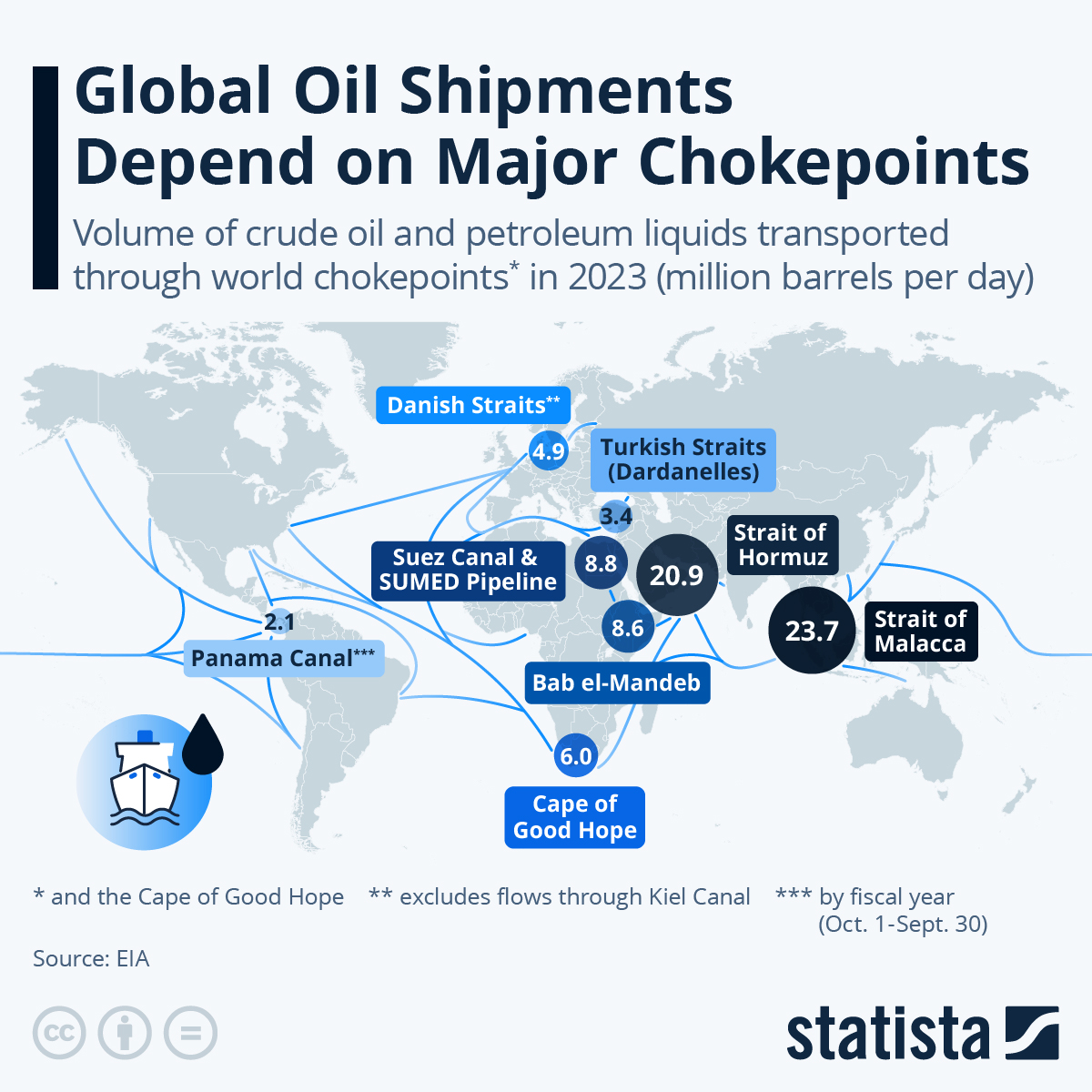 You will find more infographics at Statista
Significance of the Strait of Hormuz
The Strait of Hormuz is a narrow 24-mile-long chokepoint. It links the oil and LNG in the Middle East to the world through the Arabian Sea and the Indian Ocean. In the Strait, the share of shipments in the total oil and gas trade is 30%, and 20% in the global LNG trade. Saudi Arabia is the biggest oil exporter along the Strait, whereas Qatar leads in LNG exports of about 77 million metric tons per annum. Qatar sells 80% of its LNG along the Strait and 20% to Europe. The volume transported into the strait on a 2024 daily average is 20.3 million barrels of oil and petroleum products and 290 million cubic meters of LNG.
Additionally, the US, Qatar, and Australia account for approximately 20% of global LNG production each, making them the three major LNG producers in the world. This is sold to energy-intensive economies, such as Japan, South Korea, China, India, and Europe. If Qatar’s supply is severed, such countries lose a significant portion of their energy source virtually overnight. The LNG market is weak, and the transmission of a supply shock can be quick and fierce.
Implications of a Closure
The closure of the Strait of Hormuz poses a grave threat to global oil and gas supplies, potentially leading to a global energy crisis. Energy prices would skyrocket, with oil potentially rising above $100 per barrel and LNG spot rates. For countries heavily dependent on natural gas, this would result in another round of inflation and increased energy vulnerability. The potential for such a crisis underscores the urgent need for international cooperation and preventive measures.
In 2024, Pakistan imported 30-40% of raw materials through the Strait of Hormuz. The United States imported 7% of its crude oil and about 2% of its petroleum liquids consumption. Australia imported 15% of its crude oil and 5% of its petroleum from the Middle East while transiting 30% of its refined oil. China, India, Japan, and South Korea imported 84% of their crude oil and natural gas liquids and 83% of LNG through the Strait of Hormuz. The prices of imports have already risen due to the ongoing war between Iran and Israel. The closure of the Strait of Hormuz will devastate trade even further.
 You will find more infographics at Statista
Similarly, insurance and shipping would become tangled. Ships insurers can refuse to cover a vessel passing through the Strait of Hormuz or charge uneconomical and exorbitant war-risk premiums. Meanwhile, strategic petroleum and gas reserves in need of immediate replacement would likely be tapped. Other nations, such as Japan, South Korea, and India, heavily rely on energy flow in the Persian Gulf and would likely be among the first to tap their reserves.
Response from the US, UK, and China
World leaders have responded with a warning of the repercussions of the Iranian parliament’s measures to close the Strait of Hormuz. US Secretary of State Marco Rubio termed the move “economic suicide,” saying it would lead to a massive escalation that would justify a response. Chinese Foreign Ministry spokesperson Guo Jiakun also expressed concern that the Strait of Hormuz is an essential channel of international energy trade and called on the international community to prevent regional unrest.
 You will find more infographics at Statista
Similarly, the UK Foreign Minister, David Lammy, suggested that closing the Strait of Hormuz would be a mistaken move and “extremely dangerous.” These consistent reactions demonstrate the Strait’s strategic significance and the desire of all actors to prevent a conflict.
A Ceasefire between Iran and Israel
President Donald Trump and Qatar brokered a ceasefire between Iran and Israel in the wake of rising pressure from the threat of closing the Strait of Hormuz. But hours later, Israel accused Iran of violating the ceasefire and attacked Tehran city with intense strikes. Analysts cautioned that undermining the ceasefire would have stagflationary ramifications; oil and Brent Crude price spikes would increase the inflation rate and force the Federal Reserve to delay lowering interest rates despite mounting economic pressure. The global north, especially the US, warned Israel to immediately stop bombing Iran and follow up on the truce.
Conclusion
Conclusively, the Strait of Hormuz is not only a crucial shipping trade route; it is also a global economic equilibrium chokepoint. Iran’s possible shutdown of this chokepoint has even rattled the international markets, and the effects on the world, which relies heavily on the smooth transportation of energy, have been disastrous. A temporary ceasefire between Israel and Iran provided a fresh breath of hope, but given that it was not based on substantial grounds, what has happened is that a tight resolution is imminent. The crisis demonstrates that energy security and its geopolitics depend on diversification, contingencies, and long-term investments in renewable sources and other sources unlikely to lead to conflict.
If you want to submit your articles and/or research papers, please visit the Submissions page.
To stay updated with the latest jobs, CSS news, internships, scholarships, and current affairs articles, join our Community Forum!
The views and opinions expressed in this article/paper are the author’s own and do not necessarily reflect the editorial position of Paradigm Shift.

Owais Khan Marwat is a research professional with a background in International Relations.