
Israel occupies a land that was inhabited by and belonged to the Palestinians. Confining the Palestinians to genocidal and inhuman conditions, Israel has, since its inception, invaded almost all its neighbors and still occupies their lands. In 1981, it destroyed Iraq’s Osirak nuclear reactor. Morphing into a “Murder Inc.,” it has sent assassins around the globe with a never-diminishing hit list.
Nurtured, protected, and encouraged by Washington, Israel is the only nuclear power in the Middle East. It refuses inspection of its nuclear program. Western estimates put its nuclear arsenal at 400 bombs. With a population of 0.9 million, the equation comes to one bomb to defend 2250 Israelis.
October 7 Assault by Hamas
Despite this massive power, Israel’s myth of invincibility lay shattered with Hamas’ October 7 assault. Eminent Israeli historian Illian Pappe describes this reversal in his recent article titled “The Collapse of Zionism.” He likens the Hamas assault to an earthquake that strikes an old building with already present cracks reaching the foundations.
Netanyahu termed the martyrdom of Sayyed Hassan Nasrallah as the “key to restoring the power balance and recovering the hostages.” Despite decades of brutal subjugation and subterfuge, the acceptance of lacking in the power balance and Hamas holding Israeli hostages is in itself an acknowledgment of defeat.

It is a proven fact that Israel’s assassination spree has failed miserably to quell the resistance. It has rather proved counterproductive. It was only after Hamas founder Ahmed Yassin and his successor Abdel Aziz al-Rantisi were assassinated in 2004, that the group developed close ties with Iran.

Just like its mentor’s humiliating withdrawal from Afghanistan after two decades of occupation, a rejuvenated Hezbollah forced an equally chastened Israel to end its two-decade occupation of southern Lebanon. This period also entailed the gruesome Sabra and Shatila massacres.
In March 2019, veteran diplomat William Burns, as President of the Carnegie Endowment for International Peace, dubbed Trump’s Iran Policy as “untethered” to history. He declared that the “false assumptions about how a muscular, unilateralist US approach can produce the capitulation or implosion of the Iranian regime is an assumption untethered to history.”
Today, the peacenik William Burns, who advocated caution, is the Director of the CIA—under the Biden administration—as Washington seeks the capitulation of Iran through Israel. Narcissism and hegemonic hubris are a lethal concoction that soothes the mind, ever-whispering that history is for losers. It never is.
The Never-Ending String of Israeli Assassinations
With the assassination of Ismail Haniyeh in Tehran, a pragmatic and moderate political operator, the mantle and privilege of being the new Hamas leader went to Yahya Sinwar, the mastermind behind the October 7 attack.
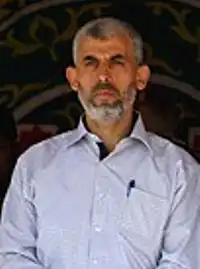
Still living in Gaza, Sinwar has spent 22 years in Israeli prisons. In 2011, he was released in a prisoner exchange for Gilad Shalit, an Israeli soldier who remained in Hamas custody for five years. With Haniyeh’s assassination, Hamas’ political bureau has been taken over by its military wing—the Al-Qassam Brigades.
In his book “Rise and Kill First: The Secret History of Israel’s Targeted Assassinations,” Israeli author Ronen Bergman affirms that Israel has assassinated more than 2,700 people throughout its history. He describes it as Israel seeking to stop history without engaging in diplomacy and statesmanship.
The Targeted Killings Within Hezbollah
He also writes how some Israeli military figures opposed the assassination plan of Hezbollah leader Abbas al-Musawi warning that he “would be replaced by someone more radical.”
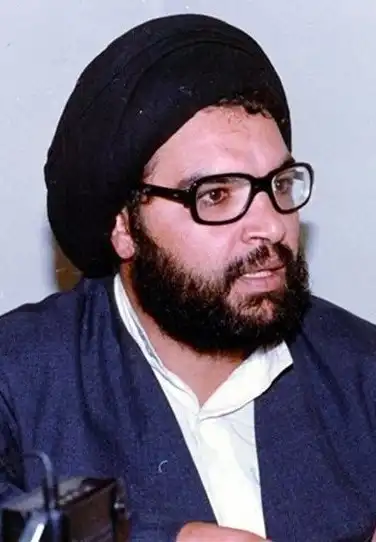
In 1992, Abbas al-Musawi along with his wife and five-year-old son were killed in an Israeli helicopter gunship strike in southern Lebanon. His successor, the infamous Hezbollah commander Hassan Nasrallah, became more resourceful and eloquent. He transformed Hezbollah into a formidable military force with long-range rockets and precision-guided missiles.
Just like its mentor’s humiliating withdrawal from Afghanistan after 2 decades of occupation, a rejuvenated Hezbollah forced an equally chastened Israel to end its two-decade-long occupation of southern Lebanon. This period also entailed the gruesome Sabra and Shatila massacres.
Yahya Ayyash, a 29-year Hamas operative, was on Mossad’s most-wanted list. In 1996 on receiving a call from his father he asked “How are you, father?” During his last words, the rigged phone exploded, killing him on the spot.
This was almost three decades before the pagers and walkie-talkies started exploding in Beirut recently. Ayyash’s assassination was deeply unsettling for Hamas as it exposed the extent to which Israeli intelligence had penetrated its ranks, time proved it a temporary setback.
The Political Maneuvering of Netanyahu
Netanyahu’s ongoing corruption trial may well earn him a conviction and an extended stay behind bars. His persistent stonewalling of the peace negotiations is his fear that the release of hostages could lead to a ceasefire and a rekindled political process. His political survival as that of his Zionist coterie lies in extending the war theater to Iran.
Instead of reining in this insanity, Washington—an enabler in the Gaza genocide—threatens anyone who dares stand up to Israel. Continuously arming and encouraging it, Washington feigns ignorance of Israel’s provocations and atrocities.
Washington’s aiding and abetting status is also proved by the NSA whistleblower Edward Snowden’s leaked documents. They show that Israel has access to the highly classified computer network shared by America’s spy agencies.
Experts and polls say that Israel has played right into Hamas’ hands. For the first time in its history, Israel is seen as a genocidal war-mongering entity by the people in the West. Pro-Palestinian news and views are at the forefront of the international media, universities, and streets.
Israel’s quest for a conflagration shall not be tenable because of economic considerations. Rakefet Aminoach, former CEO of Israel’s Bank Leumi, says that having spent over $67.3 billion to date, the Gaza war (alone) further drains the Israeli economy of $260 million daily.
Time has proved that come what may, Israel cannot quash the Palestinian cause.
“To say that we are going to make Hamas disappear is to throw sand in people’s eyes. Hamas is an ideology – we cannot eliminate an ideology.”
– Israel Defense Forces (IDF) spokesman Rear Admiral Daniel Hagari in an interview with Israel’s Channel 13
The comments by Admiral Daniel were understandably rebuffed immediately by Netanyahu’s office.
One can feel Ghassan Kanafani smiling. He was as accomplished an artist as he was a man of letters. One of the most prominent Arab novelists and resistance writers, he was assassinated by Mossad in July 1972 along with his niece Lamees in Beirut. An obituary in Lebanon’s Daily Star described him as, “a commando who never fired a gun, whose weapon was a ball-point pen and his arena the newspaper pages.”
Celebrated Palestinian poet Mahmoud Darwish eulogized Kanafani in a poignant elegy: “They blew you up, as they blow up a front, a base, a mountain, a capital, and they fought you, as they fight an army; because you are a symbol of a wounded civilization.”
A few walls remain standing defiantly in a devastated Gaza. Spray painted on them is Kanafani’s sublime quote symbolizing Palestine’s valiant generational struggle: “Bodies fall but ideas endure.”
If you want to submit your articles and/or research papers, please check the Submissions page.
The views and opinions expressed in this article/paper are the author’s own and do not necessarily reflect the editorial position of Paradigm Shift.

Mir Adnan Aziz is a columnist whose writing explores the forces that shape power, belief, and society.