

Introduction
From the snow-capped mountains of Kashmir to the olive groves of Gaza, two geographically distinct regions, two different continents, yet united by pain and hopes, both regions continue to bleed under the burden of unfulfilled promises, religious conflicts, and illegal occupations. Although the actors in both parts of the world are different, their shared dismay speaks volumes for the silence of the world despite systematic and uncontrolled suffering. This article will shed light on the similarities that Gaza and Kashmir hold, revealing a global pattern of insensitivity and chosen neglect.
Beautiful to Battlegrounds
Kashmir and Gaza are both beautiful lands with distinct geographical landscapes. Gaza, a strip of land in Palestine, has faced Israeli occupation since 2007, and more recently witnessed a full war of over fifteen months in the last two years. On the other hand, Kashmir, nestled between two neighbors- Pakistan and India, a point of conflict since 1947, has most recently been under threat of war between both nuclear-armed neighbors. Both parts of the world are a picture of occupation, military interventions, and the resilience of the people living there.
An interesting yet concerning fact about both areas is the conflicts, tyranny, and brutality against Muslims in both regions. Also, both places share the militarization of daily life as a pain. The children grow up with the stories of martyrs, bloodshed, and hatred rather than toys, fairy tales, and dreams. While Gaza has been constantly under surveillance, air strikes, and attacks, Kashmir faces cruel military occupation and curfews, especially the Illegally Indian Occupied Kashmir, IIOK.
To add, another similarity is the control on media and freedom of speech. In both places, media blockades and internet shutdowns are very common. There is no room for dissent or criticism against the brutal. Such acts keep the issues such as human rights violation in practice in both regions hidden from the global eye. There is a war of narratives where the pen is in the hands of the powerful, and the oppressed are denied their fundamental rights.
Resistance among the Youth
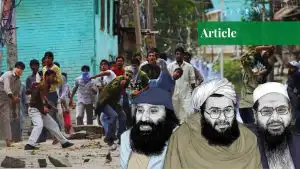
Despite years and years of tyranny and oppression, the youth in both places are very clear and assertive in their stance. They refuse to bow down to tyranny and keep longing for dignity. They have developed resistance out of hatred, humiliation, and brutality they have been facing for decades now. In Gaza, they show their resistance through protests and sometimes using art. While in Kashmir, they come to the streets and raise slogans of freedom, and suffer from pellets, bullets, and even deaths. However, the resistance of people in both places is exemplary and leaves many lessons for the world, yet depicts the chosen silence of the world about the inhumane acts of the oppressors.
Selective Humanity of the World
All the great players of the world, who advocate human rights on all forums, have limited or forgotten their concept of humanity in the case of Kashmir and Gaza. This is very unfortunate and the saddest similarity between the two places simultaneously. The continuous Israeli attacks in Gaza and the 0.9 million Indian soldiers deployed in Kashmir speak volumes about their ill intentions towards the Muslims living in Gaza and Kashmir, respectively.
Approximately 430,000 Palestinians have been displaced since March 2025, showing a 6 per cent population decline in the area by the end of 2024. Similarly, internal displacements have been reported in Kashmir. Sadly, no stringent actions have been taken against them ever since. The world has failed the Palestinians and Kashmiris very badly. The champions of human rights label atrocities in Kashmir as “internal matters”, and the massive genocide in Gaza is only given muted statements.
Kashmir and Gaza are not just two flashpoints on the world map, but also the stories. The stories of mothers burying their sons, the stories of orphans witnessing their parents’ deaths, fearful children, tormented minds, families crying for justice, and whole generations robbed of their rights and dignity. Their pain is not local- it is indeed universal. Their cries are a reflection of the world order where power has superiority over principles; where oppressors are unquestionable; and where the victim blaming is the new normal.
Implications
The sustained conflicts in both regions have deepened the humanitarian crisis- loss of education, food, shelter, safety and security, multi-generational trauma- damaged psychological health, regional instability- scattered the Middle East and South Asia, diplomatic deadlocks- violations of International law, and a global rise in extremism- violence and radicalization. Moreover, if not stopped in time, the future for both places looks bleak. There is an urgent need for humanitarian aid, engagement of the world diplomatically, peace-building missions, and a dire necessity to keep human lives before the territorial claims.
Conclusion
The two distant regions in the world share many similarities in religion, resistance, tyranny, oppression, humiliation, atrocity, injustice, cruelty, and the silence of the world to all of this. The shared pain of both regions should be an eye-opener for the world to act- to act against the tyrants. Because today, it is Kashmir and Gaza, next could be them, too. The silence and indifference of the world are not a symbol of neutrality, rather, it is complicity. The silence must end. The voices must be heard. Freedom must prevail. Because, as people of every other region, the Palestinians and Kashmiris exist, resist, and they matter!
If you want to submit your articles and/or research papers, please visit the Submissions page.
To stay updated with the latest jobs, CSS news, internships, scholarships, and current affairs articles, join our Community Forum!
The views and opinions expressed in this article/paper are the author’s own and do not necessarily reflect the editorial position of Paradigm Shift.

She is a clinical psychologist and author with over six years of experience in freelance writing, specializing in mental health, social issues, and global affairs. She co-authored L’Art de Vivre, a book on positive psychology, and contributed to flood relief efforts in 2022. She also qualified the CSS Special Competitive Examination in 2023. Through her work, she is committed to promoting resilience, raising public awareness, and fostering informed discourse by combining psychological insight with socio-political analysis.